Where Red Sandstone Meets Permanent Water at Watarrka
Overview
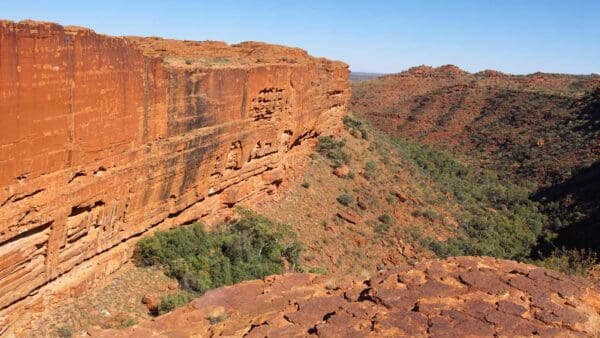
Watarrka National Park sits in the southern Northern Territory, about 450km south-west of Alice Springs, at the western end of the George Gill Range. It is a striking desert landscape shaped by rugged ranges, narrow gorges, rockholes and waterholes, with Kings Canyon as its best-known landform. What makes the park memorable is the contrast between sheer red sandstone and the sheltered pockets of permanent water that support life in an otherwise very dry part of Central Australia.
The park is also recognised nationally for its natural and cultural importance. In 2024, Watarrka was added to the National Heritage List, reflecting the significance of both its landforms and the living cultural landscape they belong to.
Highlights
The standout scenery here comes from the big sandstone country. Kings Canyon rises in steep walls about 100 metres above Kings Creek, then opens onto a high plateau marked by weathered domes and deeply cut rock formations. Elsewhere in the park, the George Gill Range brings together broken escarpments, shaded gorges and scattered rockholes that give the whole area a dramatic, folded look.
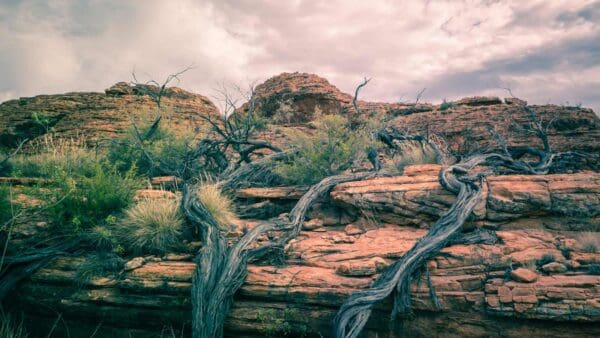
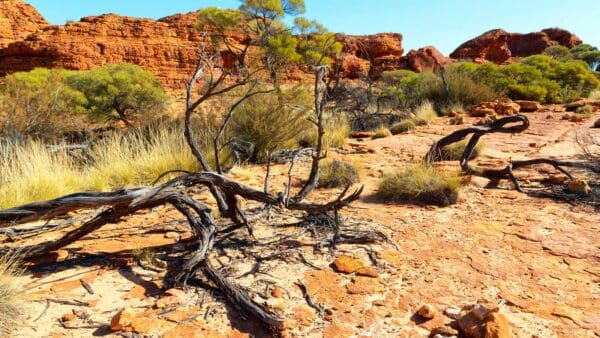
Another distinctive feature is the way permanent springs and waterholes sit within this hard red landscape. These sheltered places soften the country visually and create sharp shifts in colour and texture, from bare rock and spinifex country to pockets of green tucked into the gorge systems.
Best Time to Visit
The cooler months from April to September are generally the most pleasant time to be in Watarrka. At that time of year, the dry desert setting is usually more comfortable for longer days outdoors, and the contrast between the red rock, blue sky and sheltered greenery is often at its clearest.
Plants and Animals
Watarrka supports an unusually rich pocket of life for such an arid region. The south-facing gorges, springs and waterholes provide refuge habitat, and more than 691 native plant species have been recorded in the park. Some are rare or highly localised, including Hydrocotyle sp. Watarrka, which is only found here.
The sheltered creek environments also protect species such as the MacDonnell Ranges cycad. Around the springs and waterholes, the park supports specialised wildlife including a local dragonfly, two species of camaenid snails and the water penny beetle. That mix of permanent water, shade and rock shelter is a big part of why Watarrka feels so different from the surrounding desert country.
Culture and Heritage
Watarrka is a living cultural landscape for the Anangu ngurraritja, and the park remains a place of continuing cultural importance. It is directly connected to Tjukurrpa, and traditional law, custom and beliefs continue to be observed and practised here.
This cultural depth sits alongside the park’s national heritage recognition, which acknowledges that Watarrka matters not only for its canyon and desert landforms, but also for the enduring cultural life bound up in the place itself.