Hike at a Glance
Max elevation: 1004m
Min elevation: 307m
Total Ascent: 1794m
Hike overview
This two day walk covers about 28.5 kilometres along the Mount William Range, with roughly 14 kilometres on the first day to Barri Yalug and 14.5 kilometres on the second day across the Seven Dials to Mount William.
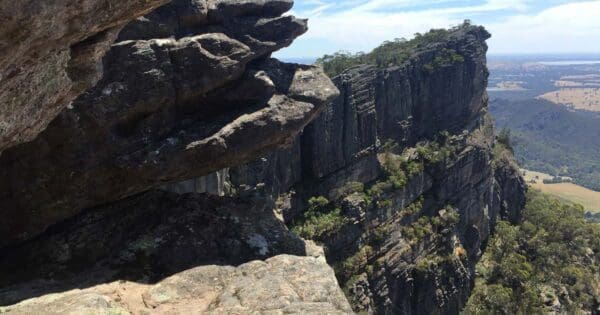
Starting from Mount Rosea Carpark, the walk begins beneath tall eucalypt forest before gradually climbing toward the rocky ridges that define this section of the Grampians. The early part of the track moves through sheltered woodland where the sounds of birds and rustling leaves accompany the steady ascent. As the forest opens, the landscape shifts to broad sandstone escarpments that reveal the rugged character of the range. The climb to the summit of Mount Rosea, known as Bugiga Mirgani, is one of the highlights of the walk, offering a sense of exposure and space that contrasts with the forest below.
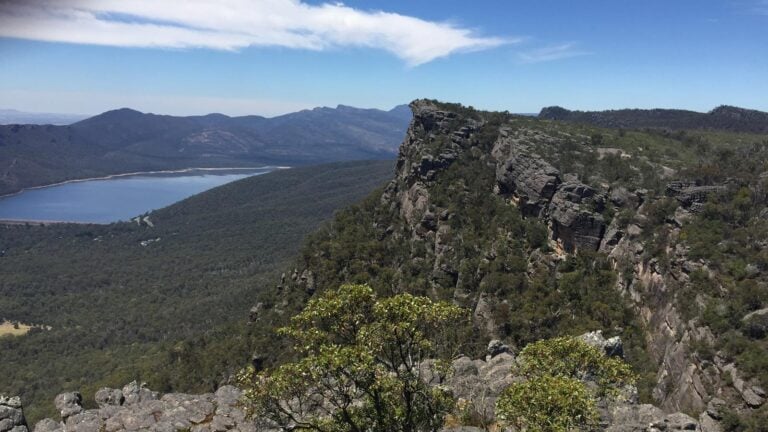
Beyond the summit, the track continues south along the ridgeline. Sections of rock and weathered slabs create a route that feels remote and distinctly alpine for Victoria. The trail passes near Borough Huts Campground before continuing along the range toward Barri Yalug Hike in Campground. Along this stretch, wide views open to the north across Lake Bellfield and the surrounding valleys, giving walkers regular reminders of just how much ground they have gained since leaving the trailhead.
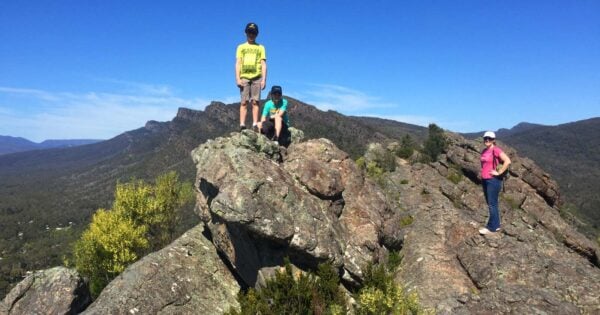
The second day introduces a more rugged and demanding section of the range. The route climbs across the Seven Dials and over Redman Bluff, where the terrain becomes more exposed and the walking more physical. Rock scrambling, uneven surfaces and steady elevation changes make this section feel adventurous while still following a well established route. Eventually the trail reaches Duwul Hike in Campground, set high on the Mount William Range in a position that feels quiet and removed from the lower valleys.
From Duwul, a short 1.2 kilometre walk leads to the finish at Mount William Carpark. Although the final distance is brief, the elevated position of the range means the surroundings still feel expansive, with sweeping views across the Grampians landscape.
Walkers should be aware that Mount William and the Major Mitchell Plateau are exposed areas where weather can change quickly. In winter and during wet conditions, heavy rain, sleet and strong winds are common, and snow can occur between May and October. July temperatures average around 5 degrees Celsius with about 170 millimetres of rainfall. Anyone planning this walk should be well prepared for cold and windy conditions and carefully assess the weather before crossing the plateau.
As this is a one way hike, transport planning is required. Most walkers organise a vehicle shuffle or arrange return transport from Mount William Carpark back to the Mount Rosea trailhead, which takes about 35 minutes by road. Some groups also choose to organise a bus transfer through a licensed tour operator.
Track grade
Grade 4 (Hard) - Challenging Walks for Experienced Walkers: Grade 4 on the AWTGS signifies challenging walking tracks. Bushwalking experience is recommended for these tracks, which may be long, rough, and very steep. Directional signage may be limited, requiring a good sense of navigation. These walks are suited for experienced walkers who are comfortable with steeper inclines, rougher terrain, and potentially longer distances.
Walk map and GPX file
Max elevation: 1004 m
Min elevation: 307 m
Total climbing: 1794 m
Total descent: -1457 m
GPX files, maps and content are copyright Trail Hiking Australia. Not to be copied, redistributed or uploaded to other platforms including AllTrails.
Explore safely
Planning this hike? Most incidents develop before you even start. Safe outcomes depend on how navigation, hydration, environment, load and judgement work together. Small oversights can compound quickly in Australian conditions. See how it happens in the Hiking Safety Systems Foundations. Then use the Hiking Safety Systems, planning calculators, and make sure a trusted contact has your trip plan before heading out.
Leave a trip plan
Before you go, complete a trip intentions form and share it with a trusted contact. Agree on a Late-Back Time and ask them to call 000 (Police) if you have not checked in. A clear trip plan is one of the simplest and most effective safety steps you can take.
Planning checklists
Download the hiking preparation and safety checklists before leaving home to help you think through your plans. They help ensure important considerations are not overlooked and support safer decision-making on the trail.
Getting there
Getting to the trailhead: Grampians National Park.
Mount Rosea Carpark is located in the southern section of Grampians National Park, about 10 kilometres south of Halls Gap along Grampians Road (C216). From Halls Gap, follow Grampians Road toward Dunkeld through the heart of the park. After passing the turnoff to Sundial Carpark and the turn to Borough Huts Campground, continue south until you reach the clearly signed Mount Rosea Carpark on the western side of the road. The sealed road provides straightforward access for most vehicles, and the carpark offers space for day walkers and overnight hikers preparing to head out along the Mount William Range.
Need a rental car to get you to the hike? Find one here.
Accommodation nearby
Find accommodation close to the trailhead including hotels, cabins, and campgrounds. Use the interactive map to explore available options in nearby towns.
Nearby towns: Ararat, Cavendish, Dadswells Bridge, Dunkeld, Halls Gap, Horsham, Landsborough, Pomonal, Stawell, Warracknabeal
About the region
The Grampians National Park (Gariwerd) is a place of deep cultural significance for Aboriginal Australians. Parks Victoria acknowledges the enduring connection Traditional Owners have to this land and their ongoing role as custodians.
Renowned for its natural beauty, the park offers a variety of experiences. Explore its world-famous walking trails, encountering majestic waterfalls, vibrant spring wildflowers, and inspiring mountain views. Look out for native wildlife such as kangaroos, wallabies, emus, and birds. The park's Aboriginal heritage, diverse plant and animal life, and stunning landscapes have all earned it heritage listing. Whether you choose a scenic drive or one of the many walking or hiking tracks, the Grampians will leave a lasting impression.
Traditionally known as Gariwerd, the region boasts the highest concentration of significant and ancient Aboriginal rock art sites in southern Australia. Brambuk – The National Park and Cultural Centre offers valuable insights into these sites, enriching your exploration.
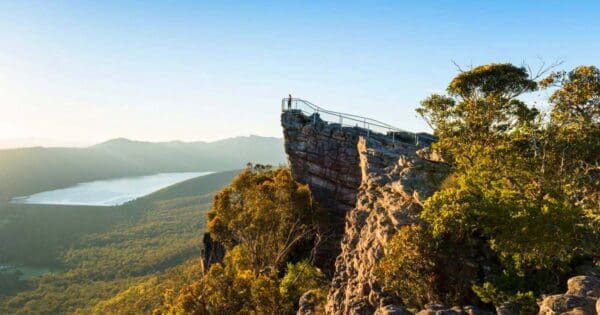
Hikers of all levels are drawn to the Grampians. Challenge yourself by scaling Mount William, the park's highest peak, or choose from the numerous trails around Halls Gap and the Wonderland Range. The Pinnacle lookout offers exceptional views, but be aware that the climb is demanding. Experienced hikers can embark on overnight adventures like the iconic Grampians Peaks Trail, Major Mitchell Plateau hike, or The Fortress and Mt Thackeray Overnight Hike.
For a more relaxed pace, consider fishing, canoeing, or kayaking on Lake Wartook, Lake Bellfield, Moora Moora Reservoir, or the park's many waterways.
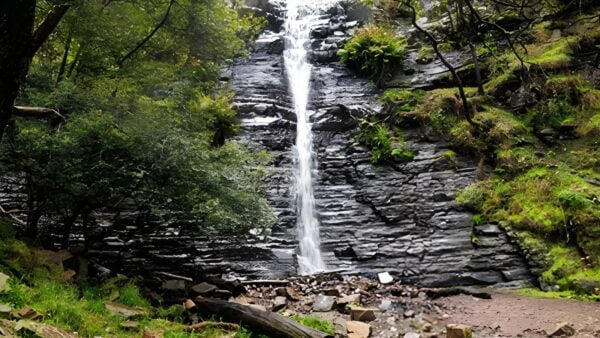
The Grampians' rugged sandstone ranges, spectacular wildflowers, diverse recreational activities, and rich Aboriginal heritage combine to create an unforgettable experience. These north-south ridges boast steep eastern slopes and gentler western inclines, a result of ancient earth movements that sculpted the landscape into a series of impressive peaks and valleys. Lookouts offer panoramic views, while waterfalls add a touch of grandeur.
Spring brings vibrant wildflower displays to the park, with the Grampians Boronia, Blue Pin-cushion Lily, and numerous other native plants painting the heathlands in colour. Keep an eye out for the park's abundant native wildlife, including kangaroos, koalas, emus, wedge-tailed eagles, and more.
Don't miss the opportunity to explore the park's shelters containing ancient Aboriginal rock art paintings, a testament to the long-standing connection between Aboriginal people and this land. Billimina Shelter, Gulgurn Manja Shelter, and Manja Shelter are some notable examples.
Let the park's fresh air invigorate you. Hike, rock climb, fish, or canoe. Choose from a variety of walking tracks, whether you prefer a leisurely stroll or a challenging multi-day trek.
Halls Gap, nestled beside the Wonderland Range, serves as a convenient base for exploring the park. This town is also home to Brambuk – The National Park and Cultural Centre, where you can delve deeper into the park's natural and cultural wonders.
Similar walks nearby
Looking for more walks in or near Grampians National Park? Try these trails with a similar difficulty grade.
Gallery
Got any photos from this hike? Your photos can help others plan. Share shots from along the trail so fellow hikers know what to expect.
Click to add your photos >>
Suggest an edit
Notice something different about this trail? Whether it’s a new feature, a route change, or a closure, share your update so we can keep our info accurate and helpful for fellow hikers.
Click to suggest edits >>
Acknowledgement of Country
Trail Hiking Australia acknowledges the Traditional Owners of the lands on which we hike and pay respects to their Elders, past and present, and we acknowledge the First Nations people of other communities who may be here today.