A groundsheet or tent footprint is easy to overlook when you’re putting a shelter kit together, but it does real work. It extends the life of your tent floor, adds a bit of comfort underfoot, and gives you some protection from what’s happening on the ground beneath you.
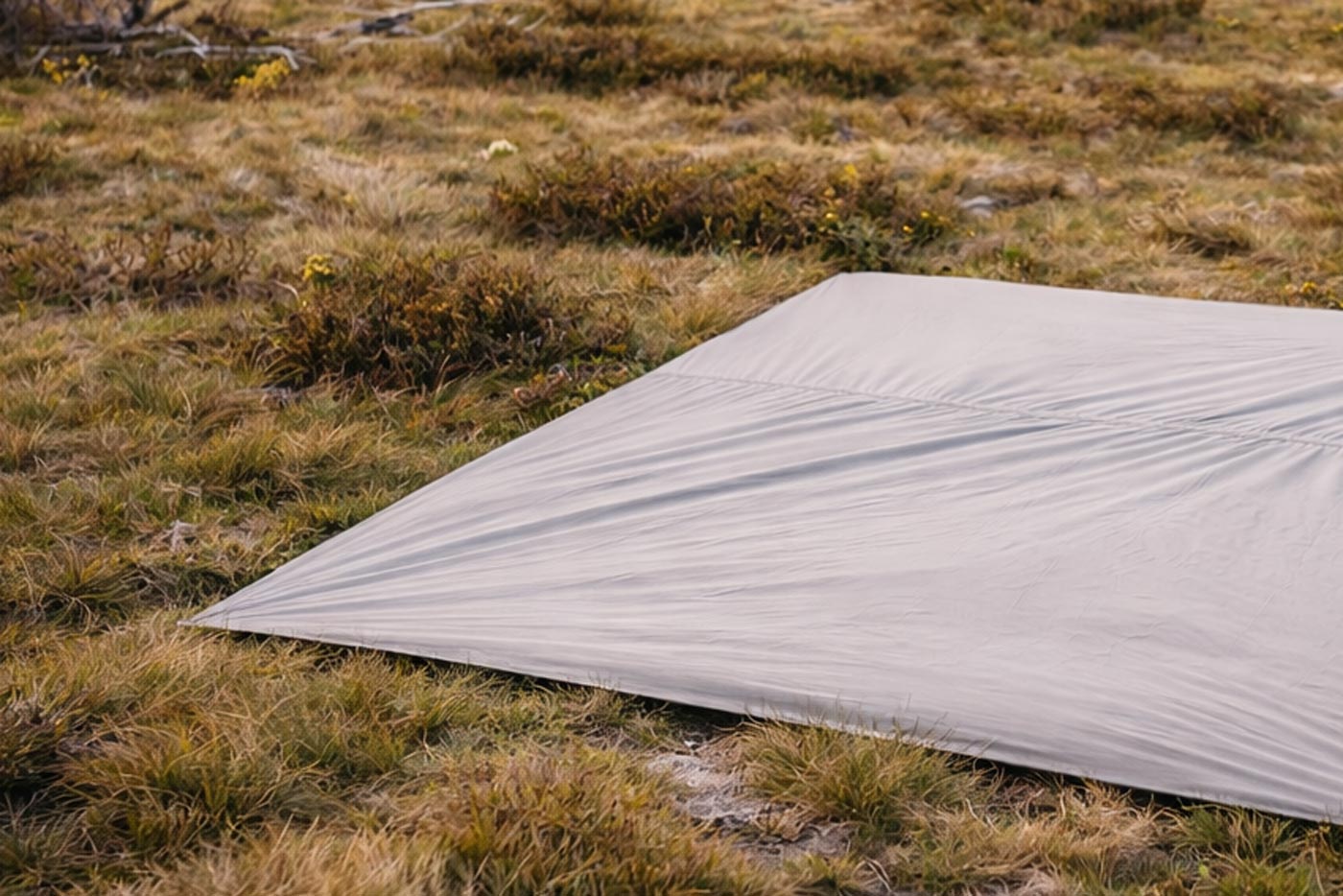
What is a Groundsheet?
A groundsheet is a layer of fabric or tarp material placed under your tent to protect it from abrasion, moisture, and sharp objects on the ground. It sits as a buffer between the tent floor and whatever is underneath it, which is what stops sticks and grit from wearing the floor down over a season of trips, and it adds a small extra layer of insulation as well.
Because a groundsheet isn’t cut to the tent’s exact shape, it gives you some flexibility. You can use it under different tents, trim it if you need to, or fold the edges under in wet weather. That flexibility is also its main weakness: get the fit wrong and you can end up with a sheet edge sitting proud of the tent floor, collecting rain instead of shedding it.
What a groundsheet does for you
Sharp rocks, sticks, or uneven ground can puncture or wear down your tent floor over time, and a groundsheet takes that abrasion instead of the tent taking it. It also helps keep wet ground from seeping through to the floor, which matters because damp ground under a tent leads to discomfort and, eventually, damage to your gear inside. In Australia’s alpine regions or in rainforest, a groundsheet also adds a bit of extra insulation from the cold, which is worth having when the ground itself is the thing pulling heat out of your sleeping system.
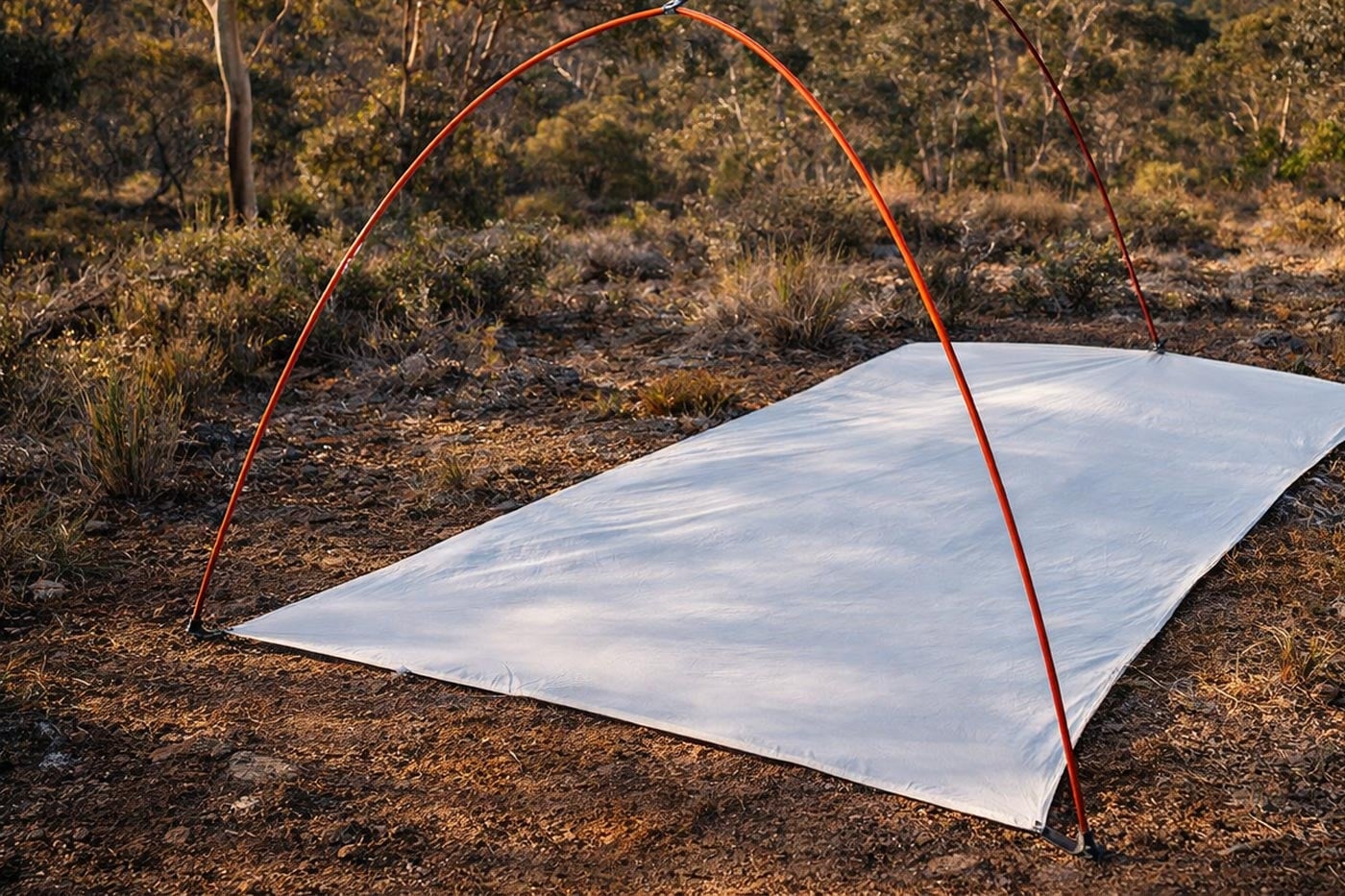
What is a Tent Footprint?
A tent footprint is a piece of material designed specifically to fit the exact dimensions of your tent. Most tents come with a footprint or recommend one as a compatible accessory, and it’s usually made of a durable, water-resistant material that gives you the same benefits as a groundsheet, plus a few advantages that come from being purpose-built.
Because it’s cut to match your tent, a footprint takes the guesswork out of sizing. It’s usually lightweight and packs down small, so you’re not adding meaningful weight for the protection you get. Footprints also tend to use higher-quality materials with reinforced edges, which makes them more durable than a generic groundsheet, and because they’re designed to work with your tent’s poles and stakes, pitching tends to go a bit faster once you’re used to the layout.
Practical Materials for Groundsheets and Tent Footprints
Not all groundsheets are created equal, and material choice matters, especially if you’re trying to keep pack weight and bulk under control. While purpose-built tent footprints are convenient, I’ve used lightweight alternative materials for groundsheets or custom footprints with good results.
Common lightweight groundsheet materials
- Tyvek: A popular choice among hikers due to its excellent durability-to-weight ratio. It’s waterproof, abrasion resistant, and surprisingly tough for its weight. When cut slightly smaller than your tent floor, Tyvek makes an effective long-term groundsheet.
- Polycryo (window insulation film): Extremely lightweight and compact, making it appealing for ultralight hikers. However, it is far less durable than Tyvek and is best suited to short trips or careful campsite selection.
- Lightweight tarp material: Some hikers repurpose thin silnylon or PU-coated tarp material. This can work well if cut to size, but weight varies significantly depending on fabric choice.
Materials to avoid
- Building insulation products: Materials like Sisalation or foil-backed building wraps are not designed for repeated folding, abrasion, or outdoor ground contact. They tend to tear easily, degrade quickly, and offer poor durability for hiking use.
- Heavy plastic sheeting: While cheap and waterproof, it is bulky, noisy, and often heavier than purpose-built alternatives.
Choosing the right material comes down to balancing durability, weight, and how often you camp. For frequent hikers, Tyvek offers one of the best long-term compromises. For occasional or ultralight trips, thinner materials may be acceptable if used carefully.
Groundsheet vs Tent Footprint: Which is Right for You?
Once you know what each option actually does, the decision comes down to a handful of practical factors: what tent you’re pitching, where you’re pitching it, how much you’re willing to carry, and how often you’re getting out.
Tent Type
If you’re using a freestanding tent, a footprint will help protect the tent floor and keep it in good condition, and it also makes setup quicker and the pitch more stable. Non-freestanding tents are more exposed to ground damage because their shape depends on staking and pole tension rather than a self-supporting frame, so a groundsheet underneath gives you that extra layer of protection.
Terrain and Environment
On rocky or uneven terrain, which is common in Australia’s Outback or desert regions, a footprint or groundsheet protects your tent from sharp objects working their way through the floor overnight. For coastal or rainforest hikes, such as in Queensland or Tasmania, moisture protection matters more, and both a footprint and a groundsheet will help keep the tent dry and reduce the chances of moisture seeping through.
Weight and Packability
If you’re trying to minimise pack weight, a groundsheet can be the more minimalist option, especially if you’re using a custom tarp or lightweight plastic material cut to size. If you’re camping for longer in a high-use area, like a base camp or car camping location, a tent footprint gives you more tailored protection and is easier to manage as part of your regular setup.
Tent Size and Usage
If you only use your tent occasionally or for shorter hikes, a basic groundsheet is probably sufficient. If you’re regularly camping for extended periods, a tent footprint is worth the investment because it offers more long-term protection and convenience.
How to Use a Groundsheet or Tent Footprint
Whichever option you go with, the same basics apply. Keep the groundsheet or footprint slightly smaller than the tent footprint area, because if it’s too large, water pools on top of the exposed edge and seeps into your tent rather than running off the ground beside it.
For footprints, lay it down before you pitch the tent and stake it down along with the tent so it stays in place. For groundsheets, you may want to fold the edges under your tent or adjust the fit depending on the weather conditions on the day.
After each use, clean off any dirt, debris, or sand, and make sure it’s completely dry before storing it, especially if you’ve used it in wet conditions. Packing away a damp groundsheet is one of the more reliable ways to end up with a mildew problem the next time you unpack it.
Is a Groundsheet or Tent Footprint Necessary?
The short answer is yes, but it depends on your hiking style and the conditions you plan to hike in. If you’re trekking through rugged terrain or moist environments in Australia, using a footprint or groundsheet will help preserve your tent and improve comfort. For ultralight hikers, carrying just a basic groundsheet made from light tarp material is often the most efficient choice. For longer trips in harsher climates, especially somewhere like the Snowy Mountains or Blue Mountains, a tent footprint may be the better option.




What’s your go-to choice for ground protection on your hikes: a groundsheet or a tent footprint? Share your experiences!
I have a footprint, but I prefer a sheet of tyvek. I find it tougher against tree roots/rocks, etc.
Ali Ayers me too. One of my tent footprints was a sheet of tyvek. I thought it was so good that I bought a roll and cut footprints for my other tents.
Ali Ayers Oh this is awesome advice!
Hi Darren
Thanks again for your thoughtful advice.
I have often wondered about the trade-off between having a heavier, durable built-in floor with good waterproofness head rating, rather than having a thin, more permeable floor which requires a footprint or groundsheet. I realise that much of this is about selling tents with low headline weights, but if the tent needs an additional layer beneath, this should really be included in the advertised weight.
For the buyer, the floor will be just one consideration and often not the primary one. With many tents, as you say, a footprint or groundsheet is probably essential.
I am guessing that tent floor durability has generally decreased as the trend has been towards lighter gear. Until 20-30 years ago, I think few of us used a second layer under the tent. I never considered it for my 1990s Macpac Olympus, which (I think) had a 20 000mm head.
I remember reading of one industrious fellow who replaced the floor on his Durston tent with what he felt was a more suitable fabric.
Cheers
Jonathan
Jonathan Miller that’s a really good observation, and you’re exactly right to frame it as a trade-off rather than a simple “better vs worse” decision.
Modern tents have largely shifted toward lighter floor fabrics to reduce overall pack weight, but that does push some of the durability and protection responsibility onto the user. In many cases, the footprint or groundsheet is effectively restoring what used to be built into the tent floor itself.
You’re also right about advertised weights. From a practical point of view, if a tent realistically needs a footprint in the conditions you’re using it in, then that should be considered part of the “true carry weight”, even if it’s not marketed that way.
The older tents you mentioned, like the Macpac Olympus, were built very differently. Heavier fabrics, higher hydrostatic head ratings, and more tolerance for rough ground. The trade-off was weight and bulk, but they were far more forgiving of poor site selection.
What’s changed isn’t just materials, but expectations. Lighter gear assumes a higher level of decision-making in the field: better site selection, more awareness of ground conditions, and an understanding of how small choices (like where you pitch) affect long-term wear.
That example of someone replacing the floor is interesting, and it speaks to the same point. People are trying to rebalance durability and weight based on how they actually use their gear, not just how it’s designed.
There’s no single right answer here. It really comes down to how much margin you want built into your system versus how much you’re willing to manage through your decisions on the trail.
Cheers,
Darren
I have tyvek.
if you wash it a few times in the washing machine the noise goes away and it gets nice and soft but doesn’t lose it’s strength