Gear Review: Teva Women’s Hurricane XLT3 Sandal
Why This One Went to Julie
Teva sent through a pair of the Women’s Hurricane XLT3 for field testing, and since it’s a women’s specific sandal, there was only one honest way to review it properly: hand it over to my wife, Julie, and let her put it through its actual paces. The timing worked out well. We were about to spend a month travelling through Europe, starting with plenty of time exploring Venice on foot, a few easier day hikes, and then a 12-day trek across the Alta Via 2 through the Dolomites. That last stretch is serious alpine trekking, the kind of terrain where sandals have no business being on anyone’s feet, so proper hiking boots handled that trek. The Hurricane XLT3 was for everything around it, the city walking, the warm days, and the day hikes where the terrain was gentle enough that sandals actually made sense.
How Julie Tested Them
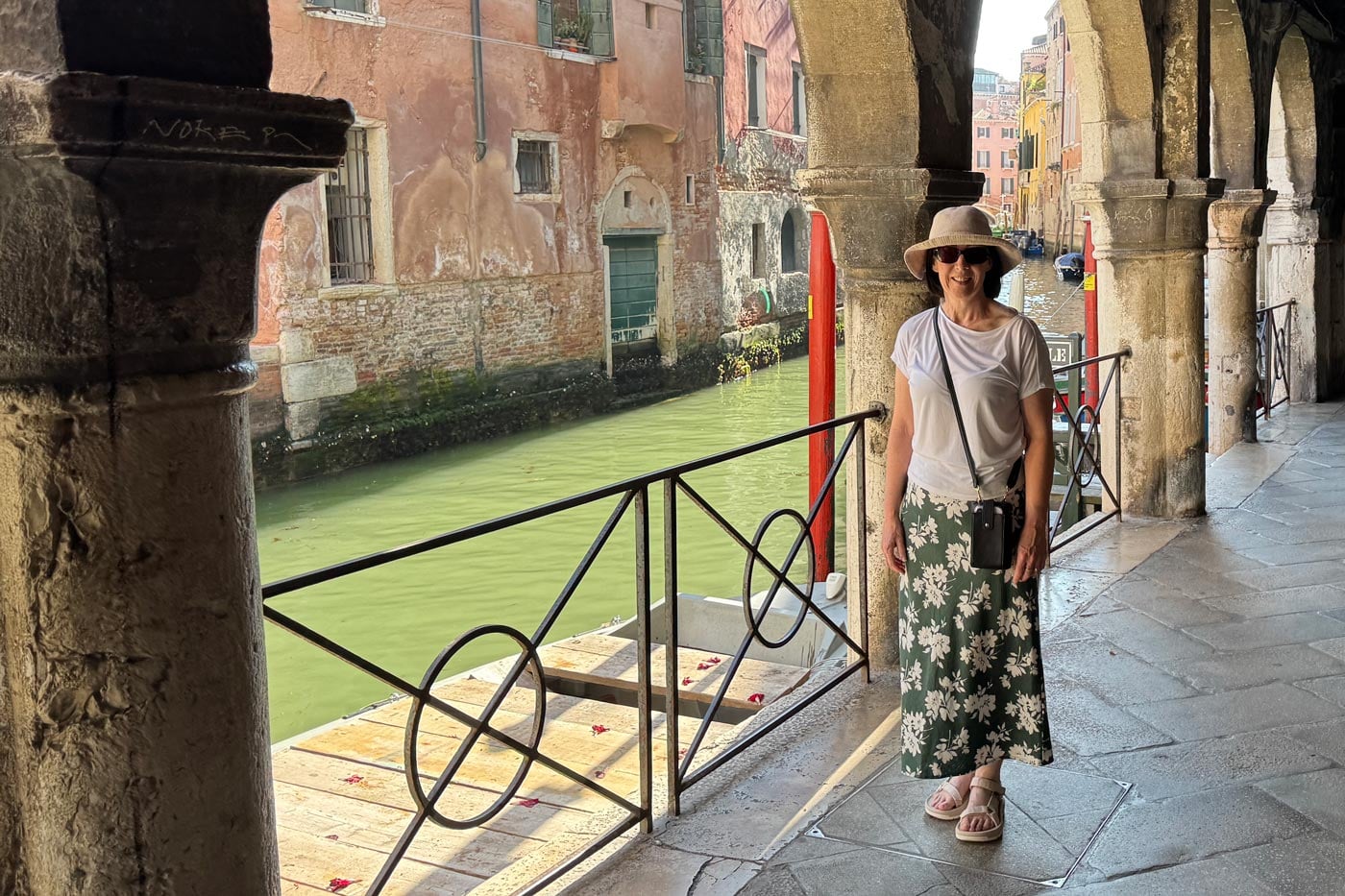
The first real test came in Venice, and it wasn’t a gentle introduction. Julie’s usual approach with new footwear is to break it in over short stints, just in case something rubs in the wrong place, but Venice doesn’t really allow for that. Once you’re out walking a city on foot, you’re in it for the day. She had the sandals on for close to 12 hours of walking and standing, across pavement, bridges, and cobblestones, before she’d had any real chance to find out how they’d behave.
Beyond the city walking, she wore them on a couple of the easier day hikes we did before the Alta Via 2, including a walk uphill to a waterfall where the track let her wade into the water itself, sandals on, to get closer without worrying about sharp rocks underfoot. Travel is genuinely where these got the most use. They arrived just before we left, so as well as taking them on a few hikes close to home, a month of warm-weather exploring became the bulk of the testing, with the day hikes layered on top.
Fit and All-Day Comfort
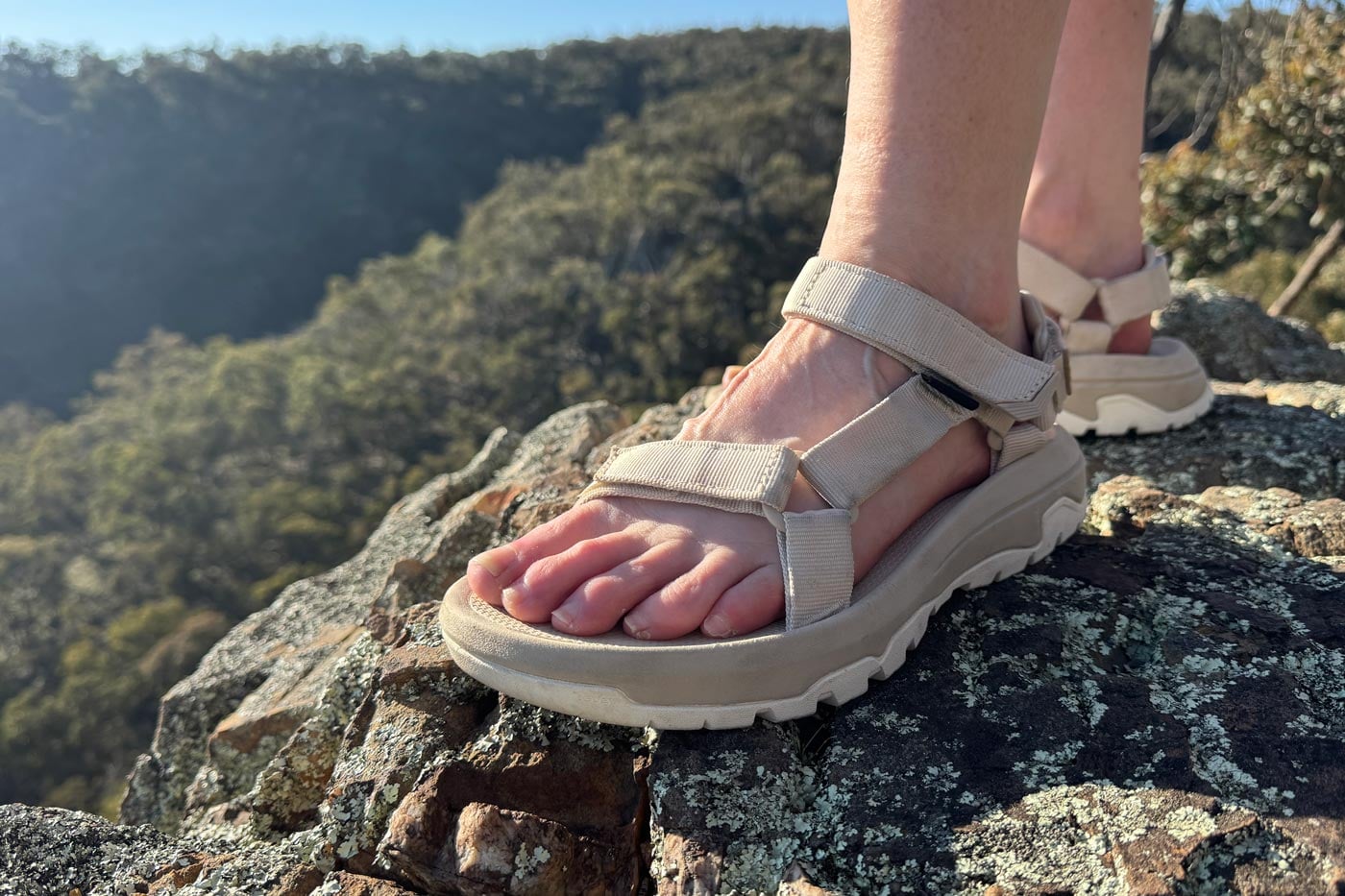
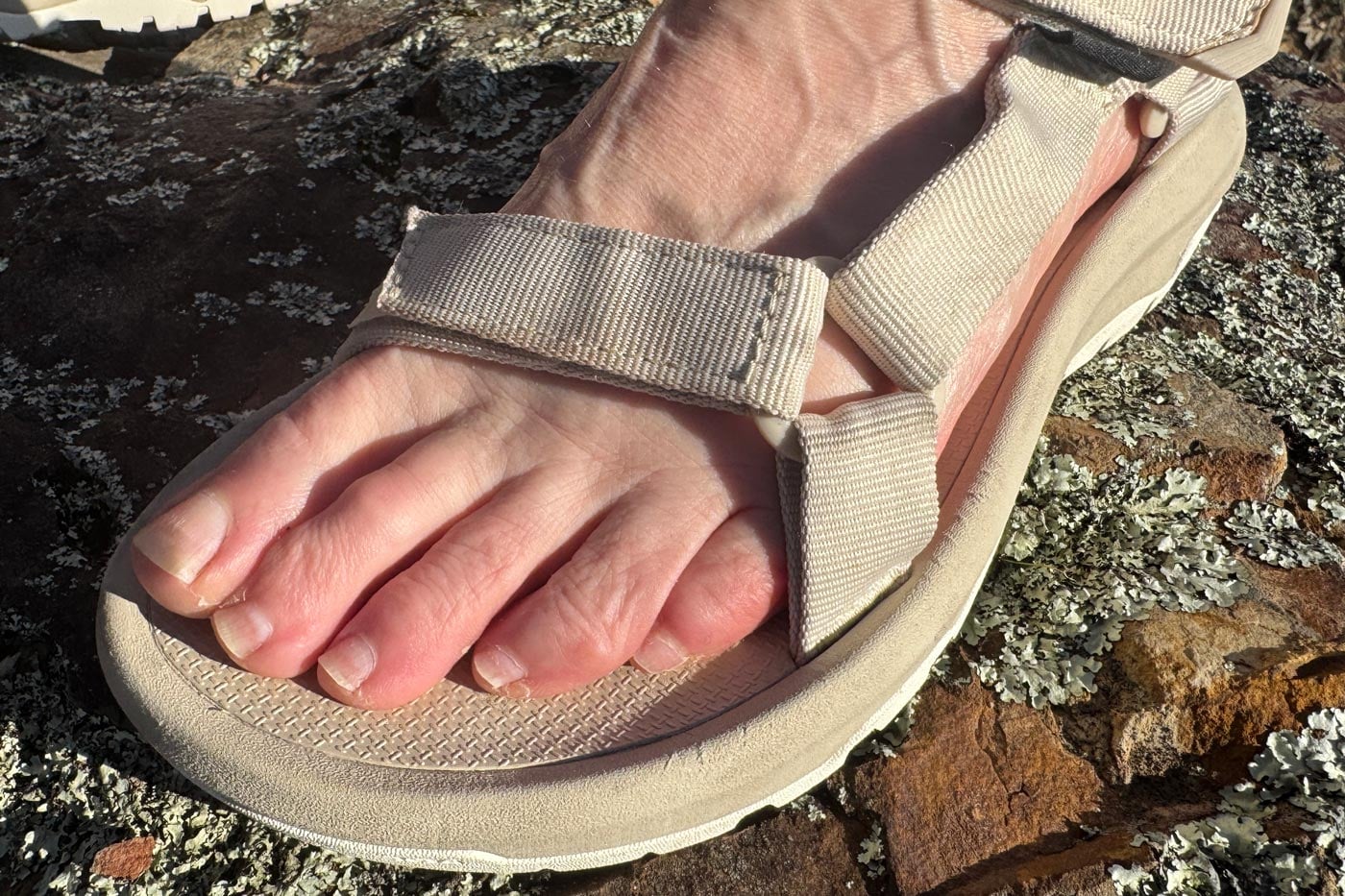
This is where the Hurricane XLT3 earned its keep. The forefoot platform is notably wide, 115mm in Julie’s US 7.5, and the footbed itself runs generous through the toe box, so there’s genuine room for the foot to sit naturally rather than feeling boxed in. It’s a wider stance than most sandals offer, and it shows up as stability underfoot rather than a loose, sloppy fit.
The three-point Universal Strapping System, across the forefoot, ankle, and heel, is the reason the long Venice day worked at all. Julie set the straps to feel right first thing in the morning, and by the six-hour mark she was able to make small adjustments on the fly rather than living with whatever she’d dialled in at breakfast. Combined with a subtly raised heel ledge that keeps the foot from shifting around in dry conditions, the fit stayed locked in without ever feeling like it was cutting off circulation. Nearly 12 hours of walking and standing, and she reported no discomfort at any point.
The underfoot padding is thick and soft, sitting on top of what’s clearly a sturdy sole rather than a mushy one, so the comfort doesn’t come at the expense of support. It’s become her go-to shoe for warmer weather hiking and travel now, the kind of thing she reaches for whenever boots are more than the day actually calls for.
Grip and Traction
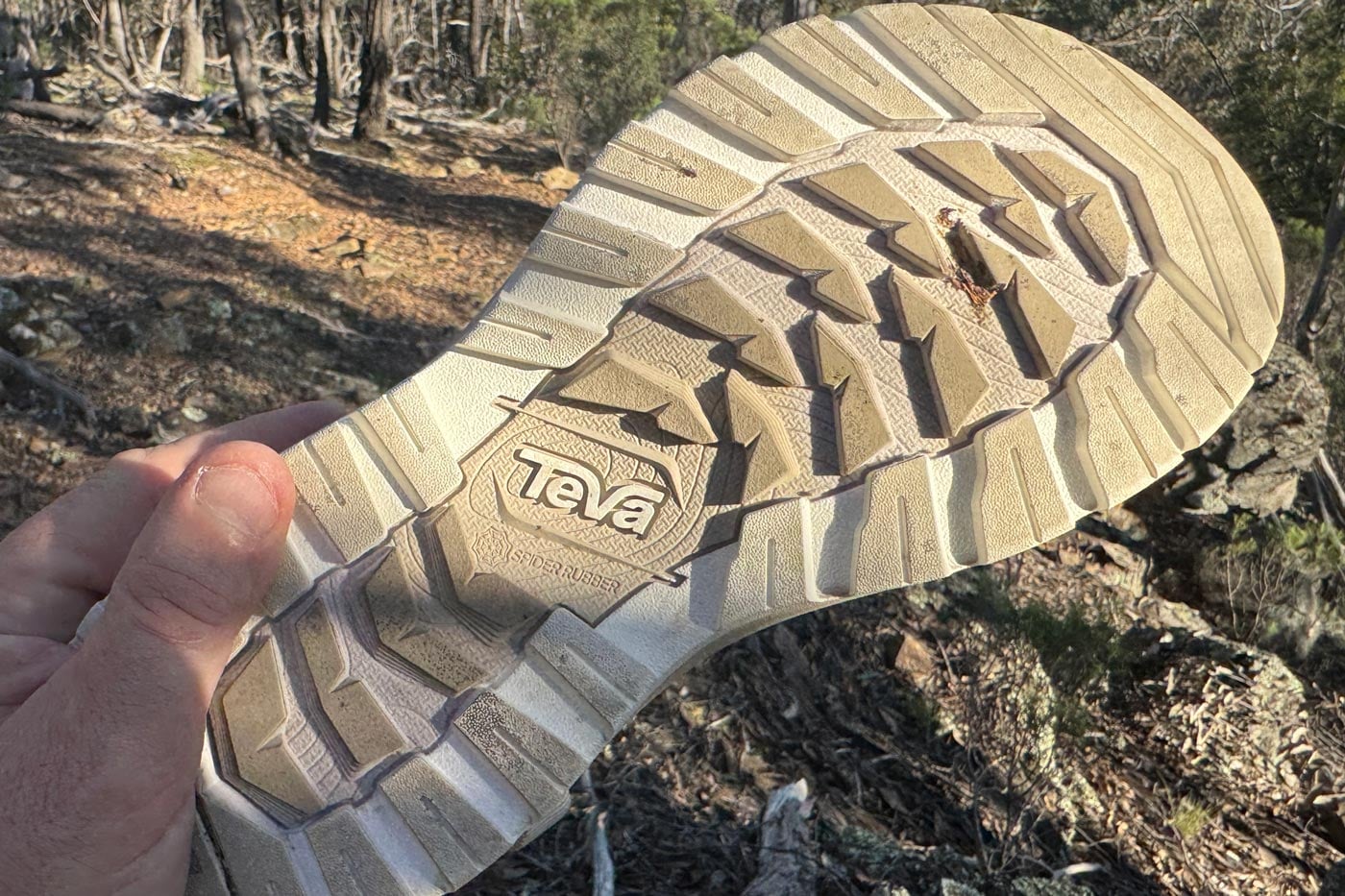
On dry rock, loose dirt, and gravel, the redesigned Spider Rubber Endure outsole does real work. The 3.7mm lugs are sharper, more angled, and serrated compared to the previous generation, and Julie noticed the bite immediately on the uphill walk to the waterfall, loose surfaces and dry, slick-looking inclines included.
Wet conditions are where things get more interesting. Teva rates the outsole at a 0.69 friction coefficient on wet surfaces, and on the handful of river crossings we made, the grip held up on wet rock and algae-covered stones without any alarming slips. The FuseLock straps also stayed put in thick mud rather than peeling loose, which matters more than it sounds, since a strap that lets go mid-crossing is a much bigger problem than a shoe that’s simply slippery.
That said, there’s an honest limit here. Once the textured footbed itself gets properly wet, it turns a little slick, and on steep descents down to the water, Julie did notice her foot sliding around inside the straps rather than staying planted. The strapping stops the sandal moving on your foot, but it can’t stop your foot moving inside the sandal once the footbed loses its grip. Worth knowing before you commit to a steep, wet descent in these rather than boots.
Strap and Buckle Durability
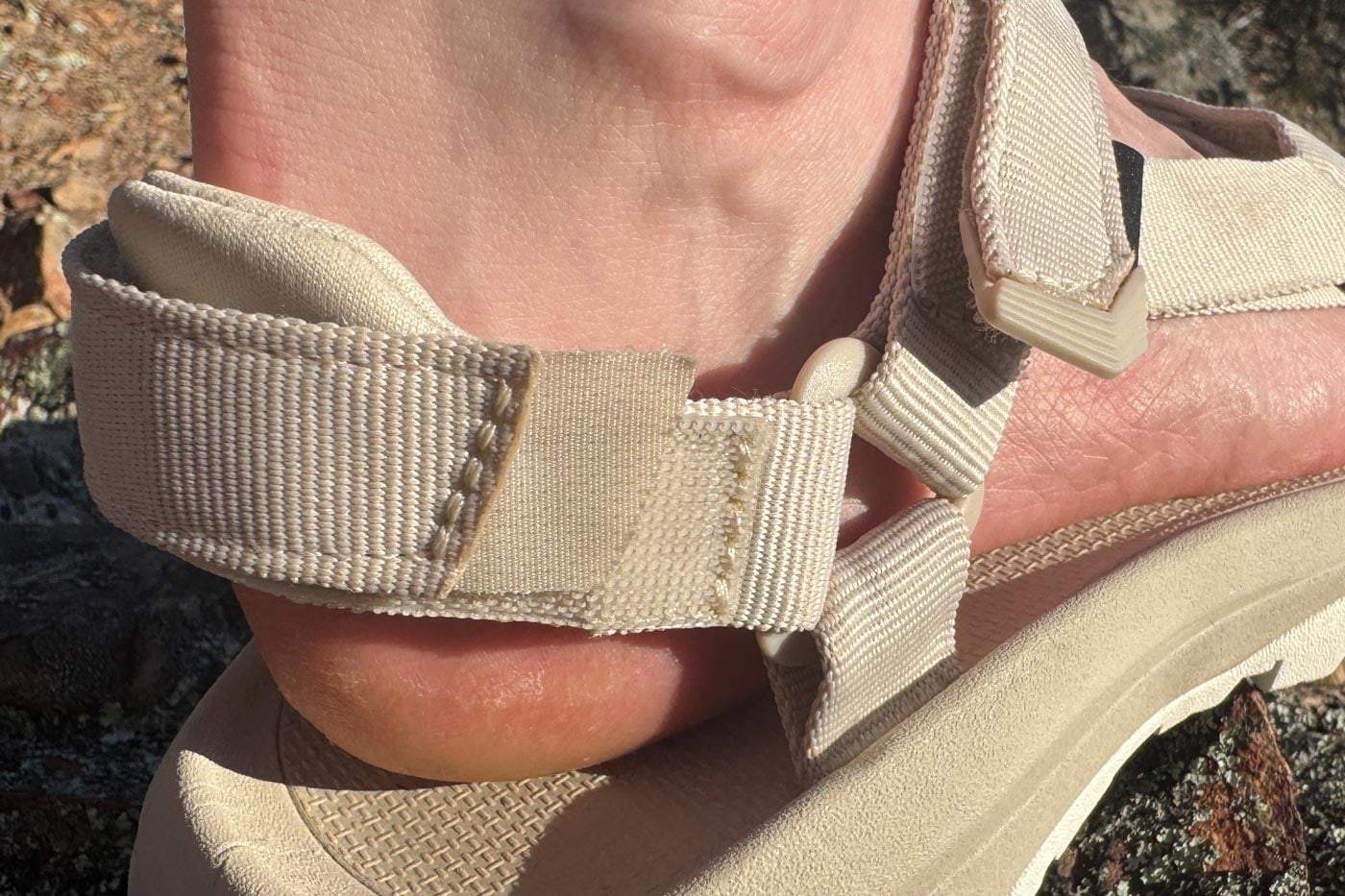
The standout upgrade on the XLT3 is the FuseLock hook-and-loop system, rated at twice the holding strength of a traditional Velcro closure. In practice, that meant Julie could set the straps once and largely forget them, rather than constantly retightening as the day wore on. They stayed locked through thick river mud and over wet boulders without any noticeable creep.
The strap edges have also been redesigned with a rolled profile, which made a real difference on the bush sections, less catching on grass, pine needles, and small twigs than we’ve dealt with on other strappy sandals. What we can’t speak to yet is how the buckle hardware holds up against sustained sand and grit exposure over the long term. Teva’s own materials describe the construction as highly durable, but that’s not something a month of travel and a couple of day hikes can confirm one way or the other. We’ll update this if anything changes with more use.
Underfoot Protection
The XLT3 handles sharp rocks, roots, and general trail debris well, largely down to a genuinely thick platform. The forefoot stack height sits around 23mm, which gives a real buffer between the sole of your foot and whatever’s underneath it. A bottom-loaded nylon shank through the midfoot adds torsional stability, and the sole itself is stiff enough that it takes a bit of force to bend, which helps smooth out the heel-to-toe transition and stops your foot doing extra work over a long day. Between the 5mm cushioned topsole and the thicker EVA midsole, which has 5mm more foam than the previous XLT2, Julie’s feet didn’t feel beaten up after the gravelly and rocky sections of the walk to the waterfall.
Wet-to-Dry Performance
The webbing is made from 100% REPREVE recycled polyester, and it’s genuinely quick-drying once you’re back on dry ground. On the walk back down from the waterfall, Julie’s feet were dry again within minutes. Before that happens, though, there’s a distinctive “squish-squeak” sound with every step while water is still trapped between the foot and the dense foam topsole, which is more amusing than annoying, but worth knowing about if you’re hoping for a quiet river crossing.
Because the straps themselves are completely unlined, wet webbing pressed against bare skin can cause friction that dry webbing wouldn’t, particularly if the sandals haven’t been properly broken in yet.
Break-In, Hot Spots, and Socks
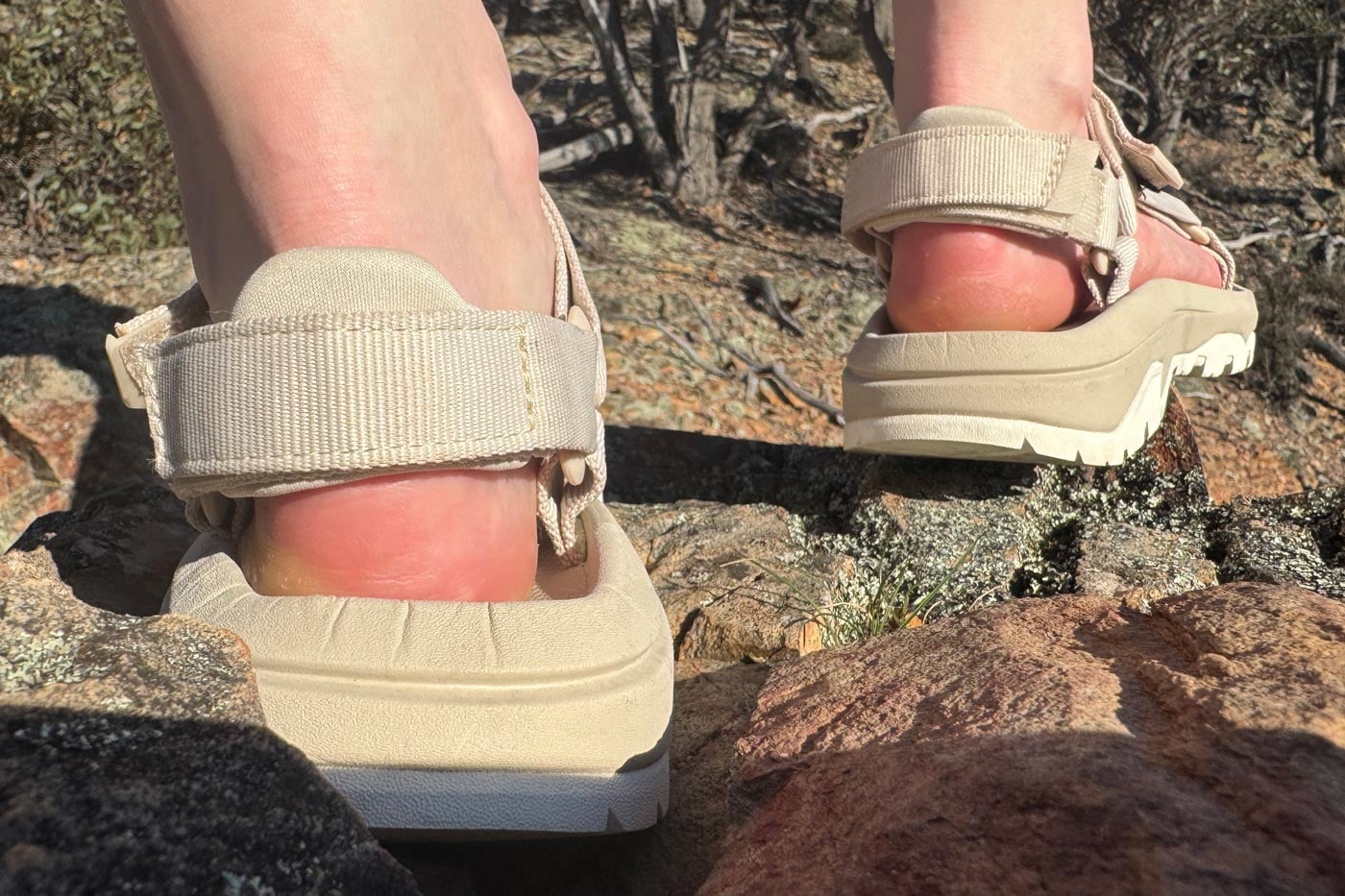
That unlined strap is the one part of the design that needs a bit of respect early on. Straight out of the box, the stiff edges of the REPREVE webbing are genuinely likely to rub if you take them straight into a long hike without breaking them in first. The hard plastic triangles that connect the straps have been repositioned from the previous model to reduce rubbing, but they can still cause hot spots at the ankle if the ankle strap is over-tightened while worn sockless.
Teva’s own guidance, and Julie’s approach, is to wear socks during the break-in period, which sounds like an odd combination until you remember it’s a practical fix rather than a fashion choice. She did this around home rather than out in public, understandably, and by the time the sandals went into proper use in Venice and on the trail, she had no hot spots or rubbing issues at all. The break-in period is real, but it’s short and easy to manage if you do it before you actually need the sandals to perform.
Considerations
No sandal is the right tool for everything, and the Hurricane XLT3 has clear boundaries worth understanding before you buy.
Technical and gnarly trails: the open-toe design leaves the toes exposed and vulnerable to stubbing or scraping against rocks and roots. On this kind of terrain, a proper closed shoe or boot is the right call, not a sandal, however good the sandal is.
Off-track scrub or loose scree: as a strappy sandal, the XLT3 relies almost entirely on the sole platform for stability, with very little lateral or ankle support built into the upper. That’s fine on formed tracks, less fine once the ground gets loose and uneven.
Wet, steep descents: as noted above, the footbed loses grip once properly wet, and on a steep downhill stretch near water, your foot can slide around inside the straps. Manageable on flatter wet terrain, worth avoiding on anything steep.
At a Glance
| Pros | Cons |
| Wide, stable forefoot platform with a generous toe box | Footbed gets slick once properly wet |
| Three-point strapping allows genuine on-the-move adjustment | Foot can slide inside the straps on steep, wet descents |
| Comfortable for extended, all-day wear | Unlined straps need a proper break-in period |
| Confident grip on dry rock, gravel, and loose dirt | Ankle hot spots possible if over-tightened sockless before break-in |
| Reliable grip on wet rock and algae-covered stones | Minimal lateral or ankle support for off-track or scree terrain |
| FuseLock straps resist peeling loose in mud | Open-toe design unsuitable for technical, root and rock-heavy trails |
| Strong underfoot protection from a thick platform and nylon shank | Long-term durability against sand and grit not yet confirmed |
| Quick-drying REPREVE recycled webbing |
Handed to someone who actually needed a women’s sandal to test, the Hurricane XLT3 turned out to be exactly the kind of gear that earns a permanent spot in the travel bag rather than the hiking pack specifically. It carried Julie through a full day of Venice on foot without complaint, coped with a rough walk to a waterfall and a wade into the water itself, and dried out fast enough afterwards that it was never an issue. For day hikes, travel, and warm-weather walking where boots are overkill, it’s a genuinely well-built option.
It was never going up the Alta Via 2, and it shouldn’t be. Once the terrain turns technical, loose, or steep and wet, the limitations of an open sandal are exactly what you’d expect them to be, no more and no less. Know where that line sits, and the Hurricane XLT3 does everything on the right side of it very well.
Where to Buy
The Teva Women’s Hurricane XLT3 is available in Australia directly through the Teva Australia website.
RRP: $170.00 AUD
Tested in the Oyster colourway.
Purchase via Trail Hiking Australia’s affiliate link
Technical Specifications
Specifications sourced from the Teva Australia product listing. Field performance may vary by terrain and use case.
| Specification | Detail |
| Model | Women’s Hurricane XLT3 |
| Brand | Teva |
| RRP (Australia) | $170.00 AUD |
| Colour Tested | Oyster |
| Weight | 268g (half pair, size US7) |
| Materials | Textile / Rubber |
| Strapping System | Universal Strapping System, 3 points of adjustability (forefoot, ankle, heel) |
| Closure | FuseLock hook-and-loop, twice the holding strength of standard Velcro |
| Outsole | Spider Rubber® Endure |
| Lug Depth | 3.7mm |
| Wet Traction | 0.69 friction coefficient |
| Forefoot Platform Width | 115mm (size US7.5) |
| Forefoot Stack Height | Approx. 23mm |
| Topsole Cushioning | 5mm cushioned topsole (5mm more EVA than previous XLT2 model) |
| Midfoot Support | Bottom-loaded nylon shank |
| Webbing Material | 100% REPREVE® recycled polyester, quick-dry |
| Best Use | Hiking, all-day wear |
| Sustainability | 100% REPREVE® recycled polyester straps, recycled EVA in midsole, recycled rubber in outsole |