Field Test Review
Finding the right hiking boot in Australia can be a real balancing act. Lightweight trail runners feel great on groomed tracks but can leave you exposed and unstable when the terrain gets rough or your pack gets heavy. Heavy-duty leather boots give you plenty of support, but they can feel stiff, heavy and often need weeks of painful break-in time.
For years I’ve been searching for a boot that sits right in the middle. I previously owned a pair of SCARPA Cyclone Gore-Tex boots that I absolutely loved, so when it came time to choose a new pair, I was keen to stay with SCARPA and find something with a similar balance of comfort and support.
That’s what drew me to the SCARPA Ribelle TRK GTX. It is positioned as a “bridge” boot that blends the toughness and precision of SCARPA’s technical mountaineering line with the comfort and walkability of a modern trekking boot. On paper it promises a mix of support, durability, instant comfort and a natural walking feel. That’s a big claim, so I was keen to see how it performed on real, rugged Australian trails.

The Field Test
I was provided with a pair of Ribelle TRK GTX boots to field test over several hikes in Victoria. I deliberately chose a range of tracks that reflect the terrain many Australian hikers encounter: rocky climbs, loose descents, creek crossings, technical scrambles and long stretches of uneven surfaces. It was the ideal environment to assess comfort, fit, stability, grip and waterproofing.

Comfort, Fit and Lacing
“Instant comfort” is the claim, and my first impression mostly matched it. Straight out of the box, the boots felt secure, supportive and surprisingly comfortable for a sturdy leather model. Being leather, they did feel a little stiff on the very first hike, but by the second and third outing they had already started to mould to the shape of my foot and became extremely comfortable.
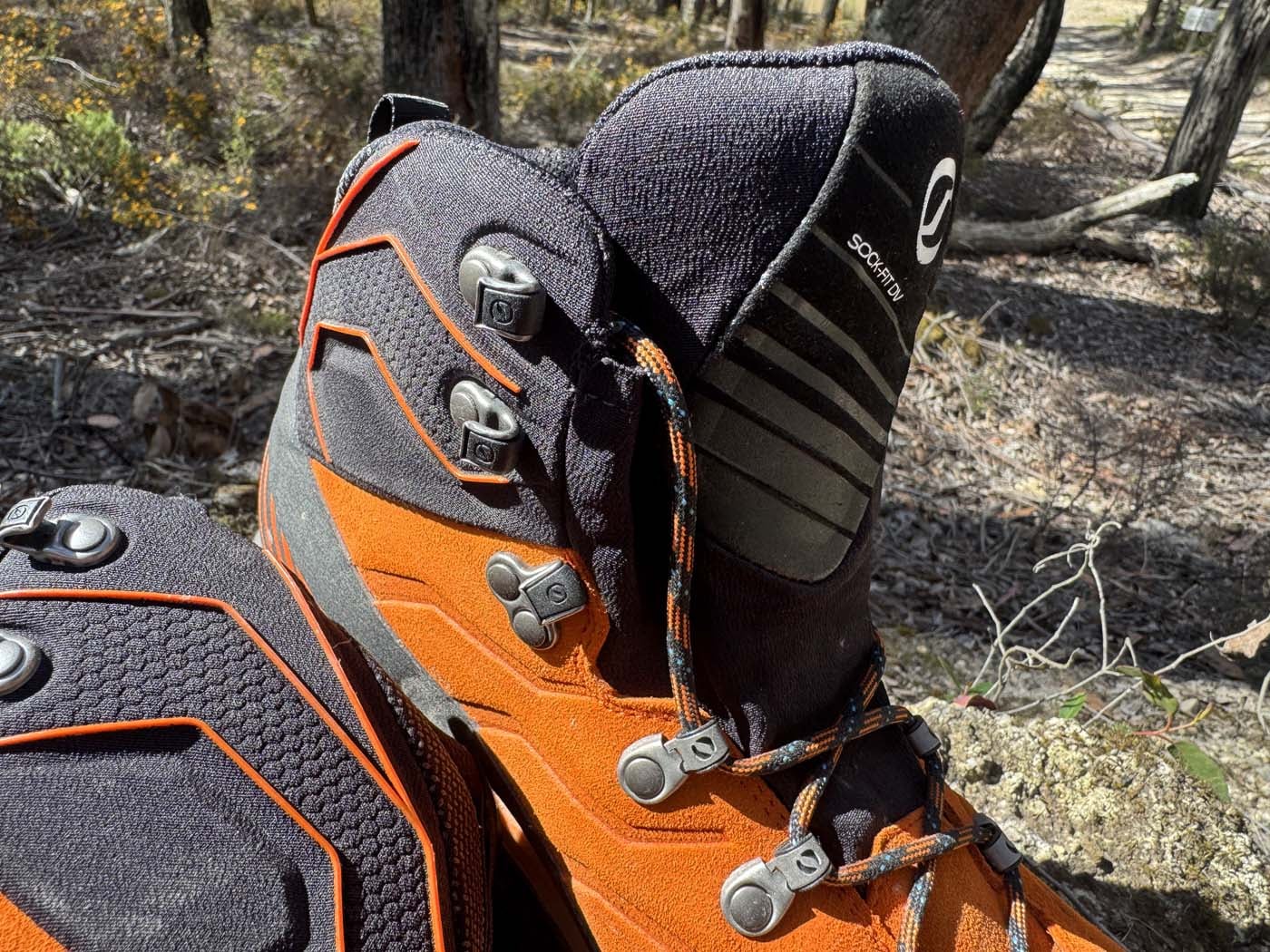
The Sock-Fit DV System is a major factor here. Instead of a traditional tongue, the tongue and flex zone are built from a single piece of stretch fabric, which eliminates common issues like tongue slip and pressure points over the instep. The boot wrapped around my foot smoothly and adapted quickly. The fit is described as Medium, and I found it offered good room and worked well with my wider foot shape and higher instep.
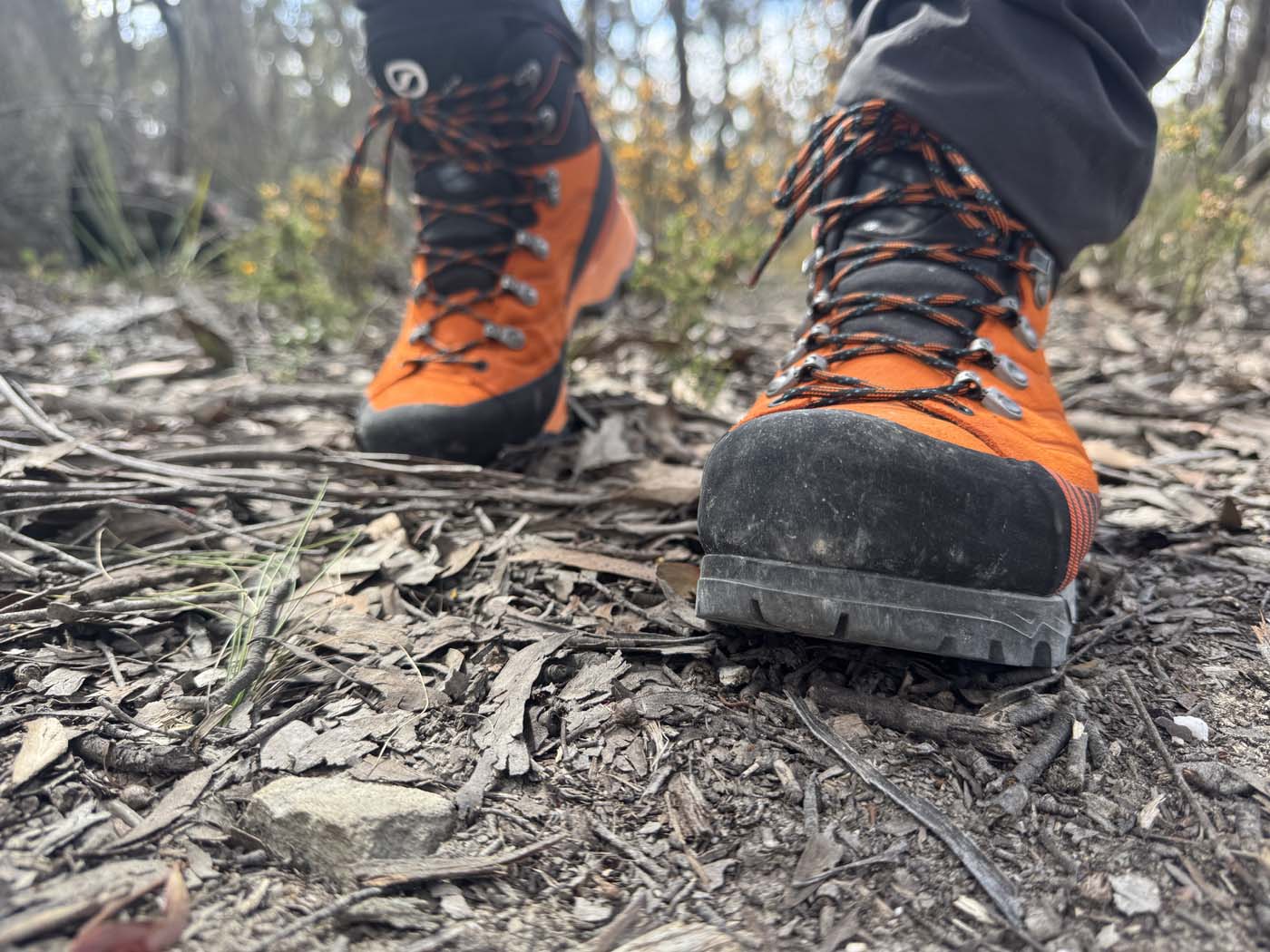
That fit is only half the story, because it’s the extended lacing system that lets you control it once you’re actually on the trail. It looks more like something you’d see on a technical climbing shoe, with the laces running right down to the toe and giving you a huge amount of control. With seven points of adjustment and a solid anchor hook at the ankle, I could fine-tune the fit depending on the terrain: relaxed on flat sections, tightened right down at the toe on steep descents, which stopped any forward slip and kept my toes off the front of the boot. It was extremely effective at keeping my heel locked in place too.
Stability and Grip
On rocky, uneven ground the stability was outstanding. It scores five out of five in technical stability tests, and my own experience on the trail backs that up completely. The stiff insole (nylon and carbon fibre), dual-density PU midsole and TPU stabiliser keep the foot level and protected. What stood out most was the ankle support: SCARPA describes it as “dynamic”, and that’s the right word for it. It gives you all the protection you need from ankle rolls, but still allows natural movement, so it never felt like my ankle was locked in a cast. I felt agile and supported at the same time.
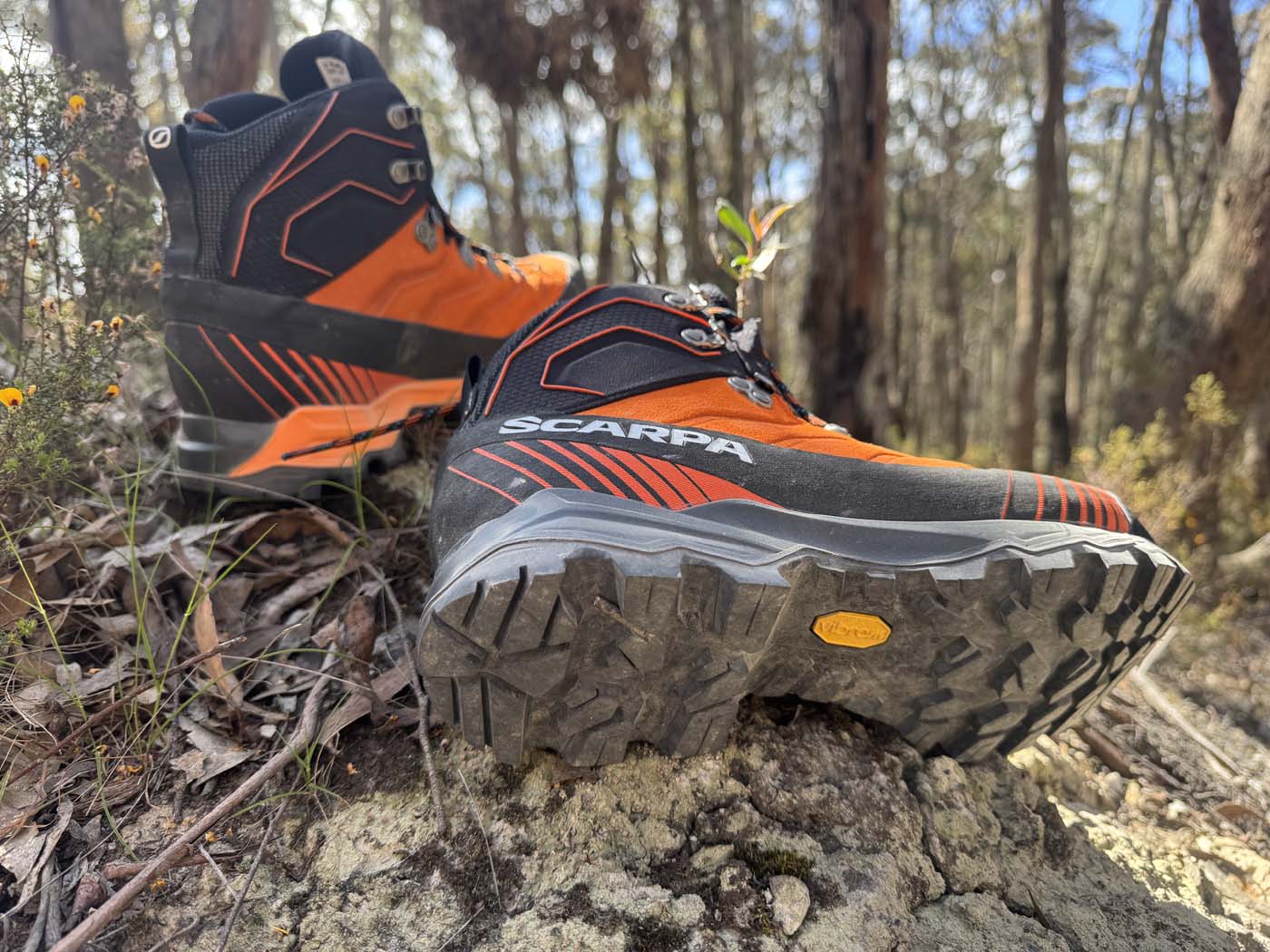
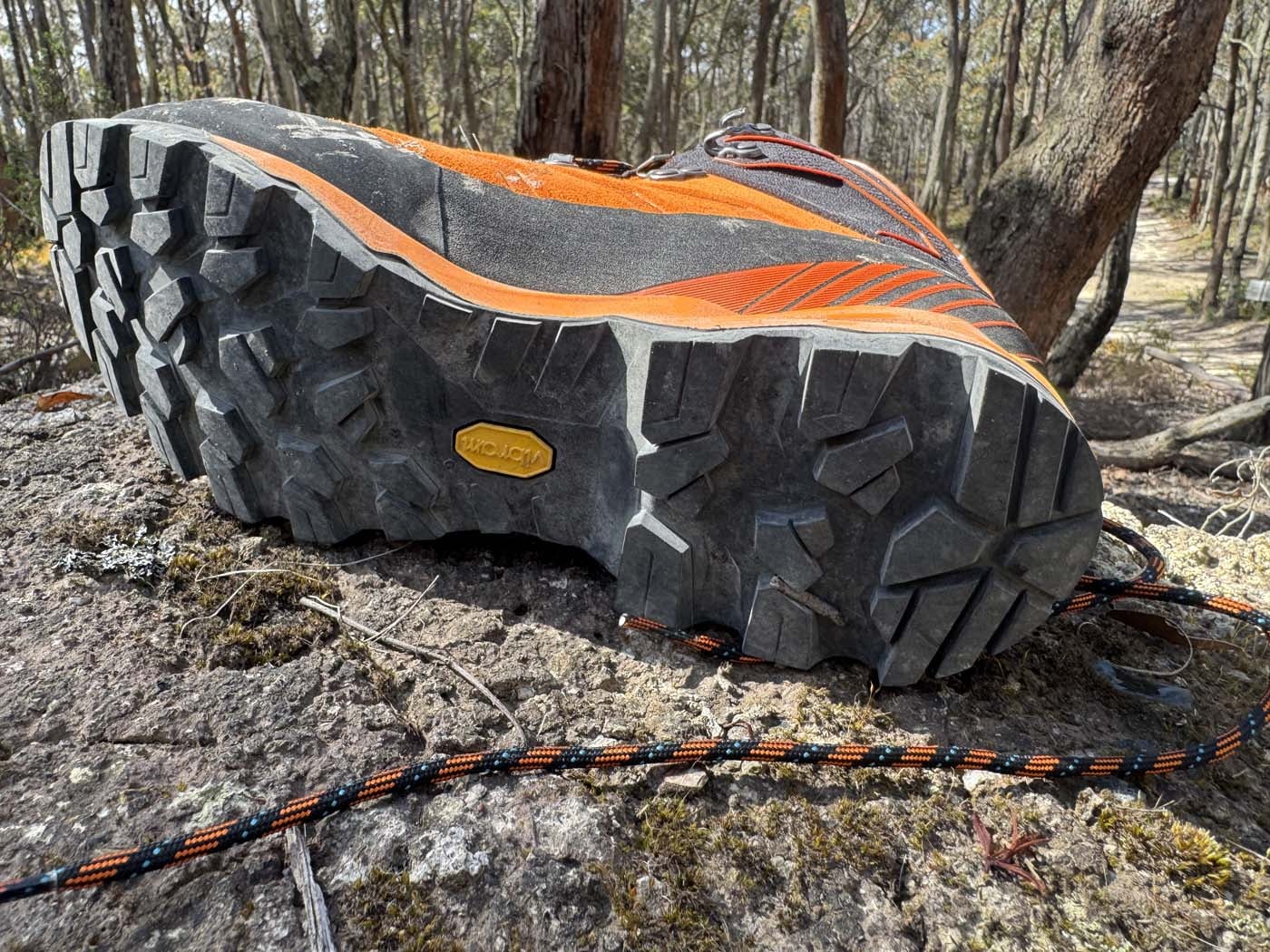
That same stable platform is what makes the outsole work as well as it does. The custom Vibram Roll Trk outsole, with its Tront rubber compound, handled loose gravel, boulders, wet rock slabs and dry rock with confidence, and felt sticky and reliable on everything I walked on. The pronounced rocker shape creates a smooth rolling motion with each step, so instead of your foot slapping the ground and peeling off, the boot rolls you forward. Over long distances that saves a surprising amount of energy, and the boot walks far lighter than it looks.
Waterproofing and Durability
The boot uses a GORE-TEX ePTFE lining that is PFC-free. Standing in a creek for several minutes left my feet completely dry, exactly as expected. The bigger question for a waterproof leather boot is usually breathability, and here I was impressed. For a boot with thick Perwanger suede leather, the breathability was very good, and my feet stayed noticeably drier than expected on warm climbs. The boot also uses 37.5 by Cocona technology for moisture and temperature regulation, and based on my experience it works well.
The same Perwanger Nepal suede that keeps the boot breathable is also what gives it its durability, and the construction feels premium throughout. A protective TPU rand wraps the lower section to shield the leather from abrasion. The boots are also fully resolable, so once you eventually wear out the Vibram sole, you can have it replaced at an official SCARPA resole centre. For a boot at this price, that’s a real point in its favour, because it means you’re not left with a disposable boot once the sole wears down.
There are a few things worth knowing before you commit to this boot, though. It isn’t designed for fine, technical foot placements, and on small, technical scrambles I found it bulky for precise edging. For fast, rough trekking that’s not an issue and is a fair trade-off for the excellent cushioning and support, but it’s worth knowing if technical scrambling is a regular part of your hiking. Despite the alpine look and the Ribelle name, it also isn’t crampon compatible: the softer, walking-focused sole isn’t built for technical snow or ice, so treat this as a three-season trekking boot rather than a mountaineering one. It has limited insulation too, and isn’t designed for deep winter or prolonged snow use, which for Australian hiking is generally a positive, since it’s part of what keeps the breathability so good.

The SCARPA Ribelle TRK GTX delivers a genuine balance of comfort, long-distance walkability, stability and protection that’s hard to find in one boot. The Sock-Fit system removes pressure points, the rocker sole saves energy over long distances, and the dynamic ankle support gives protection without restricting movement. Add that it’s resolable and built from premium materials, and the price is easier to justify over the life of the boot. If you’re a serious hiker or backpacker tackling rough Australian trails with a loaded pack, it’s a boot worth trying on.

Pros and Cons
Pros
- Excellent comfort straight out of the box
- Outstanding stability and dynamic ankle support
- Sock-Fit system removes pressure points and tongue slip
- Smooth, energy-saving rolling gait
- Excellent traction from Vibram Tront sole
- Highly customisable fit from extended lacing
- Durable Perwanger suede upper
- Fully resolable for long-term value
Cons
- Bulky for precise, technical climbing sections
- Not crampon compatible
- Limited insulation for deep winter use
Where to Buy
The SCARPA Ribelle TRK GTX has a recommended retail price of $689.95 AUD and is available through specialist outdoor retailers in Australia, including Ultralight Gear. As a premium model, availability may vary, so checking stock before visiting a store is worthwhile.
Technical Specifications
- Upper: Water-repellent Perwanger Nepal suede with TPU rand
- Lining: GORE-TEX ePTFE (PFC-free)
- Sole: Vibram Roll Trk with Tront compound and dual-density PU midsole
- Insole: 6–4 mm nylon plus carbon fibre with die-cut EVA
- Fit: Medium, suitable for wider feet and high insteps
- Weight: 680 g per boot (size 42)
- Resolvable: Yes
- Crampon Compatible: No




Love these boots. Plus they are orange and I seem to have a thing for that colour at the moment.
Darren Edwards
For $700 they would want to drive me to the trail while I sleep in the back.
Great review. How do they compare to the Kailash GTX?
Thanks for the kind words. I haven’t field tested the Kailash GTX, so I can’t offer a direct on-trail comparison.
At a high level, the Ribelle TRK GTX is a more modern trekking boot with a rocker sole and Sock-Fit design that prioritises long-distance comfort and walkability. The Kailash GTX is a more traditional trekking boot with a flatter sole and a firmer, classic feel underfoot.
If you prefer a lighter, more fluid walking feel, the Ribelle will likely suit you better. If you prefer a planted, traditional boot, the Kailash remains a solid option. Fit and walking style will be the key factors.
Thanks for the great question.
I haven’t personally worn the current Kailash GTX, so my comments on that are based on its positioning and what I understand of the last and build.
From my experience, the Ribelle TRK GTX feels more stable and precise, with stronger heel hold and a smoother rolling gait. The Kailash is generally considered a more traditional, slightly roomier trekking boot.
Given your narrow heels and broader forefoot, I’d lean slightly toward the Ribelle for better heel security on long alpine descents. That said, fit overrides everything. If you can, try both side by side and focus on heel lock and downhill comfort.
What’s your go-to hiking boot for tough Aussie trails? Any must-have features you can’t live without?
Have been using La Sportiva Aequilibrium Trek GTX for a few months. They seem pretty good. Comfortable, warm, good grip.
Great to hear they are performing well. My wife has La Sportiva boots and loves them.
Thanks for the review! With these being so new, it’s great to hear what you think of them 😊
Wallaroo Adventure Store I’ll let you know in a month when I return from the Dolomites. That will truly test them.
I have a pair of these, I scored them second hand. They’re probably a size down from ideal but they’re working very well for me. I usually like a wider boot, I find scarpa boots quite narrow but these have been excellent fit me at work (bush regeneration). They provide outstanding support and grip in difficult terrain – I do lots of hiking with gear through terrain where there are no paths. They’re perfect for this.
I found them a bit stiff for casual walking on manicured paths… I’d probably choose something else for simple trails, but maybe if I sized up they’d be ok for that too. They’re quite light! The extended lacing gives me more flexibility and has made things more forgiving considering the smaller (that I’d prefer) size. I have to say I’m pleasantly surprised with this boot. Perfect mountain goat type of boot, light, breathes well and I feel very safe and secure when I’m working in it.
Tracey McGyver thanks for sharing your experience with them. I agree completely with everything you said. Great wrap up.