Ridgelite FUTUREFLEECE™ Wind Jacket: Field Tested
Wind is the layer most hikers underestimate. You can plan for rain, you can plan for cold, but a stiff, sustained wind on an exposed ridge or a coastal track will strip warmth out of you faster than either of those on their own. A good wind layer needs to do its job without adding weight or bulk you’ll resent carrying on the days you don’t need it. That’s the gap The North Face is trying to fill with the Ridgelite FUTUREFLEECE™ Wind Jacket.
This jacket was supplied by The North Face for review purposes. All findings and opinions in this review are based on my own field testing.
Field Test Conditions
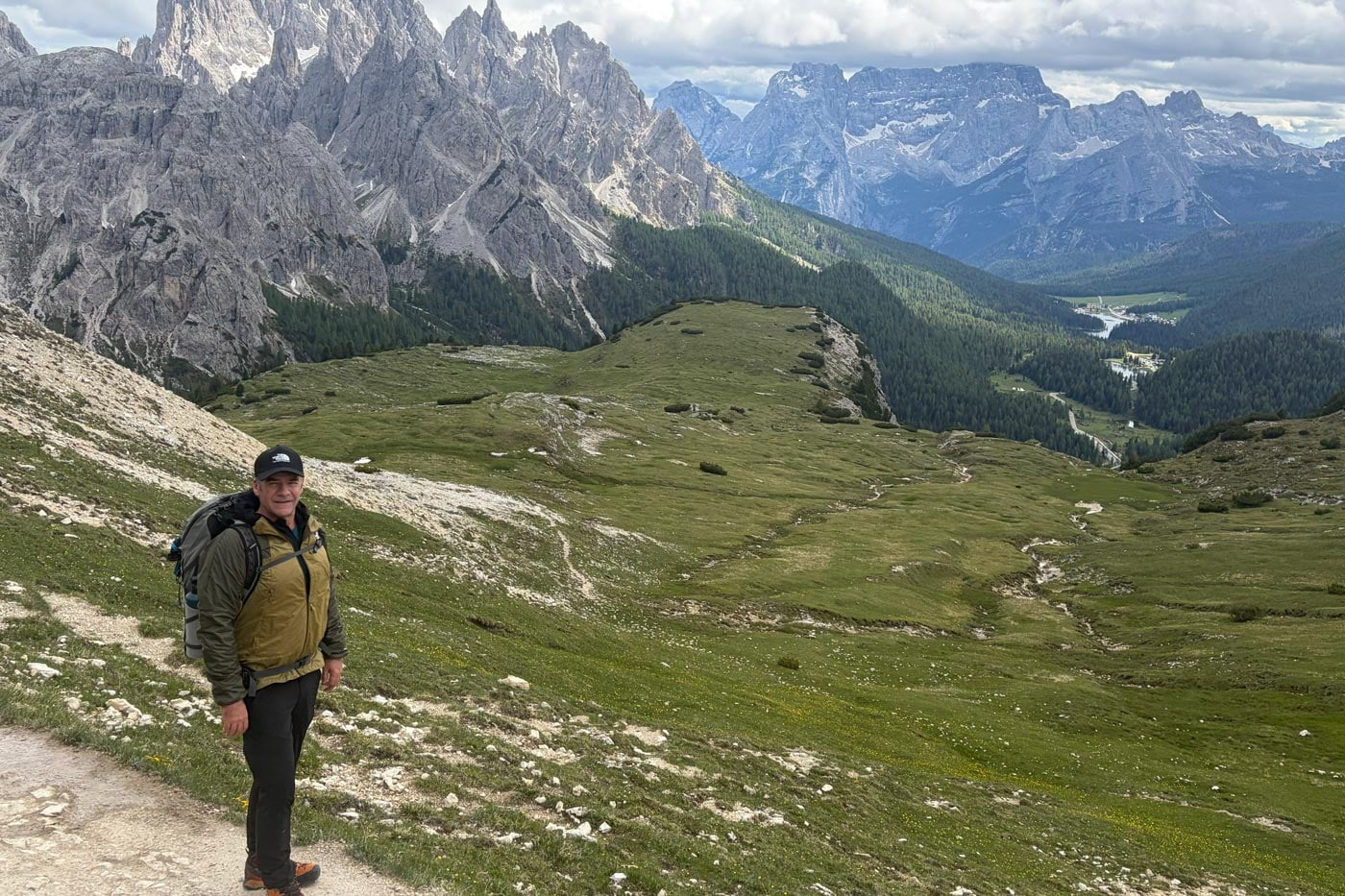
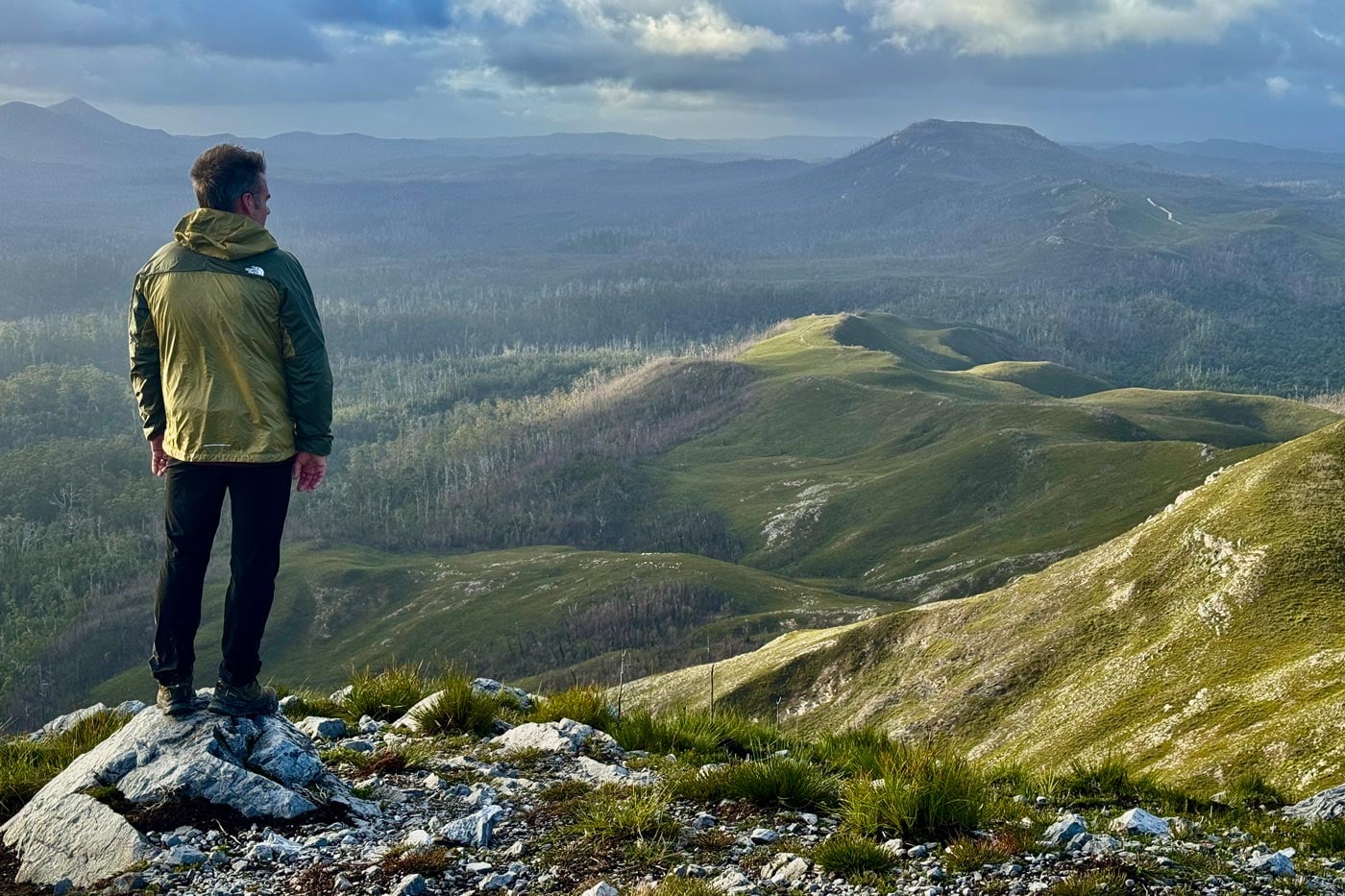
I’ve been wearing this jacket across a run of day and overnight hikes, in temperatures ranging from 2°C through to 15°C. That spread covers everything from cold starts and exposed high points down to milder, more sheltered walking, which is a reasonable test for a jacket designed as an active insulation and wind layer rather than a heavyweight outer shell.
These are the conditions where Australian hikers often face difficult clothing choices: too cold to comfortably walk without an additional layer, but too active to justify carrying a heavier insulated jacket. The Ridgelite is designed for exactly that middle ground.
Construction and Build Quality
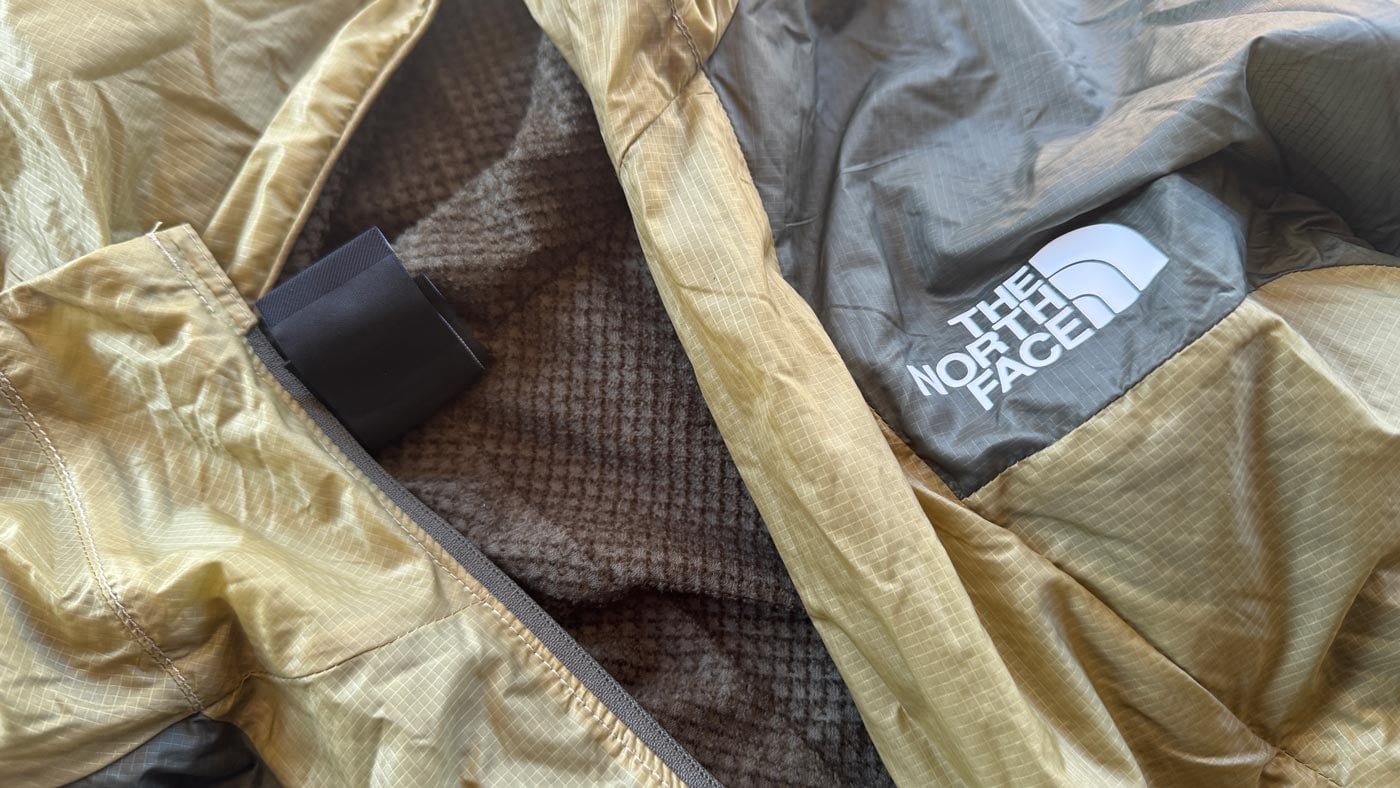
The Ridgelite is built around a simple but effective combination: a WINDWALL™ outer fabric providing wind resistance, paired with a FUTUREFLEECE™ lining providing lightweight insulation. Both fabrics are made from recycled fibres, with the body using 15D recycled nylon and the lining using 30D recycled polyester.
At 238g, it is genuinely light in the hand and the pack. Despite the low weight, it does not feel fragile or compromised. The regular fit provides enough room for a base layer underneath without feeling bulky, while the underarm gussets provide noticeably better freedom of movement when reaching, scrambling, or using trekking poles.

Warmth and Wind Protection
This is where the jacket earns its place. Despite how thin the fabric feels between your fingers, it provides impressive warmth for such a lightweight layer and blocks wind effectively, which is exactly what you want from an active insulation jacket.
It is not designed to replace a heavier insulated jacket, and it is not trying to. Its strength is taking the edge off cold wind on exposed sections of track, which in Australian conditions is often the factor that makes you uncomfortable rather than the actual air temperature.
Packability
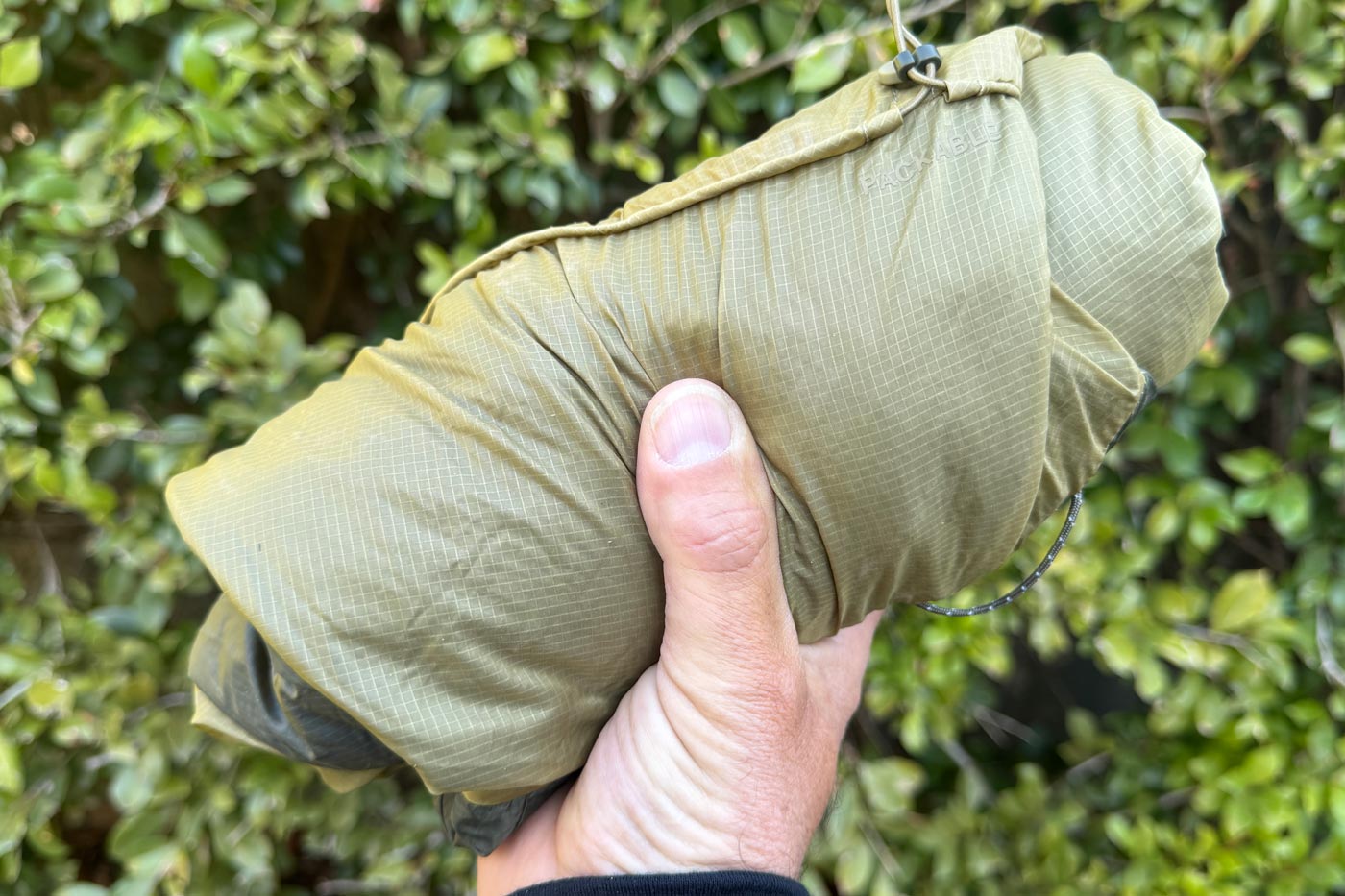
The jacket stows into its own hood using the hood’s cinch cord and rivet, making it easy to compress and carry when not needed. For hikers who carefully manage pack weight, this is a useful feature because it reduces the barrier to carrying an extra layer.
At 238g, it can comfortably serve multiple roles on a trip: a warm layer for cold starts, a summit layer, a rest-break layer, or an emergency layer when conditions deteriorate.
Fit, Mobility and Everyday Details
The full-length front zip makes it easy to regulate temperature as effort levels change, which is important on undulating terrain where the difference between climbing and stopping can quickly change comfort levels.
The three-piece hood is a useful addition for exposed conditions. The rear cinch cord allows it to be tightened when wind increases, helping retain warmth without the hood constantly shifting while moving.
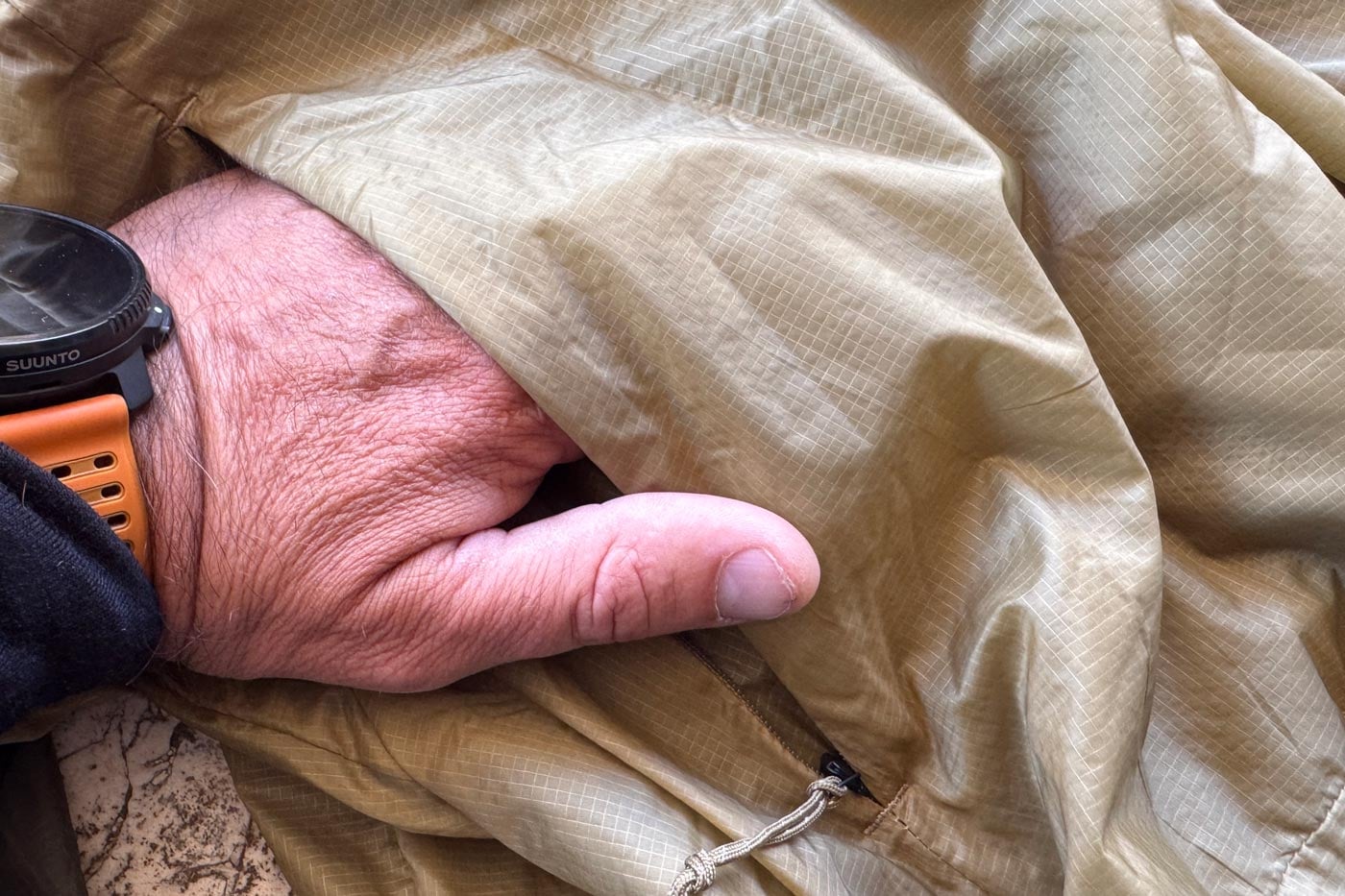
The hand pockets use reverse-coil zips, keeping the design lightweight while still providing secure storage for small essentials. The internal hem cinch cord and encased elastic cuffs are simple but effective details that help reduce drafts around the waist and wrists without requiring constant adjustment.
Things to Consider
This is not a rain jacket. The non-PFC DWR finish will bead off light drizzle or damp scrub, but it’s not built for sustained rain and shouldn’t be treated as a substitute for a proper waterproof shell. It’s also not designed for prolonged, heavy wind exposure on its own. On a genuinely exposed alpine ridge in a strong blow, I’d still want a heavier shell layer over the top or in the pack as backup. And it isn’t a substitute for a proper insulated jacket in very cold alpine conditions, it sits in the middle ground rather than at either extreme.
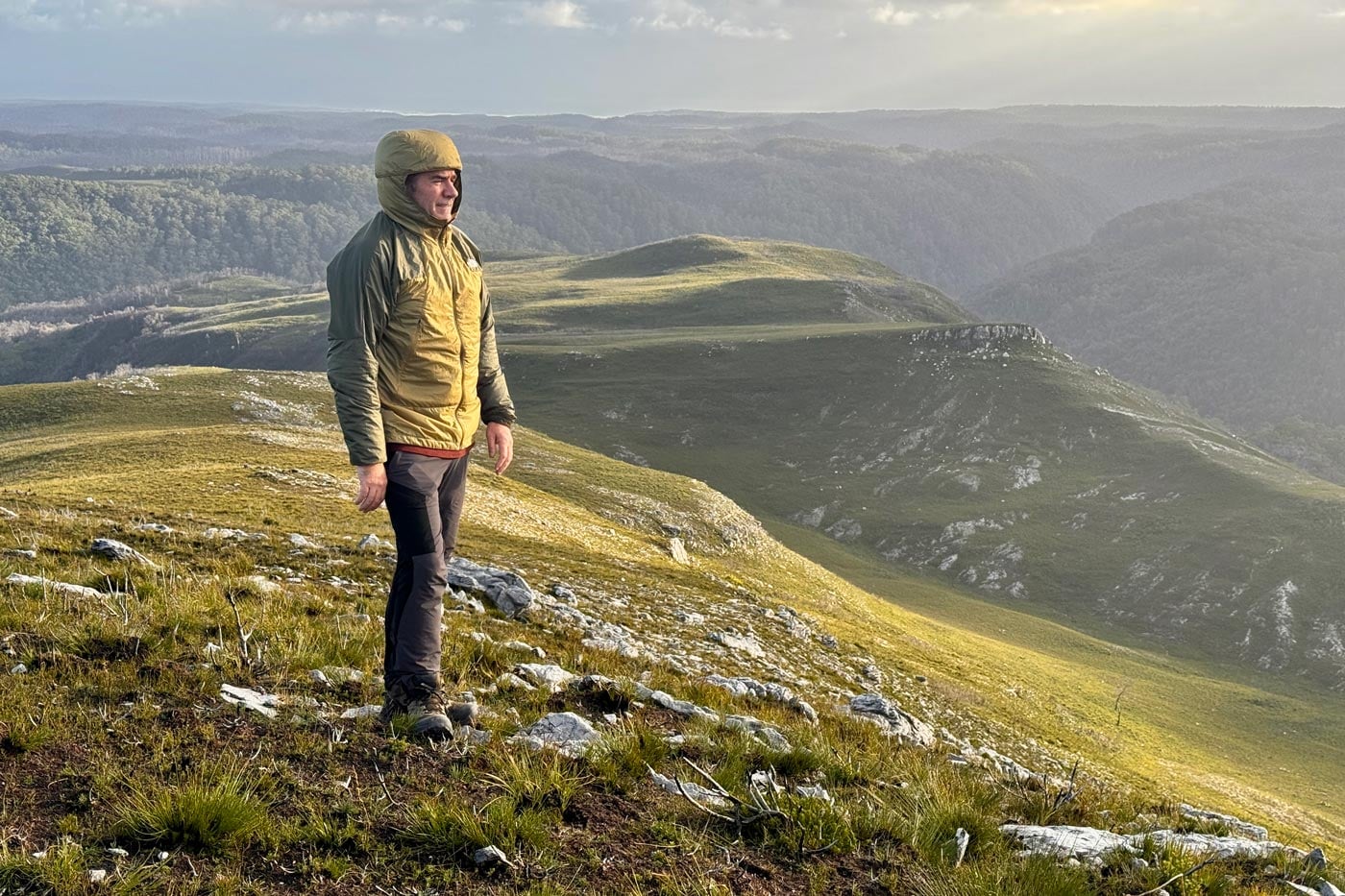
The Ridgelite FUTUREFLEECE™ Wind Jacket does one job particularly well: providing lightweight, breathable warmth and wind protection for hikers who are moving through cool and changeable conditions.
For Australian alpine areas, shoulder-season walks, and multi-day trips where every gram in the pack needs to justify itself, it is a versatile layer that can serve multiple purposes without adding unnecessary weight.
This is not a rain jacket, a storm shell, or a heavyweight alpine insulator. It sits in the middle ground: a lightweight, comfortable layer for hikers who need protection from wind and cool conditions while staying active.
Pros and Cons
| Pros | Cons |
| Excellent layer for changing conditions | Not a rain jacket; DWR finish only handles light moisture |
| Excellent warmth-to-weight ratio at 238g | Not suited to sustained heavy wind without an outer shell |
| WINDWALL™ outer provides effective wind resistance | Not a replacement for a dedicated insulated jacket in serious cold |
| Packs into its own hood for easy carry | |
| Underarm gussets and full-length zip support mobility and venting | |
| Made with recycled body and lining fabrics |
Where to Buy
The Ridgelite FUTUREFLEECE™ Wind Jacket has an Australian RRP of $330.
- Men’s Ridgelite FUTUREFLEECE™ Wind Jacket – The North Face Australia
- Women’s Ridgelite FUTUREFLEECE™ Wind Jacket – The North Face Australia
Technical Specifications
| Spec | Detail |
| Fit | Regular |
| Body fabric | 15D 32g/m² WINDWALL™, 100% recycled nylon, non-PFC DWR finish |
| Lining | 30D 65g/m² FUTUREFLEECE™, 100% recycled polyester |
| Average weight | 238g (8.4oz) |
| Centre back length | 72.4cm (28.5″) |
| Hood | Attached, adjustable, three-piece with rear cinch cord |
| Front closure | Full-length centre zip |
| Pockets | Secure-zip hand pockets, reverse-coil #3 zips |
| Hem | Internal cinch cord with cord lock |
| Cuffs | Encased elastic |
| Visibility | Reflective bar, lower back |
| RRP (AUD) | $330 |





Love this jacket.