In February 2026, Garmin released its 2025 inReach SOS Year in Review, reporting more than 3,000 SOS activations globally over the past year. The dataset spans hiking, mountaineering, marine use, motor vehicle incidents and work-related emergencies.
While the figures are global, the patterns are highly relevant to Australian hikers. The data highlights three consistent themes: injuries remain the leading cause of SOS activations, medical issues are increasing year on year, and helicopters are deployed in roughly one-third of incidents. None of that is abstract. It reflects how and why backcountry incidents actually escalate, which is what makes the report worth reading closely rather than skimming.
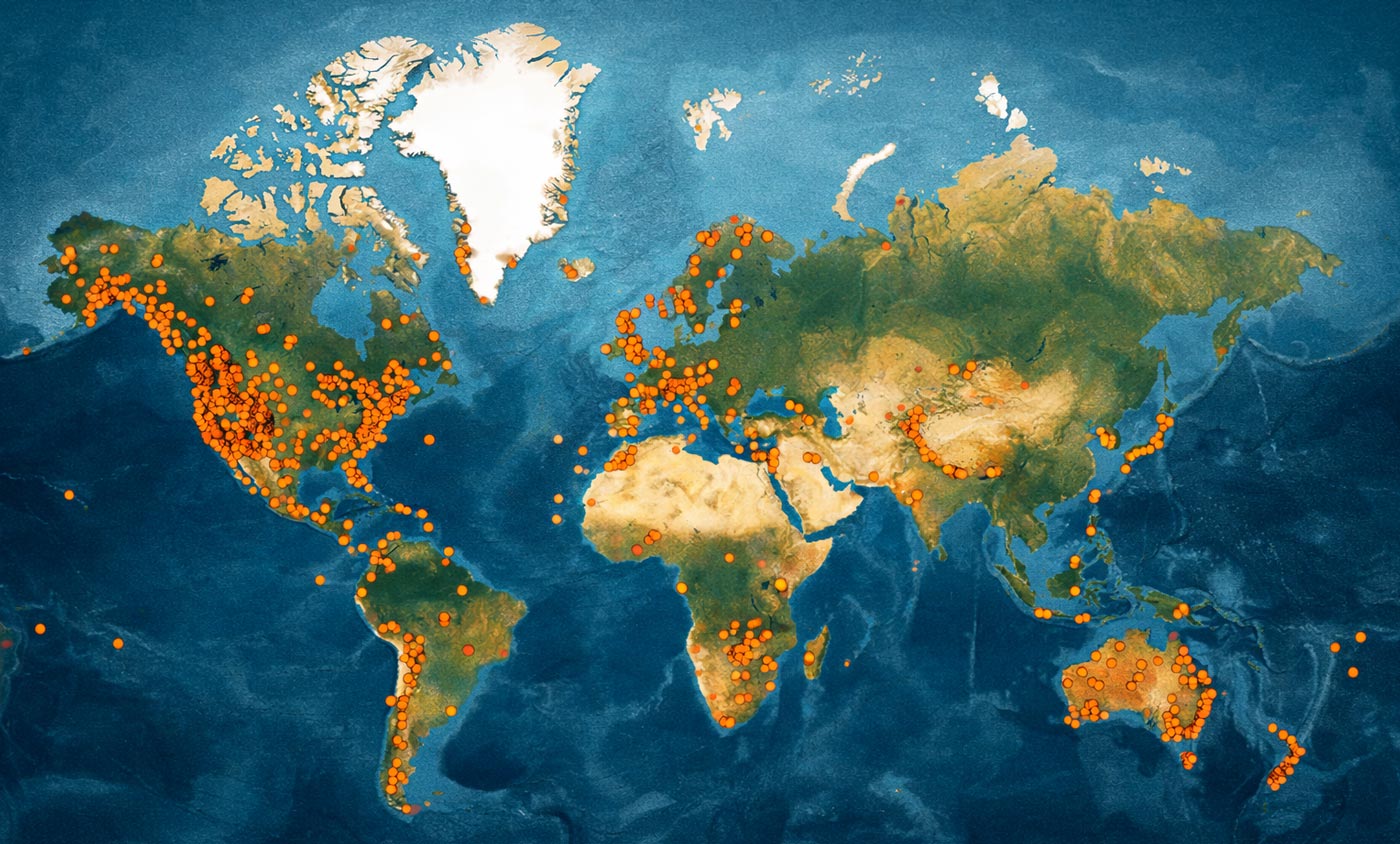
Where SOS Alerts Were Triggered
Garmin’s map of global SOS triggers shows activations across North America, Europe, South America, Africa, Asia and Australia, and Australia is not exempt. Given our vast remote landscapes, alpine terrain, desert environments and long-distance coastal tracks, the same contributing factors identified globally apply here, often with amplified consequences because of that remoteness.
Injuries Remain the Leading Cause
For another year, injury was the top reason people triggered an SOS, and for Australian hikers that typically means:
- Ankle and knee injuries on steep spur descents
- Slips on wet rock in river gorges
- Falls on loose alpine scree
- Fatigue-related missteps late in the day
- Load instability on uneven ground
Most backcountry emergencies aren’t dramatic survival scenarios so much as mobility failures. Once a hiker can’t weight-bear, the situation changes immediately, because in remote Australian terrain walking out may no longer be possible. That’s why load management, conditioning, terrain awareness and conservative descent decision-making matter so much.
Medical Issues Are Increasing
Garmin reported a continued rise in medical-related SOS triggers, including altitude sickness, heart problems and gastrointestinal illness. In the Australian context, this expands to include:
- Heat stress and dehydration in arid and tropical regions
- Hyponatraemia during long endurance efforts
- Cardiac events in middle-aged recreational hikers
- Waterborne gastrointestinal illness from poor treatment practices
Medical emergencies aren’t always environmental failures. Often they’re physiological strain exceeding what the person actually has the capacity for, which is a reminder that preparation isn’t only about navigation and equipment. It’s also about understanding your own limits.
Helicopters Used One-Third of the Time
Garmin reports helicopters are deployed in roughly one-third of SOS incidents where emergency services are required, and in Australia that figure is particularly significant, because remote alpine areas, desert tracks, deep river valleys and heavily forested terrain can make ground-based extraction slow or impractical. Once mobility is compromised, air extraction may become the safest option.
Helicopter deployment indicates seriousness, complexity and high resource use, and it also shows how quickly a minor injury can escalate once you’re in remote terrain.
Lost and Stranded Still Feature Prominently
Lost parties and stranded individuals remain within the top causes of SOS activations, and Australian bush conditions contribute their own unique challenges:
- Dense “same-same” scrub that looks identical in every direction
- Unmarked or informal tracks
- Off-track detours that lead to disorientation
- Overreliance on GPX files without terrain interpretation
- Sudden weather changes in alpine regions
Navigation breakdown remains a human factor issue more than a technology one.
Satellite Devices Improve Survival, Not Risk Removal
One notable statistic from Garmin’s report is that over 12 percent of incidents were resolved via two-way satellite communication without full emergency resource deployment. That’s encouraging, because it shows communication can de-escalate uncertainty and enable self-rescue. But the overall number of SOS activations continues to exceed 3,000 annually, which tells you technology is improving survivability without eliminating incident frequency.
Carrying a satellite device is a safety net, not a substitute for preparation, judgement and conditioning.
What This Means for Australian Hikers
The Garmin data reinforces a consistent pattern. Most backcountry emergencies aren’t catastrophic wilderness survival failures. They’re:
- Musculoskeletal injuries
- Physiological strain
- Navigation errors
- Mobility breakdown in remote terrain
Australian conditions, particularly heat, remoteness and steep spur systems, amplify the consequences once something goes wrong, which is why preparation remains the primary risk control. Satellite communication improves outcomes when things fail, but it doesn’t prevent the failure itself.
Garmin’s 2025 data provides a useful global lens, and when you apply it to Australian conditions, it reinforces what experienced hikers and rescue teams already understand: mobility is critical, physiological limits matter, and remoteness changes everything. Carrying a satellite device is wise. Building the capacity to avoid needing it in the first place is wiser.




Great statistic and shows that it works. As global population soars along with the rise of the middle classes and more and more people exploring – the probability of things going wrong increases. I’m glad our work set of inReach and RescueMe PLB is often carried but rarely used. We’ve definitely had some injuries that required non-life threatening incidents.