Getting lost or stranded in the bush is rarely caused by a single mistake. It’s usually the result of small decisions compounding under fatigue, stress, or changing conditions, and once you’re in that situation, what keeps you alive has less to do with specialist skills and more to do with prioritising the right actions at the right time.
While there are various frameworks for managing a survival situation, Australian survival instructor Bob Cooper’s Big 5 identifies five practical priorities: water, warmth, shelter, signals, and food. That’s a useful way to think about your basic survival needs, but it doesn’t tell you what to act on first when you’re actually standing there working it out. For that you need two more tools: the Rule of Threes, which tells you which threat is closing in fastest, and the Seven Survival Priorities, which lays out what to actually do about it.
The Rule of Threes
Prioritising immediate threats
The Rule of Threes is a simple way to think about relative survival priorities. It describes approximate timeframes the human body can tolerate without critical resources, under harsh conditions:
- About three minutes without air, or in icy water
- About three hours without adequate shelter in severe conditions
- About three days without water
- About three weeks without food
These are not guarantees and should never be treated as targets or limits. Actual survival time varies widely depending on temperature, weather, terrain, clothing, activity level, health, and available resources.
What the Rule of Threes is actually good for is ordering decisions, not predicting outcomes. It helps identify which problem is most likely to become life-threatening first, so energy isn’t wasted on lower-priority tasks.
Using the Rule of Threes correctly
In most hiking situations, air is available and food is not immediately critical, so those two ends of the scale rarely decide anything. Water and shelter usually become the dominant concerns far sooner, particularly in hot, cold, wet, or exposed environments, which is why most of what follows is about those two.
That doesn’t mean you are “safe” for three days without water or three hours without shelter. Dehydration, hypothermia, and heat illness can impair judgement and physical ability long before those timeframes are reached, and waiting until a problem becomes critical often removes options rather than preserving them. So the timeframes are a way of ranking what matters most right now, not a countdown you can rely on.
That’s where the Big 5 comes in. Water, warmth, shelter, signals, and food are your baseline survival goals, the things you’re actually trying to secure. The Rule of Threes tells you which of them is closing in fastest; the Seven Survival Priorities below tell you what to do about it.
The Seven Survival Priorities
These seven priorities aren’t rigid steps, and the order can shift depending on your circumstances, but there’s a practical logic to why they usually run in roughly this sequence: each one puts you in a better position to handle the next, and together they’re what keeps you alive and improves your chances of rescue.
1. Positive mental attitude
Clear thinking is one of the most important survival tools, and it’s why this list starts here rather than anywhere else: panic, frustration, and rushing decisions create new problems on top of whatever you’re already dealing with. Taking a moment to stop, breathe, and assess the situation allows better choices and reduces wasted effort. A calm, problem-solving mindset supports every other survival priority on this list.
2. First aid and immediate safety
With a clear head, the next thing to check is your own physical condition. Address any life-threatening injuries as a priority. Control severe bleeding, manage airway and breathing issues, and stabilise injuries that could worsen with movement. In remote environments, even relatively minor injuries can become serious if ignored or mishandled early, which is why this gets sorted before you turn your attention to the environment around you.
3. Shelter from the environment (The Big 5: Shelter)
Once your physical condition is stable, protection from wind, rain, cold ground, or intense sun is often more urgent than food or water, because shelter reduces heat loss, limits heat gain, conserves energy, and improves the body’s ability to cope with stress. Shelter does not need to be complex. Using terrain, vegetation, clothing, packs, or emergency gear to create a barrier between you and the environment is often enough.
4. Water and hydration decisions (The Big 5: Water)
With shelter sorted, water is next, though the decisions around it should still balance risk rather than rushing at the first source you find. Dehydration affects judgement and physical capacity quickly, especially in hot or dry conditions, so reducing exertion, seeking shade, and conserving energy can significantly slow fluid loss while water options are assessed.
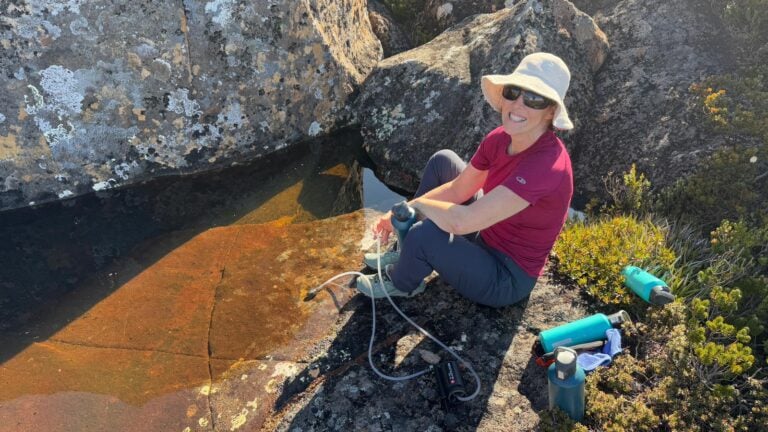
Drinking untreated water should never be the first option. When possible, collect water from clearer, flowing sources and purify it using boiling, filtration, or chemical treatment, since boiling remains the most reliable method for microbiological safety.
The one exception is a genuine last resort. In extreme, life-threatening situations where dehydration is imminent and no treatment options are available, the immediate risk of severe dehydration may outweigh the longer-term risk of waterborne illness. This is a last-resort decision, not standard practice.
5. Warmth and temperature management (The Big 5: Warmth)
Maintaining body temperature is critical in both cold and hot environments, and it loops back to the water decision: Fire can provide warmth, assist with drying, improve morale, purify water, and act as a signal, but only if conditions and skills allow. Staying dry, insulating yourself from the ground, and using clothing effectively all help conserve energy in the meantime. Fire should never be attempted in unsafe conditions or during high fire danger periods.
6. Signalling and being found (The Big 5: Signals)
Fire being able to double as a signal leads straight into the next priority. Once immediate threats are managed, increasing your chances of rescue becomes important. Effective signalling methods include whistles, signal mirrors, high-visibility items, satellite communicators, or personal locator beacons. Energy is better spent on clear, effective signalling than wandering or shouting, and staying in one location often improves the likelihood of being found.
7. Food as a long-term concern
Food is rarely a priority in short-term survival situations, which lines up with the Rule of Threes: most people can function for extended periods without food, and searching for it can waste energy and increase risk. In long-term situations, food becomes more important, but only if shelter, water, and signalling are already addressed. Never consume plants or other foods unless you are confident they are safe.
How this fits together
None of this works as a checklist you can tick off in any order and forget. The Rule of Threes tells you which threat is closing in fastest, not how long you’ve actually got. The Seven Survival Priorities tell you what to do about it: start with a clear head, deal with any injury, then get shelter sorted before you worry about water, because shelter buys you the stability and energy to make good decisions about everything that follows it. Warmth and water are linked through fire where conditions allow it, and once the immediate threats are under control, effort shifts to signalling and rescue rather than trying to self-recover, since staying in place and being found is the better bet. Food only matters once all of that is addressed, and even then, only if you’re confident what you’re eating is safe.
None of it is rigid. Conditions can force you to adapt the order, and a positive mental attitude and dealing with immediate safety stay just as important throughout as the Big 5 priorities themselves. Survival is rarely about doing everything. It’s about doing the right things, in the right order, for reasons that hold up once the pressure is actually on.