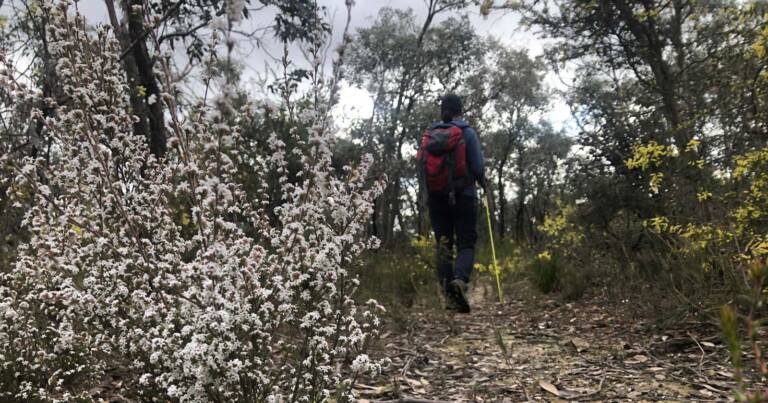
Australia is a demanding place to hike. High ambient heat, abrasive sand, prolonged humidity in the north, alpine bogs in Tasmania and long exposed descents in the ranges all accelerate the forces that damage feet, and on Australian trails, small inefficiencies compound quickly.
I think of feet as the primary load-bearing structure in hiking. Every step transmits force through skin, soft tissue, joints and bone, and over hours or days, minor friction, moisture exposure or mechanical stress can escalate into blisters, nail trauma or overload injuries. Most of these problems aren’t random. They’re predictable responses to cumulative stress exceeding what the tissue can tolerate, which is why I don’t treat foot care as one product decision. It’s about managing load, friction, moisture and recovery together, in a structured way, because each of these factors feeds into the others over the course of a hike.
Most hiking-related foot problems fall into four interacting categories: mechanical shear and friction, moisture exposure, cumulative load and fatigue, and repetitive impact, particularly downhill. These forces rarely act alone. A long descent with a heavy pack in wet socks increases shear, tissue strain and nail trauma all at once, which is exactly why foot injuries usually come from predictable mechanical and environmental stress rather than bad luck. Understanding how these forces interact, and managing them deliberately, is most of what effective prevention actually is.
Blisters: a shear injury, not just friction
Blisters get blamed on rubbing, but the underlying mechanism is excessive skin shear. When layers of skin stretch in opposite directions under pressure, microscopic separation occurs, and fluid fills that space to form the blister.
Heat and moisture increase vulnerability because wet skin softens and deforms more easily. Tight footwear increases pressure, and downhill walking increases the braking forces that drive your toes forward and amplify internal skin stress, which is the same downhill mechanism I come back to later when it comes to toenail damage.
For a detailed explanation of skin shear, heat and moisture interaction, see The Science of Blister Formation for Hikers. The mechanism matters because it points straight at prevention: if shear and moisture are what actually cause blisters, then reducing internal skin stress and controlling moisture before damage occurs is where prevention has to focus.
Reducing shear before it starts
That means footwear with adequate toe room and a stable heel fit, lacing that prevents forward slide, socks that manage moisture and limit movement, friction reduction strategies where they’re needed, and early treatment of hotspots before they progress. Prevention is easier than field management, because once a blister has formed, healing inside a boot becomes genuinely difficult.
The same resource on how prevention strategies reduce skin shear and blister risk goes into this in more depth, and for field care once a blister has already developed, see Blister Treatment for Hikers: Field Management and Infection Risk. Reducing shear early is what keeps small problems small, because the interventions that work best are the ones applied before damage sets in, not after.
Moisture: wet skin is vulnerable skin
Wet feet aren’t just uncomfortable. Prolonged moisture softens the outer layer of skin, which increases susceptibility to shear injury and infection, and saturated socks increase friction on top of that. Damp environments also raise fungal risk and, in extreme cases, immersion injury.
Managing moisture means matching footwear to the terrain and climate you’re expecting, managing sweat through ventilation, changing socks once they’re saturated, drying your feet at breaks and at camp, and reducing how long your feet stay wet in the first place. The goal isn’t perfect dryness. It’s limiting exposure time, because duration of wet exposure matters just as much as which materials you’re wearing.
For a deeper breakdown of fabric systems, layering and prolonged wet risk, see Moisture Management for Hikers: Wet Feet, Fabric Systems and Risk, and for fungal prevention and hygiene guidance, see A Hiker’s Guide to Tinea: Prevention, Risk and Treatment.
Downhill impact and toenail trauma
Bruised or lost toenails are usually the result of repeated micro-trauma during descents, where toes strike the front of the boot under braking forces, particularly on long steep trails. This is the same braking mechanism that drives blister formation, just applied to the nail rather than the skin.
Risk increases with inadequate toe box space, loose lacing, long toenails, heavy packs and prolonged steep descents, which makes toenail injury primarily a load and fit issue rather than something you can put down to chance. For detailed prevention strategies including lacing and downhill pacing, see Toe Protection and Downhill Impact Management for Hikers. Downhill mechanics and boot fit matter more here than most hikers realise.
Cumulative load and foot fatigue
Not all foot pain is friction related. Long distances, abrupt elevation increases, multi-day exposure or a sudden change in footwear can all exceed what your tissue can tolerate, and fatigue alters your gait in ways that increase strain on passive structures such as the plantar fascia and tendons. Pain that worsens during a hike and is still there the next day usually points to excessive loading rather than a friction problem.
Managing foot fatigue comes down to gradual progression in distance and elevation, appropriate pack weight, recovery between demanding days, and strengthening the lower limb structures that support you. Sudden load increases are one of the most common triggers of foot pain, which is why gradual progression matters as much as any piece of gear. For a structured discussion of load tolerance and progression, see Foot Fatigue and Load Management for Hikers, and for evidence-informed guidance on plantar fasciitis specifically, see Hiking with Plantar Fasciitis: What Actually Helps and What Does Not.
Field treatment and escalation
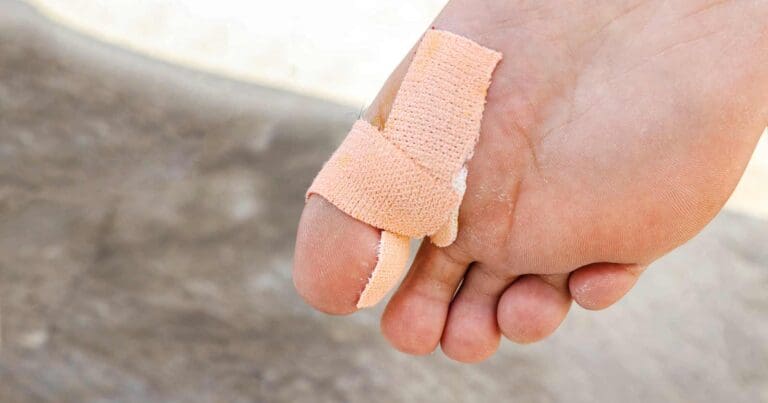
Despite good preparation, issues still come up. On multi-day or remote hikes, judgement becomes critical: minor blisters can be managed in the field, but signs of infection need escalation, and severe spreading redness, increasing pain or systemic symptoms shouldn’t be ignored. Knowing when a manageable problem turns into a trip-ending risk is part of hiking responsibly, and that judgement matters more the further you are from help.
For practical field care guidance, see Blister Treatment for Hikers: Field Management and Infection Risk.
A practical foot health framework
Before and during a hike, I ask myself:
- Is my load appropriate for my preparation?
- Is my footwear stable and suited to terrain?
- Am I actively managing moisture?
- Have I addressed early warning signs immediately?
Small corrections made early are what prevent the larger problems later, because everything above, the shear, the moisture, the load and the impact, compounds if it’s left unmanaged and is far easier to deal with before it does.
Foot problems in hiking are predictable responses to mechanical and environmental stress, and by managing shear, moisture, cumulative load and downhill impact deliberately, most of them can be reduced or avoided. Good bushwalking foot care was never about chasing the perfect sock or boot. It’s about understanding the risk, controlling exposure and responding early, because your feet carry you every kilometre, and I’d rather treat them as a system than an afterthought.