There is a particular kind of confidence that comes from a good run of trails. Not arrogance, exactly. More a quiet assumption, that you know how your body responds under load, how your mind holds up across the long middle days, and roughly what the mountains are going to ask of you.
I had that confidence going into Peru. I had earned it, or thought I had. The Western Arthur Range in 2023. The Haute Route across the Swiss Alps in 2024. Months of preparation for each, and both had delivered. I felt strong on those trips, motivated, connected to every step. When Julie and I booked the Huayhuash Circuit for June 2025, I expected the same. What I didn’t account for was the state I was actually in.
The months before Peru had been heavy. Work, pressure, the accumulated weight of things I hadn’t fully acknowledged. I told myself the usual things: that I was busy, that I’d find time to prepare properly, that my experience would carry me through. I had done difficult things before. I knew how to suffer through a hard day on trail.
What I didn’t know how to do was hike from a place of genuine depletion. Not physical depletion. Mental depletion. The kind that doesn’t show up in your legs. I hadn’t trained properly. Not because I lacked the knowledge, but because I couldn’t find the drive. Every planned session felt like one more obligation pressing in from a life that already had too many of them. I let it slide. And then I got on the plane.
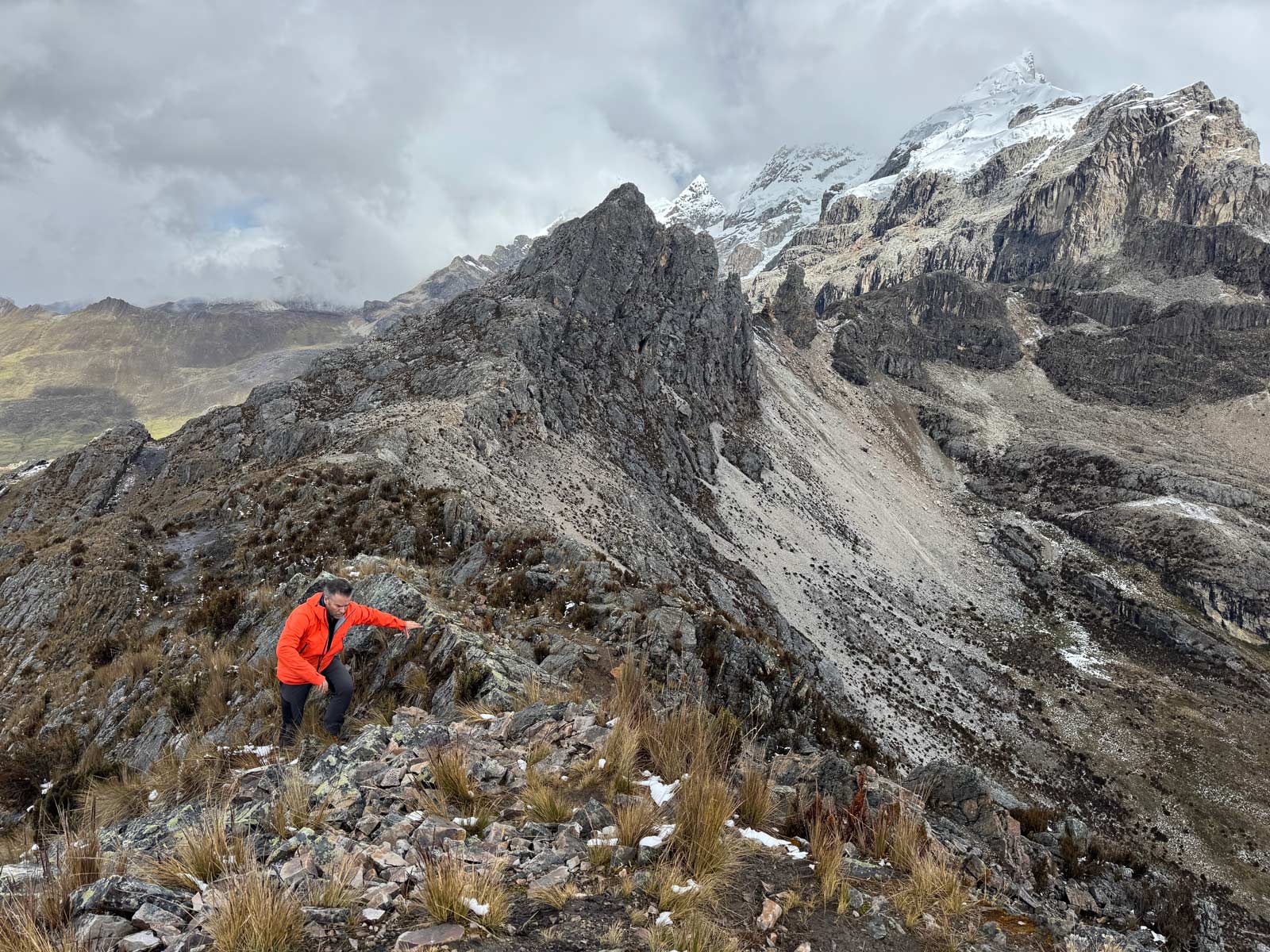
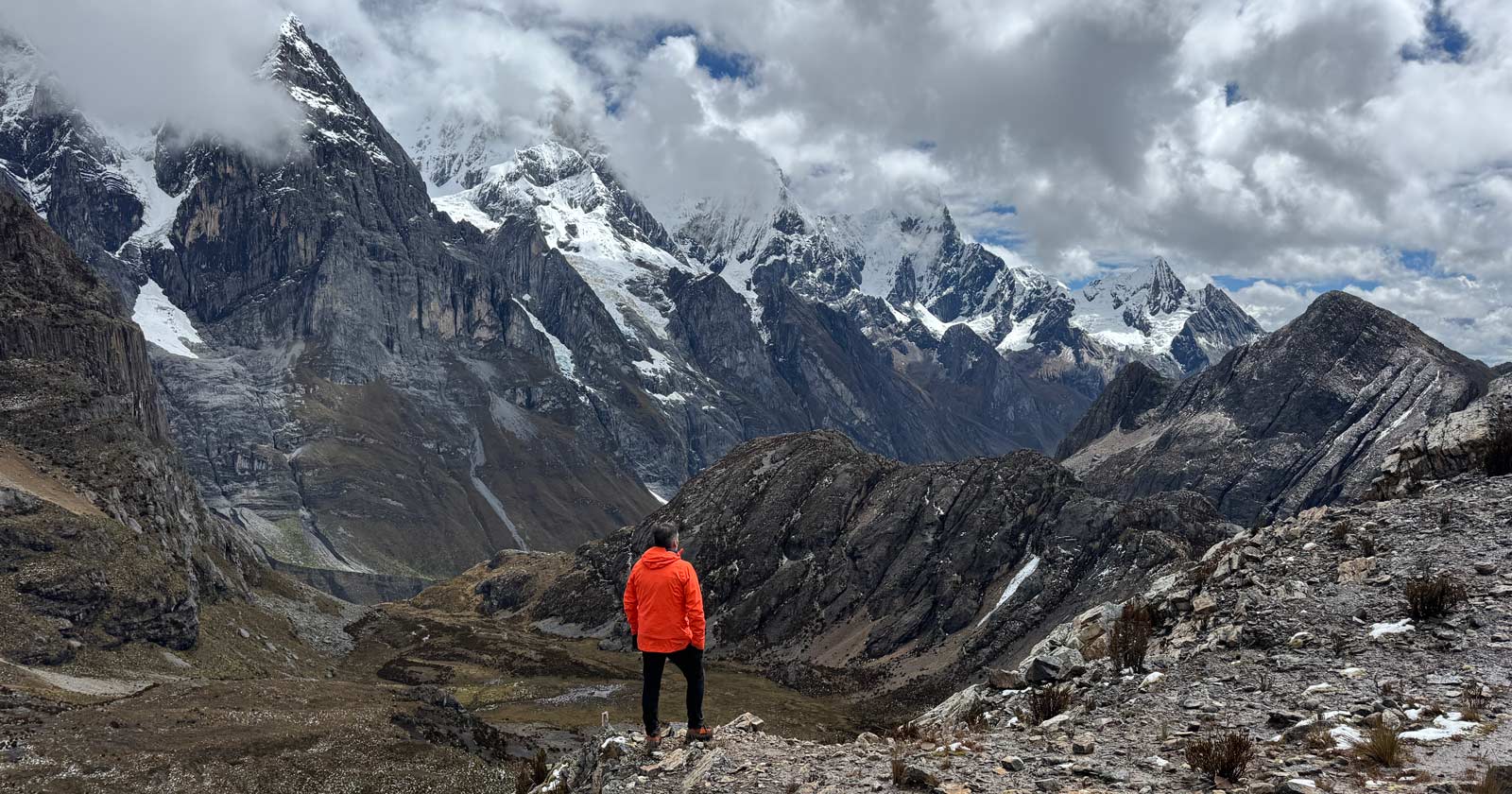
The Cordillera Huayhuash is not a forgiving place to discover any of this. The circuit crosses a high pass almost every day, most of them above 4,700 metres, and the altitude doesn’t negotiate. It simply reduces. Your pace drops. Your thinking slows. Your capacity for everything narrows. I blamed the thin air for the first day or two. It was a reasonable excuse and contained enough truth to be useful. But by day three I knew it wasn’t the altitude. Julie was moving well, steadily, carrying the same load at the same elevation. She had prepared properly and it showed. I hadn’t, and that showed too.
The gap between us grew in increments. On a flat section it was barely noticeable. On a climb it opened up until she was out of sight, and I was left alone with whatever was in my head. What was in my head was not helpful. Doubt, mostly. A quiet, persistent voice cataloguing the distance between where I was and where I expected to be. I had walked into this trip relying on who I had been on previous treks rather than who I actually was in June 2025. Those are not the same person. The mountains don’t adjust for the gap.
There was one day when it changed. Day seven, at San Antonio Pass, 5,100 metres. The highest point on the circuit. I don’t fully understand why that day was different. The altitude was the same. My fitness hadn’t recovered. But Julie and I walked together that entire day, every step, and the isolation of the previous days simply wasn’t there. Somewhere on the climb I shed a quiet tear. Not from the altitude or the effort. From the relief of it. From what it felt like to be actually present rather than just physically located somewhere.
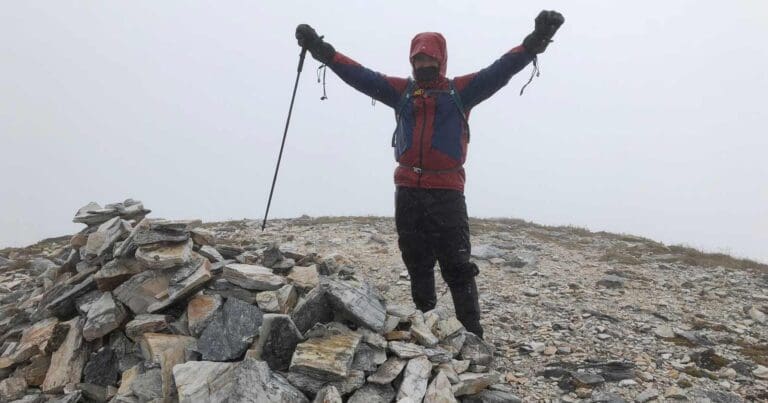
When we summited Nevado Mateo later that day, I had nearly turned back several times on the approach. Not because the climbing was beyond me. Because I had so little left in the tank mentally that every reason to stop felt reasonable, and the reasons to continue felt abstract. I kept going partly through habit, partly because Julie was ahead and turning back alone felt worse than continuing. The summit was, as the Huayhuash tends to be, extraordinary. I stood there in the thin air and felt what I had been missing for the previous six days. Not triumph. Just presence.
I have spent time since Peru thinking about what actually went wrong, because it wasn’t the altitude and it wasn’t the preparation, not primarily. Both were factors, but they were downstream of something else. The real thing was that I had stopped paying attention to what I was carrying before I even reached the trailhead. I had been managing a version of myself on the trail rather than actually being there. The Huayhuash, like every demanding place, has no patience for managed versions.
The mistake I made wasn’t skipping training sessions. It was not being honest, with myself or anyone else, about the state I was in when I arrived. A high pass at altitude has a way of making that honesty unavoidable. The only question is whether you find it on day two or day seven. I found it on day seven.
Next time, I intend to find it before I leave home.
This essay is part of my Personal Reflections series, a collection exploring what hiking reveals about who we are.



They say, “You fight like how you train.” I guess it’s the same here
“You hike like how you train,” 😅
Murky Murk what got to me most was the mental prep. Physically I was ok, but I wasn’t in the right headspace before I went and I felt the impacts.
Trail Hiking Australia Makes sense. Bit like my first marriage 😅😂
I reckon it’s about 90% mental fitness and 10% physical fitness
Anne Griffin totally agree Anne. And it’s not always about the mental challenges of the walk. It can be what you brought with you.
An approach that could work generally in life…
Dougal Sanderson too true
I enjoyed this read Darren. I find it’s an internal fight to get in the right headspace to keep going (or even start) sometimes.
Thank you Mark. Good to know it’s not just me. I’ve never struggled like this on a trek before and I think I was carrying a lot of mental baggage with me from home on this one