Most hiking damage is cumulative. A few people step off the track in one spot. A few more do the same nearby. Soon there’s a second, third, unofficial trail spreading through vegetation. Multiplied across hundreds of hikers over years, these small choices reshape the landscape. Minimum-impact hiking is about understanding how your decisions combine with everyone else’s to either preserve or degrade the places you visit. The Leave No Trace Center for Outdoor Ethics has developed seven principles that guide this thinking. They are not rules imposed from outside. They are decisions that, when made consistently, protect the trails and places you return to. Understanding the reasoning behind each one matters more than memorising them.
The seven principles
The full Leave No Trace principles are detailed on the LNT website. Here is how they apply to hiking in Australia.
Plan ahead and prepare
You cannot minimise impact without understanding the place. Research the track, check regulations and restrictions, understand water sources, know what weather is typical, and identify campsites. This preparation means you stay on the established route rather than wandering. You camp where camping is appropriate rather than creating new sites. You arrive with the right gear rather than improvising in ways that damage the environment.
Travel and camp on durable surfaces
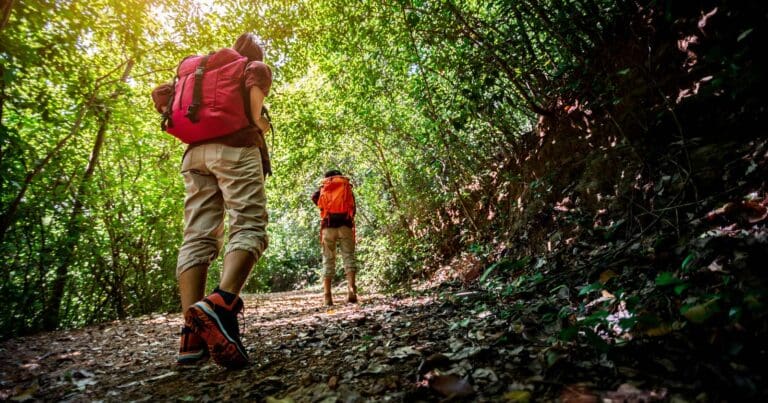
Trails exist because concentrated use on one route damages less than scattered use across a wide area. Stay on the established track even when it is muddy or eroded. Walk single file rather than spreading out. When you camp, use existing campsites rather than creating new ones. Rocky or gravel areas absorb impact better than fragile alpine vegetation or soil. The principle is simple: concentrate your impact rather than spread it.
Dispose of waste properly
Everything you bring in comes out. Pack out all rubbish, food scraps, and litter. Human waste requires specific management depending on location. Carry water away from water sources before washing yourself or dishes, and scatter strained dishwater away from streams. Poor waste management contaminates water, harms wildlife, and affects the experience of other hikers.
Leave what you find
Plants, rocks, archaeological sites, and natural features all have a place in the landscape. Taking souvenirs or moving things alters the experience for the next person and disrupts ecosystems. Leave everything as you find it so others have the same opportunity for discovery and so the natural environment remains intact.
Minimise campfire impacts
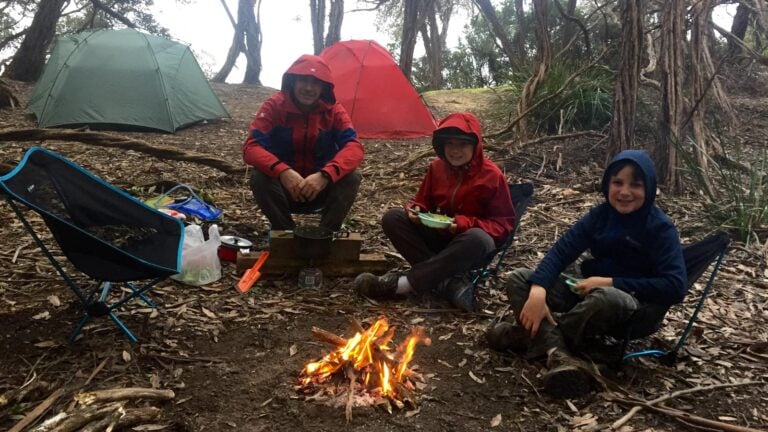
Campfires are culturally important and feel like part of camping, but they leave lasting marks. Established fire rings exist in some areas and should be used when fires are permitted. Use a lightweight stove for cooking instead. Collect only dead wood from the ground that can be broken by hand. Burn completely and scatter cool ashes. In many Australian environments, particularly sensitive areas and high-use zones, a stove is the better choice than fire.
Respect wildlife
You are in their home. Observe animals from a distance and do not approach or follow them. Never feed wildlife, even if it seems friendly or hungry. Feeding changes behaviour, creates dependency, and exposes animals to predators and disease. Keep pets leashed and controlled. Avoid areas where animals are sensitive to disturbance: nesting sites, denning areas, winter ranges, and mating seasons.
Be considerate of other visitors
Other people come to the outdoors for different reasons. Some want solitude and silence. Others want to move fast or enjoy group experiences. Yield to others on narrow sections. Keep noise to reasonable levels so others can hear nature. Camp away from trails and other groups. Leave places as you find them so the next person’s experience is not diminished by your use.
Why these principles apply in Australia
Australian trails can recover slowly. Alpine and semi-arid environments are particularly fragile. Once damage is done, restoration takes years. Trails are often busy in summer and autumn. Small individual choices multiply across thousands of hikers. Understanding minimum-impact principles is not about sacrifice. It is about understanding that your choices combine with everyone else’s to shape what the trail becomes.




THA. I know we have had this discussion before and I think this is something that all walking groups, individuals and adventurers should consider before posting.
I would like to add another to those principles and that is
8) Leave no digital trace.
Just as we try to leave no trace we have passed this way physically many believe that this should also apply to the digital world.
I think its great that pictures are posted to let people know how beautiful it is “out there” but as we discussed the beauty should be de identified.
The principle of ” leave no digital footprint” needs to join those other principles.
Peter Lane totally agree. I’ve spoken at length with leave no trace about this. They have decided that digital is not included in the core seven principles, and as this article you have commented on is copyright to them, I cannot edit their content. Instead, I wrote that other article I shared with you to address this issue. You may want to read Leave No Trace’s comment on digital here: https://lnt.org/social-media-guidance/
Thank you Tha! Will read with interest. We have always had guide books and walking books(eg John Chapmans SW) but social media and the digital age is a whole different beast!
The damage that can be done by a post can FAR outway an individual sleeping and walking on hard ground. 😏
I think Leave no trace needs to re evalute and maybe continued rational argument from concerned walkers may get the point across.
I know you agree and support this so I guess this is the correct place to have a discussio?
Peter Lane Thank you for engaging on this important topic. I agree that the digital age, particularly social media, presents challenges that traditional guidebooks like John Chapman’s didn’t face. The instant reach and influence of posts can lead to overcrowding or harm to delicate ecosystems.
I do agree and support this. My conversation with Leave No Trace does not appear to have altered their position. However, maybe if more advocates—such as you and the group you have been discussing this with—also communicate with Leave No Trace directly, it may make a difference. They may, in fact, consider adopting this as an official eighth principle.
I’ll keep doing what I can to advocate for responsible digital sharing, and I encourage others to also have their say. Together, we can work to protect both the environment and the sense of discovery for future hikers. If you have specific ideas about how we, as a community, can approach this issue, I’d love to hear them.
Have been thinking about how this could become more widespread.
I have been individually responding to various posters with mixed results. Mostly negative I am afraid .
I have had some communications with bushwalking clubs. Some are pro the leave no digital footprint but others who I wont name blithely continue to post with detailed instructions for site and access.
The social media flood gates are relentless with many wanting to be seen but not considerig the cosequences.
The only way I can see forward is grassroots education at a club level . Unfortunately the Parks service in all states seem hellbent on being the worst offenders.
In Tassie they have a responsble walking / leave no trace poster in every imaginable spot( loos etc) and dont seem to advertise walks but NSW is the exact opposite with parks staff showing walks and access as part of their posts.
The solution needs to be both at a National/ StateParks level where education of leave no trace walking needs to include a leave no digital trace message as well as at a club level. How to tackle facebook though is beyond me😒
I think the size of the problem and mentality of the posters/ influencers is a bridge too far!!
I’m a bit surprised that catholes are the only option suggested for solid human waste. Some places that’s no problem – like in rainforests with deep compost that makes it very easy to dig deep enough. In some places (rocky, alpine etc), it’s virtually impossible to dig a proper hole, or in places that have become very popular, poo tubes are a far better option. You can use DIY containers, or purpose-made ones from PVC pipe. Available at some Parks offices in Tassie. Strongly recommended for places without toilets. At the very least, encourage people to pack out their used toilet paper. I’ve triple-bagged mine for years and never had a problem.
Kathy Cotton totally agree, as mentioned to Peter Lane, the article you have read is a direct extract from the official Leave No Trace Principles. I have written an article that addresses the concerns you raised here: https://www.trailhiking.com.au/health-and-hygiene/going-to-the-toilet-on-a-hike/
Kathy Cotton likewise. A poo tube is a necessity these days on the Main Range in winter as cat holes are impossible and the summer melt can leave some pretty nasty things littering the ground not to mention the impact on the water supply. Likewise in rocky Central Aus. The area around Lake Rhona was just disgusting with users not even bothering with catholes!!!
One technique if you are using catholes is to use them on thewalk BETWEEN camp sites rather than completely fouling a spot.
Given the increase in users on many walks I think this is another thing that the Parks should be encouraging in their blurbs.
Weight is an issue with the homemade PVC versions and the commercial bags etc are expensive.
I have been “experimenting” with a dry bag, cat litter and recyclable plastic bags( and trying not to fall whilst skiing!)
Maybe the Leave No Trace website needs continued prodding on some of these issues…..
Peter Lane great info and tips. Agree the more people out there, the more we need to be taking these matters seriously. I’ll have a look through my content to make sure I’m advocating catholes as a last resort and it’s best to pack everything out.