Hiking with your baby
Hiking is a good way to get fresh air, gentle exercise, and time outdoors after becoming a parent. Taking a baby onto the trail can feel daunting the first time, but with sensible preparation it can be safe, enjoyable, and genuinely relaxing. The trick is keeping your expectations realistic. Short distances, easy terrain, and a willingness to change plans on the day will make the experience far more comfortable for both of you.
Before you head out, make sure your baby is developmentally ready to be carried over uneven terrain. Most babies are better suited to hiking once they have sufficient head and neck control to sit supported in a carrier, which often develops around six months of age. If you’re unsure, speak with your healthcare provider before planning anything longer or more uneven.
A well-fitted, supportive carrier matters once you’ve got the green light. Look for a quality baby carrier that supports your baby’s hips, back, and neck while distributing the weight comfortably across your own body. Backpack-style carriers are often more comfortable for longer walks and give better ventilation, while front carriers can suit shorter, flatter walks. Whichever style you choose, practise using it before your hike so you know it fits correctly and feels stable before you’re relying on it on the trail.
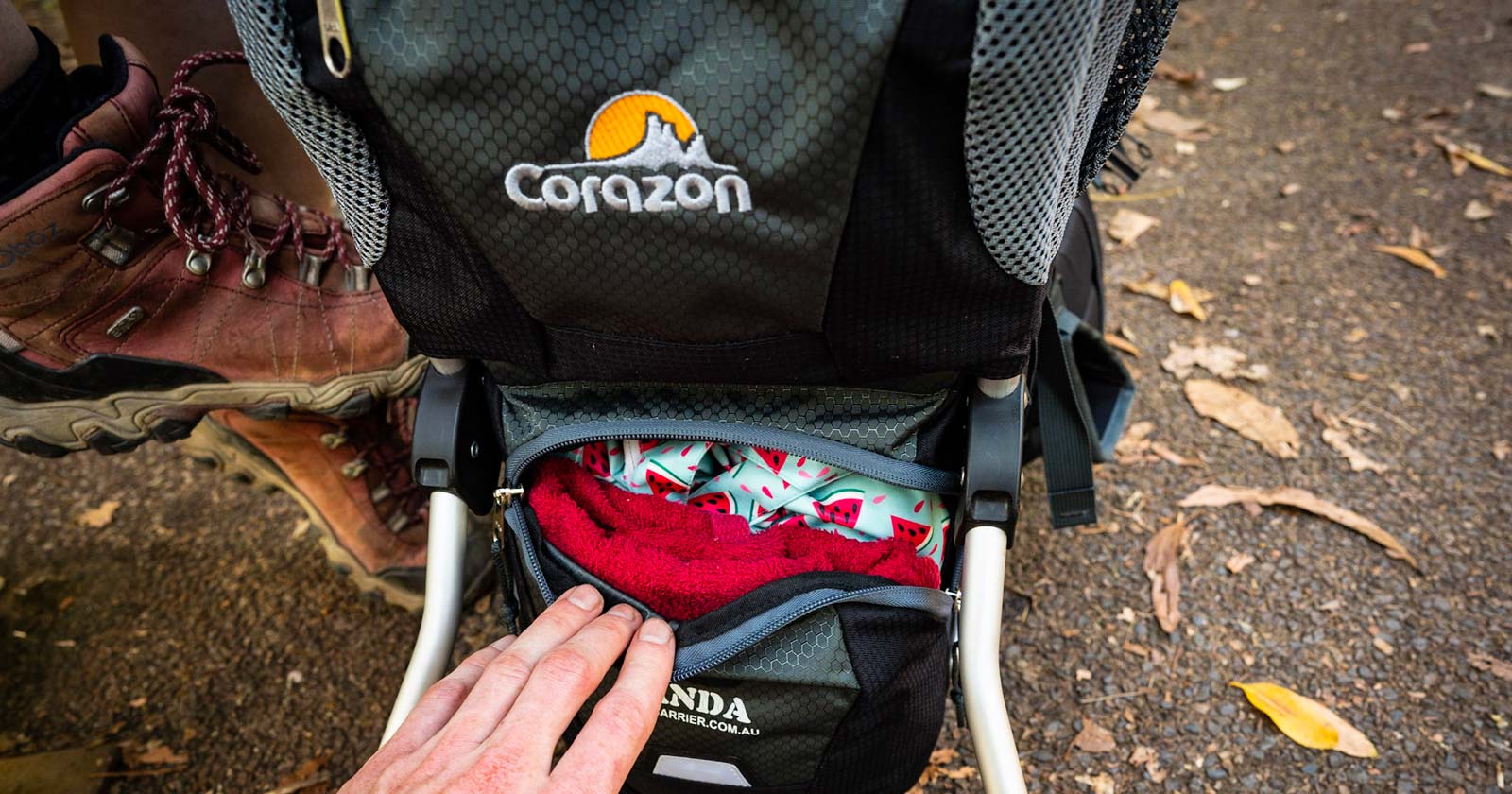
Babies can’t regulate body temperature as effectively as adults, so what you dress them in matters more than it might for you. Dress your baby in lightweight layers so you can adjust their clothing as conditions change through the walk. A wide-brimmed hat helps protect their face and neck from sun exposure. In warmer weather, use sun protection appropriate for infants, and make sure air can actually move through the carrier so they don’t overheat.
Hiking with a baby also means carrying more than you’re used to. Pack nappies, wipes, a change mat, spare clothing, bottles, formula or baby food if required, and plenty of water for yourself. It’s always better to finish a hike with supplies you didn’t use than to need something you left at home.
Trail choice makes a real difference here too. Look for short, well-formed tracks with gentle gradients and minimal obstacles, and avoid steep climbs, rough rock steps, scree, or narrow exposed sections, all of which increase fall risk once you’re carrying the extra weight of a baby carrier. Keep your first outings short and build up gradually as you both get more comfortable on the trail.
Babies set the schedule, not you. Plan to stop often, move at a relaxed pace, and be willing to turn back if your baby becomes unsettled. Feeding, nappy changes, and rest breaks are all part of the experience rather than interruptions to it. Always let someone know your plans before you head out, and don’t push on if conditions or energy levels change on you partway through.
None of this is really about covering distance. It’s about fresh air, gentle movement, and shared time outdoors, and you get there by choosing suitable trails, using a supportive carrier, packing carefully, and staying flexible when your baby needs you to be. Start small, build confidence gradually, and let each hike be guided by how comfortable you both are rather than by any expectation you walked in with.




Tell us about your adventures with your bub. What’s your top tip for keeping toddlers entertained while hiking?