Tasmania’s Premier Alpine Bushwalk
Julie and I hiked the Overland Track in December 2016. This guide brings together what we learned on the trail, along with the practical details needed to plan the walk properly, including the best time to go, logistics, costs, camping, water, navigation, fitness requirements, and safety considerations. It is intended as a planning reference rather than a day-by-day story, which is covered separately in our trip report.
1. Overview of the Trek
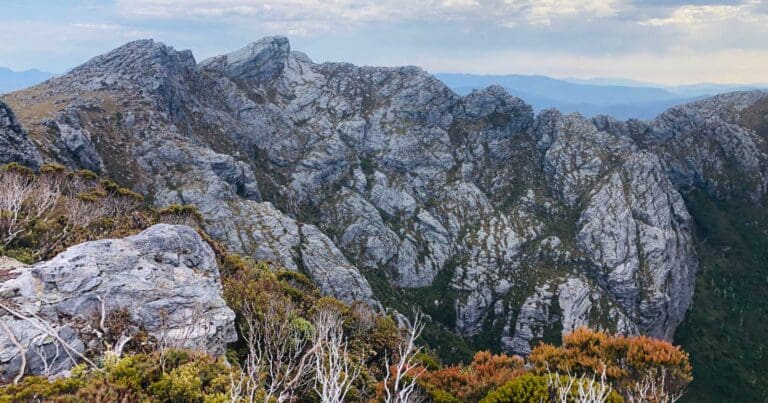
The Overland Track is situated in the heart of the Cradle Mountain-Lake St Clair National Park, which forms a significant part of the Tasmanian Wilderness World Heritage Area. It is widely regarded as Australia’s premier alpine long-distance walk, stretching for 65 kilometres from the iconic Cradle Mountain to Australia’s deepest natural lake, Lake St Clair. The track is not merely a walk through the woods; it is a traverse of a glaciated landscape that has been shaped over hundreds of millions of years. Hikers navigate through a diverse array of ecosystems, including high-altitude alpine heaths, expansive buttongrass moorlands, ancient temperate rainforests dominated by myrtle and King Billy pine, and dramatic dolerite mountain ranges.
People choose to hike the Overland Track for its profound isolation and the physical challenge of navigating a remote wilderness where self-sufficiency is the only rule. Unlike many other global long-distance tracks, there are no road access points, resupply stations, or permanent settlements between the start and the finish. Once you depart from the northern trailhead at Ronny Creek, you are committed to the landscape until you reach the southern terminus. The experience is defined by the variability of the weather and the ruggedness of the terrain. Even in the height of summer, the track can be lashed by sub-zero winds and snow, requiring a high degree of preparedness and a resilient mindset.
The commitment required for the Overland Track is substantial. Most walkers take six days to complete the standard route, but the numerous side trips to summits and waterfalls can easily extend the journey to eight or ten days. It demands a level of physical fitness that allows for carrying a full multi-day pack over steep, rocky, and often muddy terrain. For those who undertake it, the track offers a rare opportunity to experience an environment that feels prehistoric, where the silence of the alpine plateaus is broken only by the wind or the call of a black currawong.
2. Key Facts at a Glance
The following table provides the essential metrics for the Overland Track to assist in your initial planning stages.
| Feature | Specification |
| Total Distance | 65 kilometres (Main track); 82.5 kilometres (Lakeside option) |
| Typical Duration | 6 days (standard) |
| Trail Type | Point-to-point (One-way Southbound in peak season) |
| Northern Terminus | Ronny Creek, Cradle Valley |
| Southern Terminus | Cynthia Bay, Lake St Clair |
| Highest Elevation (Main Track) | 1,250 metres (Cradle Plateau) |
| Highest Point (Side Trip) | 1,617 metres (Mount Ossa Summit) |
| Lowest Point | 720 metres (Forth River Crossing) |
| Total Elevation Gain | Approximately 1,500 metres |
| Difficulty Level | Grade 4 (Moderate to Difficult) |
| Best Time to Hike | December to March |
| Mandatory Requirements | Overland Track Pass (Oct-May) and National Parks Pass |
3. Where the Trek Is and How to Get There
The Overland Track is located in the Central Highlands of Tasmania, approximately 80 kilometres south of the northern coast and 160 kilometres northwest of Hobart. The geography of the track means that logistics require careful coordination between the northern and southern ends of the park.
Reaching the Northern Start
The track begins at Ronny Creek in Cradle Valley. Most hikers fly into Launceston, which is the nearest major airport and transport hub. From Launceston, the drive to the Cradle Mountain Visitor Centre takes approximately two hours. Devonport is even closer, about 1 hour and 15 minutes away, and is the arrival point for the Spirit of Tasmania ferry from Melbourne. Public transport to the start is limited to specialized shuttle services that cater specifically to bushwalkers. These services operate daily during the peak season and often provide a convenient way to reach the trailhead without needing to park a vehicle. If you are driving your own car, you must consider how you will return to it at the end of the hike, as the finish point at Lake St Clair is several hours’ drive from the start.
Reaching the Southern Finish
The track concludes at Cynthia Bay at the southern end of Lake St Clair. The finish point includes a visitor centre, a small café, and a ferry terminal. From Lake St Clair, it is approximately 2.5 hours to drive back to Launceston and about 3.5 to 4 hours to Hobart. Most independent hikers find that the most efficient logistical arrangement is to leave their vehicle at the Lake St Clair Visitor Centre and take a pre-booked shuttle up to Cradle Mountain to start their walk. This ensures your car is waiting for you when you finish, allowing you to depart at your own pace. Alternatively, car relocation services are available where a driver moves your vehicle from the north to the south while you are on the track.
The Shuttle and Briefing Process
Upon arrival at the Cradle Mountain Visitor Centre, all walkers must check in. You will be required to show your booking confirmation and undergo a mandatory safety briefing. This briefing covers current track conditions, weather forecasts, and essential safety protocols. Once briefed, you will receive your physical Overland Track Pass, which must be displayed on your pack. A shuttle bus then takes you from the visitor centre to the Ronny Creek trailhead, where you will sign the registration book and begin your walk.
✈️ Find flights →
🚗 Compare car hire →
4. Best Time to Hike and Seasonal Conditions
Tasmania’s alpine weather is notoriously unpredictable and can be severe at any time of year. Understanding the seasonal nuances is critical for both safety and enjoyment.
Summer (December to February)
This is the most popular time to hike due to the longer daylight hours and generally warmer temperatures. During these months, daytime temperatures on the plateau typically range from 10°C to 20°C, but can still drop below freezing overnight. Summer is also the time when alpine wildflowers are in bloom, covering the moorlands in colour. However, even in mid-summer, the track can experience sudden blizzards, heavy rain, and high winds.
Autumn (March to May)
Autumn brings cooler, crisper days and a higher likelihood of frost. This season is famous for the “Turning of the Fagus” (Nothofagus gunnii), Australia’s only cold-climate deciduous tree. In late April and early May, the slopes of the mountains turn vibrant shades of gold and rust. While the days are shorter, the weather can be more stable than in the height of summer, though the risk of early snow increases as May approaches.
Winter (June to August)
Hiking the Overland Track in winter is a serious undertaking that should only be attempted by those with extensive experience in alpine environments and cold-weather survival. The track is often covered in deep snow, and the markers can be obscured. Daylight hours are very short, and temperatures frequently remain below zero. During winter, the booking system is not in place, and walkers can travel in either direction, but the requirements for self-reliance are much higher.
Spring (September to November)
Spring is often the wettest season in the highlands. As the snow melts, the track can become extremely muddy, and creeks may rise rapidly. However, spring also offers a sense of renewal as the waterfalls are at their most powerful and the native wildlife becomes more active. Temperatures begin to rise, but the volatility of the weather remains high.
Weather Risks and Impacts
Rain is a constant feature of the Tasmanian wilderness. The northern end of the track receives significantly more rainfall than the southern end. Persistent drizzle can last for days, while heavy mountain rain can turn sections of the track into small streams. Wind is perhaps the most underestimated hazard; on the exposed plateaus, gusts can be strong enough to knock a hiker off their feet, significantly increasing the risk of hypothermia through wind chill.
| Season | Average Day Temp | Average Night Temp | Conditions |
| Summer | 16°C | 5°C | Unpredictable, long days, wildflowers |
| Autumn | 12°C | 2°C | Cooler, stable, Fagus turning |
| Winter | 5°C | -2°C | Snow, very cold, short days |
| Spring | 10°C | 1°C | Wet, windy, high waterfall flow |
5. Track Conditions and Terrain
The terrain of the Overland Track is rugged and varied, requiring constant attention to footwork. The track surface has been heavily modified in some areas to protect the environment, while other sections remain in a very raw state.
Boardwalks and Managed Surfaces
Approximately 30 kilometres of the track consists of timber boardwalks. These are primarily located over buttongrass moorlands and fragile alpine herb-fields. While boardwalks make for easier walking in terms of navigation, they can be extremely slippery when wet or icy. In older sections, you may encounter “cordwood” (small logs laid across the path) or “planking” (single boards), both of which require balance and care.
Natural Surface and Mud
In the forested and lower-lying areas, the track consists of natural soil, which is frequently interrupted by a dense network of tree roots. These roots become very slick after rain. Mud is a defining characteristic of the Overland Track, particularly in sections like “Frog Flats,” the lowest point of the walk. In wet weather, mud can be ankle-deep or deeper. High-quality gaiters are essential for keeping mud and debris out of your boots.
Rocky Sections and Scrambles
The higher elevations and side trips involve significant amounts of rock. The main track climb to Marions Lookout is steep and involves navigating rock steps and a short section with a fixed chain for stability. Side trips to summits like Cradle Mountain or Mount Ossa involve “boulder hopping,” where you must navigate over large dolerite blocks. These boulders can be unstable or incredibly slippery when covered in a light dusting of snow or ice.
Exposure
Much of the track is situated above the treeline on exposed alpine plateaus. These areas offer no protection from the elements. In “white-out” conditions (fog or heavy snow), the world becomes a featureless grey, and it is easy to lose the track. Even on a clear day, the sun at high altitude is intense, and the lack of shade means hikers are constantly exposed to UV radiation.
6. Daily Distances and Typical Itinerary
The standard itinerary for the Overland Track is six days, walking from north to south. This pace allows for a balance of physical exertion and time to appreciate the environment.
Day 1: Ronny Creek to Waterfall Valley (10.7 km)
This is often considered the most challenging day due to the initial climb and the weight of a full pack. Starting at Ronny Creek (800m), the track rises through a patch of rainforest before reaching Crater Lake. From here, a very steep ascent leads to Marions Lookout (1,250m), providing a 360-degree view of the park. The track then undulates across the Cradle Plateau, skirting the base of Cradle Mountain, before descending into Waterfall Valley.
- Time: 4 to 6 hours.
- Terrain: Steep climbs, exposed plateau, boardwalks.
Day 2: Waterfall Valley to Lake Windermere (7.8 km)
A shorter day that allows for recovery or side trips. The track traverses a series of alpine moorlands and heaths. A popular side trip is to Lake Will, a glacial lake fringed by ancient pencil pines. The day ends at Lake Windermere, an island-studded lake that is one of the most picturesque spots on the track.
- Time: 5 to 3.5 hours.
- Terrain: Undulating moorland, mostly boardwalk.
Day 3: Lake Windermere to Pelion Plains (16.8 km)
This is the longest day in terms of distance. The track crosses the Pine Forest Moor before descending steeply into the rainforest. You will pass through the “Forth Valley Lookout,” offering views into the deep gorge below. After crossing the Forth River at Frog Flats, a gradual climb leads to the expansive Pelion Plains, where Pelion Hut is situated beneath the dolerite spires of Mount Oakleigh.
- Time: 5 to 7 hours.
- Terrain: Long forest sections, significant mud, some steep descents.
Day 4: Pelion Plains to Kia Ora (8.6 km)
The day begins with a steady climb through rainforest to Pelion Gap (1,126m), the high saddle between Mount Pelion East and Mount Ossa. If the weather is clear, this is the day most hikers attempt to summit Mount Ossa, Tasmania’s highest peak. From Pelion Gap, the track descends through Pinestone Valley to the Kia Ora Hut.
- Time: 3 to 4 hours (excluding side trips).
- Terrain: Sustained climb, exposed saddle, forest descent.
Day 5: Kia Ora to Windy Ridge / Bert Nichols Hut (9.6 km)
This section is dominated by ancient rainforest and spectacular waterfalls. After passing the historic Du Cane Hut, a series of side tracks lead to D’Alton, Fergusson, and Hartnett Falls on the Mersey River. The main track then climbs over Du Cane Gap before descending to the Windy Ridge area, where the modern Bert Nichols Hut is located.
- Time: 5 to 4.5 hours.
- Terrain: Rainforest, waterfalls, steep climb over the gap.
Day 6: Windy Ridge to Narcissus (9.0 km)
The final day on the main track is a gradual descent through eucalypt forest and across the Narcissus River plains. The terrain is much easier than previous days, following the Narcissus River to the northern end of Lake St Clair. Most hikers finish here and take the pre-booked ferry across the lake to Cynthia Bay.
- Time: 3 to 4 hours.
- Terrain: Flat or gently descending forest and plains.
Optional Day 7: Narcissus to Cynthia Bay (17.5 km)
For those who prefer not to take the ferry, the Lakeside Track follows the western shore of Lake St Clair. This is a long day through dense myrtle-beech rainforest. While the track is mostly flat, the numerous tree roots and occasional creek crossings make it physically demanding. Echo Point Hut provides a halfway point for those who wish to spend one last night in the wilderness.
- Time: 5 to 6 hours.
7. Navigation and Wayfinding
Navigation on the Overland Track is generally straightforward, but it requires vigilance, especially when fatigue sets in or weather conditions deteriorate.
Signage and Marking
The main track is marked with standard orange triangular markers. These are typically placed on trees in forested areas and on recycled plastic poles in the moorlands and alpine plateaus. Major junctions have clear directional signs with distances and estimated times. You will also find “registration books” at each major hut; it is essential to sign these so that rangers can track your progress.
Maps and GPX
While the track is well-defined, you should never set out without a high-quality topographical map and a compass. Digital maps and GPX files on smartphones or GPS units are excellent tools, but they should be considered secondary. Cold temperatures can cause phone batteries to drain in minutes, and the thick forest canopy can sometimes interfere with GPS signals. Familiarize yourself with the map each night to understand the elevation changes and landmarks for the following day.
White-out Conditions
On the Cradle Plateau and Pelion Gap, visibility can drop to less than ten metres during a heavy mist or snowstorm. In these conditions, the orange markers can be very difficult to spot. If you lose sight of the next marker, you must stop immediately. Do not keep walking in the hope of finding the track. Use your compass to maintain a bearing or wait for a break in the weather.
Side Trip Navigation
Side trips to mountain summits are often less clearly marked than the main track. Once you leave the maintained path, you will often follow “cairns”, small stacks of rocks left by previous hikers. These require a keen eye to follow through boulder fields. In poor weather, summit side trips should be avoided entirely, as the risk of becoming disoriented on a mountain peak is very high.
8. Accommodation Options
Accommodation on the Overland Track is provided in the form of public huts and designated tent platforms. During the booking season, you must stay at the designated overnight sites.
The Public Hut System
There are seven main huts along the track. These are basic shelters designed to provide protection from the elements. They are not hotels; they provide a communal bunk platform (usually two-tiered), a large table, and sometimes a small heater.
- Capacity: Huts range in size from 16 to 36 bunks.
- Booking: You cannot “reserve” a bunk. They are filled on a first-come, first-served basis.
- Etiquette: Huts are shared spaces. Keep your gear tidy, minimise noise after dark, and never use the hut heaters to dry wet clothing as this creates a significant fire risk.
Tent Platforms and Camping
Every hiker is required to carry a quality tent, regardless of whether they intend to sleep in the huts. Huts can and do fill up, especially during peak periods or when bad weather slows down groups. Most hut sites have timber tent platforms. These platforms protect the sensitive alpine soil and provide a flat, dry surface for your tent.
- Platform Anchors: You cannot use standard tent pegs on timber platforms. Most platforms have wire loops or metal cleats. You should carry several lengths of thin cord (2-3 metres) to secure your tent to these points.
- Campsites: At some sites, such as Waterfall Valley and Pelion, there are also grass or dirt camping areas for overflow.
Facilities at Hut Sites
- Toilets: All sites are equipped with composting “drop” toilets. These are remarkably effective but require hikers to follow the instructions regarding the use of sawdust or “bulking agent.” Toilet paper is usually provided but you must carry your own as a backup.
- Water: Rainwater tanks are attached to all huts. This is the primary water source for most hikers.
- Cooking Areas: Huts have indoor tables for cooking, but you must use your own fuel stove. There are no communal cooking facilities or pots provided.
9. Food, Water, and Resupply
Self-sufficiency is a hallmark of the Overland Track. Once you leave Ronny Creek, you are responsible for every meal and every litre of water you consume.
Water Availability and Treatment
Water is generally plentiful. Tasmania’s high rainfall means that tanks are usually well-filled and creeks are flowing. However, you should never assume the water is safe to drink without treatment.
- Tannins: Much of the water in Tasmania is stained a dark tea-colour. This is caused by organic tannins from the buttongrass and is not harmful, though it can have a distinct earthy taste.
- Treatment: To prevent waterborne illnesses like Giardia or Cryptosporidium, you should treat all water. Boiling is the most reliable method, but it consumes fuel. Many hikers prefer lightweight squeeze filters or UV purification pens. Chemical drops are a good backup but often require a 30-minute wait time.
Food Planning
You will need to carry food for at least six days, plus an extra day’s worth of emergency rations. Because you are carrying everything on your back, weight and caloric density are the most important factors.
- Breakfast: Porridge, muesli, or breakfast bars are common.
- Lunch: Wraps with hard cheese, salami, or nut butter are durable and high in energy.
- Dinner: Dehydrated or freeze-dried meals are the standard choice. They are lightweight and only require boiling water.
- Snacks: Trail mix, chocolate, and energy bars are essential for maintaining blood sugar levels during long climbs.
Fuel for Stoves
The Overland Track is a “Fuel Stove Only” area. You must carry a reliable stove and enough fuel for the entire trip.
- Gas Canisters: These are the most common and easiest to use.
- Methylated Spirits: Often used in Trangia-style stoves.
- Note on Transport: You cannot carry gas or methylated spirits on planes. You must purchase your fuel once you arrive in Tasmania. Most shuttle drivers sell fuel canisters, and they are available at outdoor stores in Launceston and Devonport.
10. Permits, Fees, and Regulations
The management of the Overland Track is designed to balance visitor experience with the preservation of a World Heritage wilderness.
The Overland Track Pass
During the peak season (October 1 to May 31), you must book an Overland Track Pass well in advance. These passes are limited to 34 independent walkers per day to prevent overcrowding and environmental degradation. The cost of the pass is approximately $285 per adult, though this is subject to annual review. This fee contributes directly to the maintenance of the track, the huts, and the removal of waste.
National Parks Pass
In addition to the Overland Track Pass, you must also hold a valid Tasmanian National Parks Pass. For most hikers, an “Icon Daily Pass” or a “Holiday Pass” is the most appropriate option. You can purchase these online or at the visitor centre when you check in.
Key Regulations
- Direction of Travel: You must walk from North to South (Cradle Mountain to Lake St Clair) during the booking season.
- Leave No Trace: You must carry out all rubbish. This includes organic waste like apple cores or orange peels, which do not decompose easily in the cold alpine environment and can harm native wildlife.
- Sanitation: You must use the provided toilets at hut sites. If you are caught between sites, you must bury human waste at least 15 centimetres deep and at least 100 metres away from any water source.
- No Fires: Campfires are strictly prohibited. The risk of peat fires, which can burn underground for weeks, is too high.
11. Safety Considerations and Risks
The Overland Track is a remote alpine walk where weather, terrain, and fatigue can combine quickly. Sound preparation and conservative decision-making are the most effective safety measures.
Hypothermia
Hypothermia is the most significant risk on the track and can occur at any time of year. It develops when the body loses heat faster than it can generate it, most commonly due to prolonged exposure to wind, rain, and cold temperatures.
- Prevention: Avoid cotton clothing, which retains moisture and accelerates heat loss. Keep waterproof layers readily accessible and eat regularly to maintain energy and body heat.
- Recognition: Early warning signs include the “umbles”, fumbling, stumbling, and mumbling. Uncontrollable shivering, confusion, or apathy indicate a serious condition. If symptoms appear, stop immediately, shelter from the wind, change into dry clothing, and insulate the person in a sleeping bag until they stabilise.
Physical Injuries
Lower-limb injuries are common due to uneven surfaces, slippery roots, mud, and the weight of a multi-day pack. An appropriate first aid kit should include blister treatment, compression bandages, antiseptic, and basic pain relief. Trekking poles are strongly recommended, as they reduce joint load and improve balance on steep, wet, or unstable sections of the track.
Emergency Communication
There is very little mobile phone reception on the track. Some high points may have a weak signal, but it is unreliable.
- Personal Locator Beacons (PLB): It is highly recommended that every group carries a PLB. In the event of a life-threatening emergency, activating a PLB sends a satellite signal to emergency services.
- Hut Radios: Some huts have emergency radios, but these are for ranger use or extreme emergencies and should not be relied upon for routine communication.
Wildlife Hazards
While most Tasmanian wildlife is harmless, you must be aware of snakes. Tiger snakes and copperheads are common on the track during summer. They are generally shy but will bite if trodden on. Always watch where you put your feet and wear gaiters for added protection. Leeches are common in the damp rainforest sections; while they are not dangerous, they are a nuisance. Salt or a quick flick will remove them.
12. Fitness and Experience Required
The Overland Track is classified as a Grade 4 walk, meaning it is suited to people with previous bushwalking experience and a good level of fitness.
Physical Fitness
You do not need to be an elite athlete, but you must be “track fit.” The biggest challenge for most people is the weight of the pack. A typical pack for the Overland Track will weigh between 15kg and 22kg.
- Training: Spend several months before your trip walking with a weighted pack. Focus on hill climbs and uneven trails. Cardiovascular fitness is important, but leg strength and core stability are what will get you through six days of heavy lifting.
Required Experience
This should not be your first multi-day bushwalk. You should be familiar with:
- Carrying and packing a large rucksack.
- Using a fuel stove in windy conditions.
- Setting up your tent quickly in the rain.
- Basic navigation and map reading.
- Managing your own body temperature through layering.
Is it suitable for first-timers?
If you are fit and have done several overnight walks, the Overland Track is a great first “long” trek. However, if you have never slept in a tent or carried more than a day pack, you should build up your experience on shorter tracks first. The remoteness of the Overland Track means that if you discover your boots don’t fit or your pack is too heavy on Day 2, there is no easy way to exit.
13. Gear and Packing Considerations
The quality of your gear can be the difference between a rewarding experience and a dangerous one. In the Tasmanian highlands, “cheap” gear often fails when you need it most.
The Three-Layer System
Your clothing strategy should revolve around layers that can be added or removed as conditions change.
- Base Layer: Lightweight merino wool or synthetic thermals. These wick sweat away from your skin.
- Insulation Layer: A high-quality fleece or a down/synthetic “puffer” jacket. This traps your body heat.
- Shell Layer: A heavy-duty waterproof and windproof jacket with a proper hood. This must be a “breathable” fabric like Gore-Tex to prevent you from getting soaked in your own sweat.
Footwear and Socks
Your boots are your most important piece of equipment. They must be waterproof, have a stiff sole for rock hopping, and provide good ankle support.
- Socks: Use dedicated hiking socks (usually a wool/synthetic blend). Avoid cotton socks, which cause friction and blisters.
- Gaiters: These are essential. They keep mud, water, and snow out of your boots and protect your lower legs from scrub and snake bites.
The Pack
A pack with a capacity of 65 to 75 litres is standard. Ensure it has a high-quality harness system that transfers the weight to your hips rather than your shoulders.
- Waterproofing: Even “waterproof” packs will leak in persistent rain. Use a heavy-duty pack liner (a thick garbage bag works well) to keep your sleeping bag and dry clothes absolutely dry.
Mandatory Gear List
Rangers will check that you have the following before you are allowed to start:
- Waterproof jacket with hood and storm front.
- Waterproof over-trousers.
- Sturdy hiking boots.
- Warm fleece or wool jumper (not cotton).
- Thermal base layers (top and bottom).
- Warm hat (beanie) and gloves.
- 3-4 season tent with inner and outer layers.
- Sleeping bag rated to -10°C and an insulated mat.
- Fuel stove and fuel.
- First aid kit and emergency whistle.
14. Guided vs Independent Hiking
There are two primary ways to experience the Overland Track, each offering a very different experience.
Independent Hiking
This is how most people walk the track. You carry all your own gear, cook your own food, and stay in public huts or tents.
- Pros: Lower cost, total freedom to choose your pace and side trips, and a sense of personal achievement.
- Cons: You must carry a heavy pack (18kg+), organise all logistics, and have the skills to manage yourself in the wilderness.
- Who it’s for: Fit, experienced hikers who value independence.
Guided Hiking
Several commercial companies operate guided tours. These range from “full pack” camping trips to “light pack” lodge-based walks.
- Pros: Much lighter packs (often only 7-10kg), food is provided and cooked for you, and professional guides handle navigation and safety. Some operators have private huts with hot showers and real beds.
- Cons: Very expensive (often $3,000 to $5,000+), you must stick to the group’s schedule, and you have less flexibility for side trips.
- Who it’s for: Those with a larger budget, less experience, or those who prefer the comfort of a bed and a guided experience.
🥾 Explore nearby experiences →
15. Environmental and Cultural Respect
The Overland Track is a privileged environment to visit, and it requires a high level of respect.
Leave No Trace Principles
- Plan Ahead: Proper planning reduces the chance of emergencies and environmental damage.
- Travel on Durable Surfaces: Stay on the track or boardwalk. Stepping off the track to avoid mud only widens the path and destroys fragile alpine plants.
- Dispose of Waste Properly: Carry out everything you carry in.
- Leave What You Find: Do not collect rocks, plants, or feathers.
- Respect Wildlife: Observe animals from a distance. Never feed them, as this leads to aggressive behavior and poor health for the animals.
Cultural Significance
The Tasmanian Aboriginal people have a deep and ongoing connection to this land. The “Big River” and “Northern” nations used these highlands for thousands of years, following seasonal tracks to hunt and gather. The landscape is dotted with sites of spiritual and historical importance. When you walk the track, you are walking on a cultural landscape. Be respectful of the silence and the antiquity of the place.
Biosecurity
To protect Tasmania’s unique flora from diseases like Cinnamon Fungus, you must ensure your boots and tent pegs are spotlessly clean before you arrive. Use the washdown stations provided at the visitor centre. This simple act helps ensure the forests you are walking through remain healthy for future generations.
16. Is This Trek Right for You?
The Overland Track is a magnificent, world-class experience, but it is not a walk in the park.
You will love the Overland Track if:
- You enjoy being in remote, wild places where the weather dictates the day.
- You find satisfaction in being self-sufficient and carrying everything you need to survive.
- You want to see some of the most dramatic mountain scenery in Australia.
- You are prepared to get muddy, wet, and tired in exchange for incredible views and solitude.
You might want to reconsider if:
- You are uncomfortable with the idea of having no mobile phone reception or “escape” route for six days.
- You have significant knee or back issues that make carrying a 20kg pack painful.
- You are looking for a relaxing, predictable holiday.
- You are not willing to invest in high-quality gear or the time required for physical training.
Deciding to hike the Overland Track is a commitment to self-sufficiency in a remote alpine environment. If you are prepared for prolonged exposure to weather, comfortable carrying a heavy pack, and willing to adapt plans when conditions change, this guide will help you plan the walk realistically and safely.
Photo Gallery
/Guide%20to%20the%20Overland%20Track%20(12).jpg "Complete Guide to the Overland Track (Tasmania)")
/Guide%20to%20the%20Overland%20Track%20(18).jpg "Complete Guide to the Overland Track (Tasmania)")
/Guide%20to%20the%20Overland%20Track%20(6).jpg "Complete Guide to the Overland Track (Tasmania)")
/Guide%20to%20the%20Overland%20Track%20(19).jpg "Complete Guide to the Overland Track (Tasmania)")
/Guide%20to%20the%20Overland%20Track%20(5).jpg "Complete Guide to the Overland Track (Tasmania)")
/Guide%20to%20the%20Overland%20Track%20(1).jpg "Complete Guide to the Overland Track (Tasmania)")
/Guide%20to%20the%20Overland%20Track%20(16).jpg "Complete Guide to the Overland Track (Tasmania)")
/Guide%20to%20the%20Overland%20Track%20(8).jpg "Complete Guide to the Overland Track (Tasmania)")
/Guide%20to%20the%20Overland%20Track%20(7).jpg "Complete Guide to the Overland Track (Tasmania)")
/Guide%20to%20the%20Overland%20Track%20(4).jpg "Complete Guide to the Overland Track (Tasmania)")
/Guide%20to%20the%20Overland%20Track%20(15).jpg "Complete Guide to the Overland Track (Tasmania)")
/Guide%20to%20the%20Overland%20Track%20(20).jpg "Complete Guide to the Overland Track (Tasmania)")
/Guide%20to%20the%20Overland%20Track%20(2).jpg "Complete Guide to the Overland Track (Tasmania)")
/Guide%20to%20the%20Overland%20Track%20(10).jpg "Complete Guide to the Overland Track (Tasmania)")
/Guide%20to%20the%20Overland%20Track%20(14).jpg "Complete Guide to the Overland Track (Tasmania)")
Do you have any photos from this hike?
Your photos can help others plan. Share shots from along the trail so fellow hikers know what to expect.
Plan carefully, hike safely: These guides are for inspiration and general planning only. Trails can change, conditions vary, and you are responsible for your own decisions, preparation, and safety. Use judgement, maps, and the Hiking Safety Systems to help you prepare effectively.