Sorry, no records were found. Please adjust your search criteria and try again.
Sorry, unable to load the Maps API.
Explore stunning hiking trails of Serpentine National Park
Discover the diverse trails of Serpentine National Park, Western Australia, offering hikes and walks for all skill levels and interests. Find your perfect adventure today.
Discover 6 hiking trails in Serpentine National Park
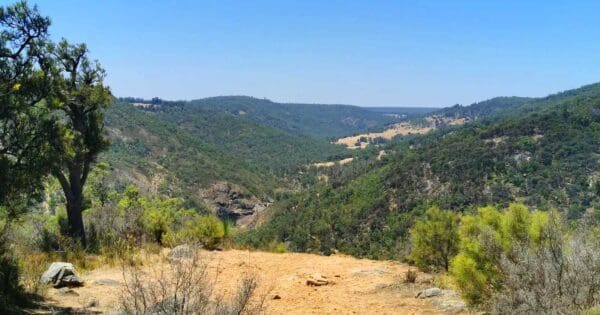

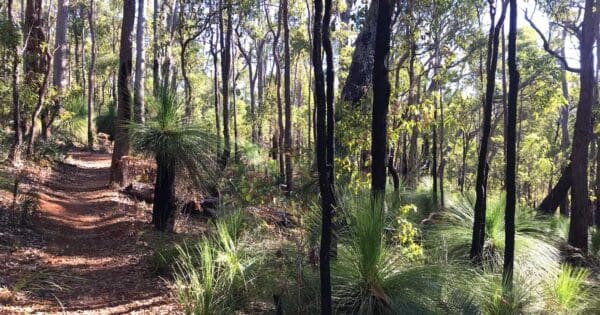
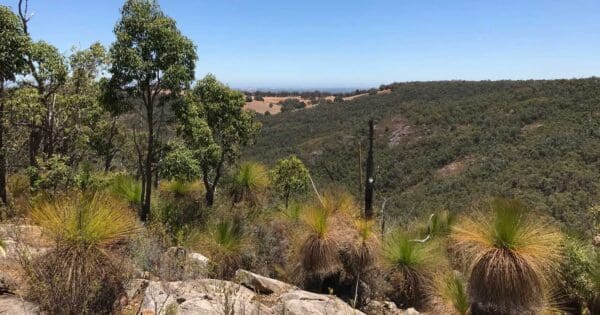


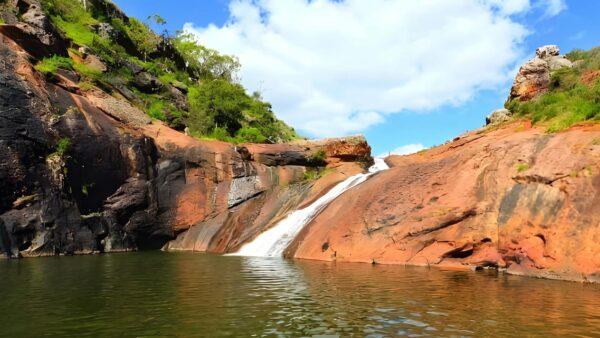

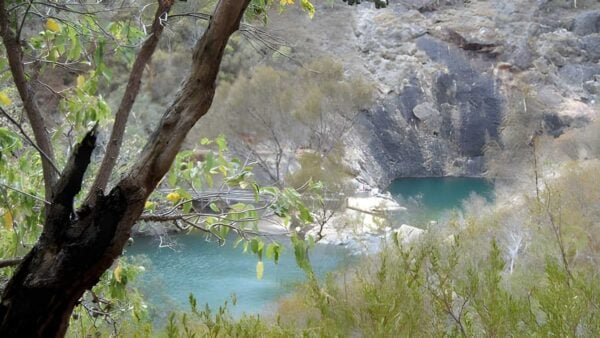
Granite Slopes, Forested Gullies and the Scarp Edge at Serpentine
Overview
Serpentine National Park sits on the western edge of the Darling Scarp, about 49 km south-east of central Perth, between Serpentine, Jarrahdale and the Serpentine Dam area. It brings together a compact but varied slice of the scarp, with steep valley country, granite hills, forest and brook lines all folded into one park.
What gives the place its character is that strong meeting point between plateau and plain. The land rises from around 60 metres to 300 metres above sea level, and the scenery shifts quickly from broad views over the coastal plain to deeply cut valleys along the Serpentine River and Gooralong Brook. Even close to the city, it still feels shaped by geology first, with water, rock and forest doing most of the talking.
Highlights
The park’s standout scenery comes from the Darling Scarp itself. There are sweeping outlooks across the Swan Coastal Plain, steep granite-backed slopes and sharply incised valleys that give the landscape a more rugged feel than many nearby bush areas.
Granite outcrops are a big part of that appeal. They create bold, open landforms among the forest and help give the park its changing character through the seasons, especially where water moves through the river and brook systems below those rocky slopes.
Best Time to Visit
The cooler months are usually when the park shows its most changeable side. It has a Mediterranean climate, with hot dry summers and cool wet winters, and most rain falls from May to October. In winter the river and stream beds run strongly, while spring brings the seasonal wildflower display that stands out across the scarp and forest margins.
Autumn can also be a rewarding time, when the first rains start to green the grasses again after summer’s dry browns. Summer has its own stark beauty, but the landscape is generally at its freshest and most expressive from late winter into spring.
Plants and Animals
Serpentine National Park protects a mix of vegetation types that reflects its varied landforms. Across the park you move through jarrah and marri forest, wandoo woodland, sheoak, scarp heath and specialised plant communities on granite outcrops. Some areas, especially jarrah-sheoak forest, are notably rich in plant life.
The granite country is especially important for conservation. These outcrops support distinctive plant and animal communities, including fire-sensitive plants and some restricted species. Two geographically restricted eucalypts occur here, including Darling Range ghost gum on granite hillsides above the falls area and salmon white gum on clayey scarp soils.
The range of habitats also supports a broad spread of fauna. The park functions as a corridor for animals moving along and across the Darling Range, and its birdlife benefits from that link between scarp and coastal plain. Stream zones and granite outcrops add more specialised habitat, including for reptiles, frogs and species such as the long-necked tortoise below the falls.
Culture and Heritage
The park contains Aboriginal cultural heritage linked to the Serpentine River, which is recorded as a site of mythological significance. The waterways are an important part of that heritage, and the park also has a longer record of Aboriginal cultural interest that has not been fully surveyed across the whole area.
It also holds a long history of formal protection. Land around Serpentine Falls was first reserved in 1900, and the present park grew in stages from that early reserve into the larger national park seen today.
Find more places to explore…
Help expand the trail collection!
Know of an official trail not listed on Trail Hiking Australia? I’m focused on showcasing the best tracks managed by land managers, and I’d love your help! Sharing a trail adds to our community and helps others discover safe, new adventures.
Submit your trail here

