Sorry, no records were found. Please adjust your search criteria and try again.
Sorry, unable to load the Maps API.
Explore stunning hiking trails of Mount Wellington
Discover the diverse trails of Mount Wellington, Tasmania, offering hikes and walks for all skill levels and interests. Find your perfect adventure today.
Discover 2 hiking trails in Mount Wellington
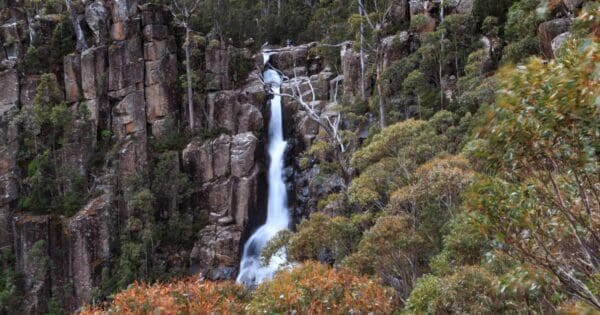

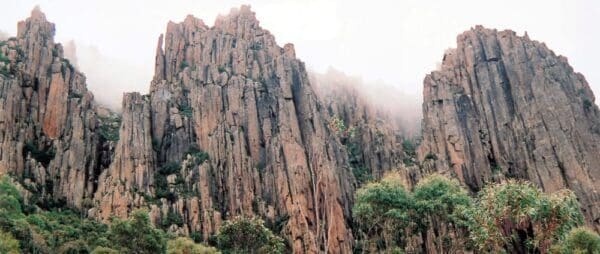

Dolerite columns above Hobart: the character of kunanyi / Mount Wellington
Overview
Kunanyi / Mount Wellington rises directly behind Hobart and shapes the whole feel of the city. The summit stands 1271 metres above sea level, and the mountain forms the eastern end of Wellington Park, a large reserved area that stretches west along the Wellington Range. From the city it can look close enough to touch, but on the ground it is a broad, complex landscape of foothill forest, gullies, cliffs, open high country and exposed rock.
What makes the mountain so memorable is the contrast packed into one place. Lower slopes carry wet fern gullies, rainforest pockets and dry eucalypt woodland, while higher ground opens into alpine vegetation, boulder fields and wind-shaped country that feels far removed from the streets below. It is this quick shift from urban Hobart to mountain country that gives the place its distinctive presence.
Highlights
The defining feature is the great sweep of Jurassic dolerite that gives the upper mountain its bold, columned rock faces and broken plateau country. The Organ Pipes are the best known expression of this geology, with tall vertical buttresses standing out above the city, but the mountain’s scenic character also comes from its sandstone cliffs, boulder fields and the long ridgeline running west through the range.
There is also a strong sense of scale here. From higher points the mountain looks across Hobart, the Derwent estuary and much of southern Tasmania, while on the slopes themselves the scenery changes constantly between shaded gullies, waterfalls, rocky outcrops and open subalpine ground. In the foothills, mossy gullies and tall forest create a very different mood from the stark summit country above.
Best Time to Visit
Kunanyi / Mount Wellington changes sharply with the seasons, so the best time to visit depends on the kind of landscape you want to see. Summer and early autumn usually bring the clearest access to the higher country, with longer daylight and a good chance of broad views across Hobart and the south. Spring is a good time for seeing the mountain’s shifts in vegetation, especially where wetter gullies and open slopes sit close together.
Winter gives the mountain a different character again, with snow sometimes settling on the upper slopes and summit. Even without snow, the colder months can be the best time to appreciate how quickly the terrain changes from sheltered foothills to exposed alpine country.
Plants and Animals
The mountain supports an unusually wide spread of habitats for such a compact area, from rainforest and fern gullies low down to alpine moorland higher up. This range of altitude, soils and exposure allows a rich mix of plant life, including many mosses, liverworts and lichens, along with plant communities that are restricted or poorly reserved elsewhere in Tasmania.
Animal life is equally varied. Almost all of Tasmania’s mammal species have been recorded here, including wombats, echidnas, bandicoots, potoroos, pademelons and Tasmanian devils. The mountain is also notable for birdlife, with at least 67 bird species recorded in the park, making it one of the richest avian areas of its size in Tasmania. High altitude boulder screes provide important habitat for the endemic long-tailed mouse.
Culture and Heritage
Kunanyi / Mount Wellington and the wider Wellington Range are described as the traditional lands of the Muwinina people, and the mountain remains part of a broader Palawa cultural landscape. The mountain is understood as a place of deep spiritual connection, linked to water, ancestors and long continuing relationships with country.
Visible reminders of long Aboriginal presence include sandstone rock shelters and stone artefacts, particularly around the foothills. The mountain name Kunanyi is the revived Aboriginal name for the place. More recent history also sits strongly in the landscape, especially through the long-established network of historic tracks and huts on the mountain.
Find more places to explore…
Help expand the trail collection!
Know of an official trail not listed on Trail Hiking Australia? I’m focused on showcasing the best tracks managed by land managers, and I’d love your help! Sharing a trail adds to our community and helps others discover safe, new adventures.
Submit your trail here

