Sorry, no records were found. Please adjust your search criteria and try again.
Sorry, unable to load the Maps API.
Explore stunning hiking trails of Mark Oliphant Conservation Park
Discover the diverse trails of Mark Oliphant Conservation Park, South Australia, offering hikes and walks for all skill levels and interests. Find your perfect adventure today.
Discover 4 hiking trails in Mark Oliphant Conservation Park
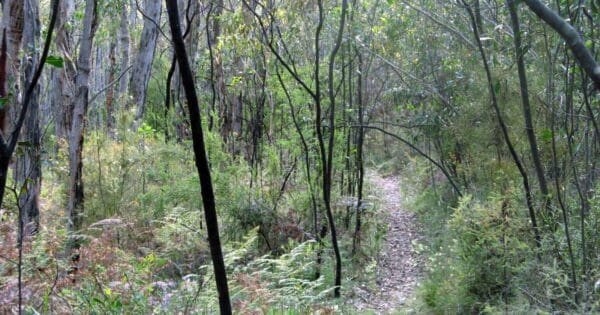

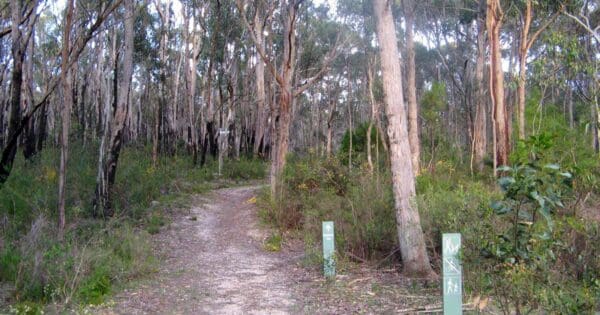

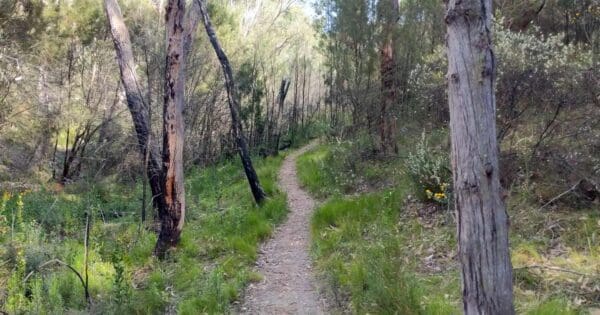
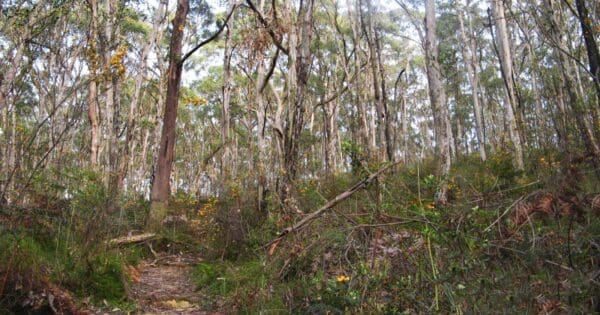
Stringybark Forest and Wildlife Refuge in the Adelaide Hills
Overview
Mark Oliphant Conservation Park protects a compact but important stretch of Adelaide Hills forest about 14 km south-east of Adelaide, near Stirling, Heathfield and Longwood. Much of the park remains in a largely natural condition, with steep slopes, sheltered gullies and creek lines giving it the feel of a proper patch of hills country rather than a suburban reserve.
What stands out here is the quality of the remnant forest. The park preserves one of the small surviving parcels of high-rainfall sclerophyll forest typical of the higher parts of the Adelaide Hills, and it also plays a corridor role linking native vegetation across the wider Mount Lofty Ranges.
Highlights
The landscape is made up of hilly uplands and dissected tableland remnants, with elevations ranging from about 370 to 470 metres above sea level. Slopes are moderate to steep, and the shape of the country creates a mix of ridgelines, side gullies and creek flats that gives the park much of its scenic character.
The forest itself is the real drawcard. Messmate stringybark and pink gum dominate much of the park, creating the classic look of the wetter Adelaide Hills. In the southern valley, candlebark gums grow near the creek lines, adding another distinct element to the landscape.
Best Time to Visit
The park generally has hot, dry summers and cool, wet winters, with most rainfall falling through winter and spring. For many walkers, the most comfortable time is from late autumn to spring, when the forest is greener, the creeks and gullies feel fresher, and the higher-rainfall vegetation is at its best.
Spring is especially rewarding for the ground flora, with native orchids and lilies recorded in the park. Summer can still have its own appeal, but it is usually the harsher season here, with January and February the hottest months.
Plants and Animals
Most of the park is covered by open sclerophyll forest associated with the wetter Adelaide Hills. Alongside messmate stringybark and pink gum, there are patches with cup gum, while the understorey includes species such as needle bush, silver banksia, native cherry and fire weed. On lower slopes, South Australian blue gum appears with golden wattle and guinea flower.
The flora is notable for its diversity and for the presence of plants of conservation interest. Candlebark is recorded here as a rare species in South Australia, and the park also supports many native orchids and lilies, along with maidenhair fern in the north.
Despite its modest size, the park is valuable wildlife habitat in a heavily settled part of the Mount Lofty Ranges. Southern brown bandicoots are known from the park, along with yellow-footed antechinus, southern bush rats, echidnas, western grey kangaroos and several bat species. Birdlife is also strong, with records including scarlet robin, superb fairy-wren, eastern spinebill, crimson rosella and yellow-tailed black cockatoo.
Culture and Heritage
Mark Oliphant Conservation Park lies on the western boundary of Peramangk country, with Kaurna country to the west on the Adelaide Plains. Archaeological evidence in the park shows Aboriginal use of the area, including stone artefacts found on sandy flats, lower hill margins and near quartz outcrops that were used for toolmaking.
The park also carries more recent layers of history. Part of what is now the Loftia recreation zone was used for public recreation from the 1930s, later passed through YMCA and government ownership, and the reserve was renamed in 1996 to honour Sir Mark Oliphant and his long association with conservation in the Mount Lofty Ranges.
Find more places to explore…
Help expand the trail collection!
Know of an official trail not listed on Trail Hiking Australia? I’m focused on showcasing the best tracks managed by land managers, and I’d love your help! Sharing a trail adds to our community and helps others discover safe, new adventures.
Submit your trail here

