Sorry, no records were found. Please adjust your search criteria and try again.
Sorry, unable to load the Maps API.
Explore stunning hiking trails of Maria Island National Park
Discover the diverse trails of Maria Island National Park, Tasmania, offering hikes and walks for all skill levels and interests. Find your perfect adventure today.
Discover 3 hiking trails in Maria Island National Park



Fossil Cliffs, Dolerite Peaks and the Long Story of Maria Island
Overview
Maria Island National Park lies off Tasmania’s east coast, opposite Triabunna, and protects a whole island landscape shaped by the sea. It covers about 11,550 hectares of land as well as a marine section around the northern part of the island, so the park brings together sheltered bays, long beaches, striking cliffs, open grassland and forest in one compact place. The island’s natural character is unusually easy to read because the geology, coastline and wildlife are all so prominent.
What makes Maria Island feel different from many other Tasmanian parks is the mix of strong scenery and a calm, open landscape. Much of the island is free of vehicles, and the combination of broad coastal views, visible landforms and abundant animal life gives it a quiet, spacious feel that stays with you.
Highlights
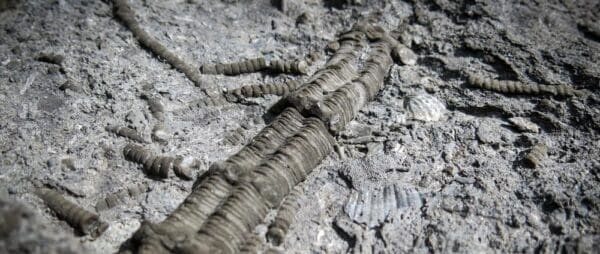
The scenery here is shaped by two very different kinds of rock. On the western side, the Painted Cliffs stand out for their weathered sandstone patterns, where wind and waves have carved swirling lines and warm bands of colour into the rock. Near Darlington, the Fossil Cliffs expose richly fossil-bearing layers laid down around 300 million years ago, with clams, corals, sea fans, scallop shells and sea lilies preserved in the stone.
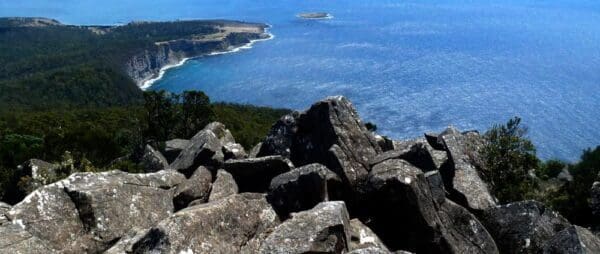
The island’s higher country has a completely different look. Dolerite dominates the peaks and ridgelines, especially around Mount Maria and Bishop and Clerk, creating steep profiles and wide coastal outlooks. Along the eastern side, sheer cliffs face the Tasman Sea, giving the park a harder, more dramatic edge than the gentler bays and beaches on the west.
Best Time to Visit
Maria Island can be rewarding at any time of year, but the milder months from spring through autumn usually make the island easiest to enjoy for longer walks and time spent out on the coast. Spring is especially appealing if you want active wildlife and fresh green growth across the grasslands, while the warmer months tend to bring clearer days for appreciating the contrast between the island’s cliffs, beaches and inland peaks.
Birdlife is a strong reason to come in different seasons rather than aiming for a single perfect month. The island is recognised as one of Tasmania’s best birdwatching spots, so timing can shape what you notice, particularly in the woodlands and around the coast.
Plants and Animals
Wildlife is one of the defining features of Maria Island National Park. Native pademelons have long been part of the island, and it is also well known for easily seen forester kangaroos, Bennett’s wallabies, Flinders Island wombats, Cape Barren geese and Tasmanian native hens. The island has also been used as a refuge for threatened species, taking advantage of its separation from the mainland.
Birdlife is particularly rich. All but one of Tasmania’s 12 endemic bird species have been recorded here, and the island is an important place to look for the endangered forty-spotted pardalote. Around Darlington, habitat also supports other threatened birds including the swift parrot, adding to the sense that this is a park where conservation values are visible as well as significant on paper.
Culture and Heritage
Maria Island has a long human history that reaches back to Aboriginal occupation and continues through European exploration, convict settlement and later industry. On the island’s north-west tip, Darlington preserves one of the most important historic precincts in Tasmania, with a group of intact probation-era buildings set within a largely unchanged landscape.
Darlington first opened as a penal settlement in 1825 and later became a probation station, part of a convict management system that was unique to Tasmania. It is now recognised nationally and internationally for that history, and forms part of the Australian Convict Sites World Heritage listing. This historic layer gives Maria Island a depth that is quite distinct from parks valued only for scenery and wildlife.
Find more places to explore…
Help expand the trail collection!
Know of an official trail not listed on Trail Hiking Australia? I’m focused on showcasing the best tracks managed by land managers, and I’d love your help! Sharing a trail adds to our community and helps others discover safe, new adventures.
Submit your trail here

