Sorry, no records were found. Please adjust your search criteria and try again.
Sorry, unable to load the Maps API.
Explore stunning hiking trails of Langi Ghiran State Park
Discover the diverse trails of Langi Ghiran State Park, Victoria, offering hikes and walks for all skill levels and interests. Find your perfect adventure today.
Discover 3 hiking trails in Langi Ghiran State Park
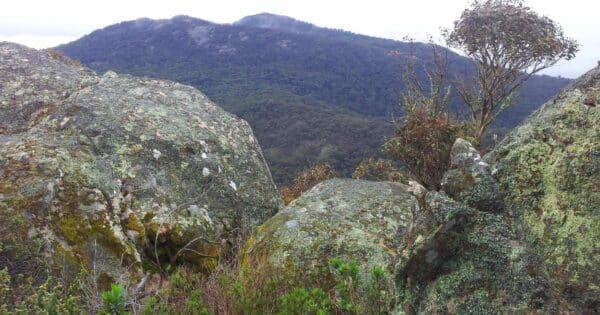
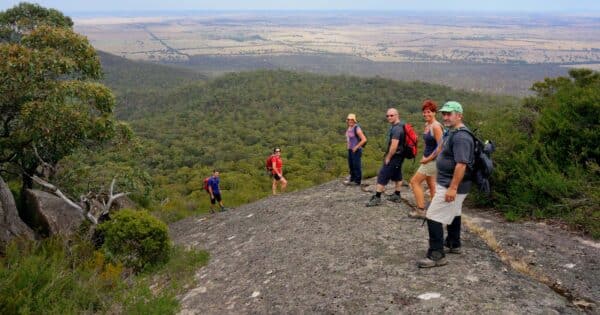

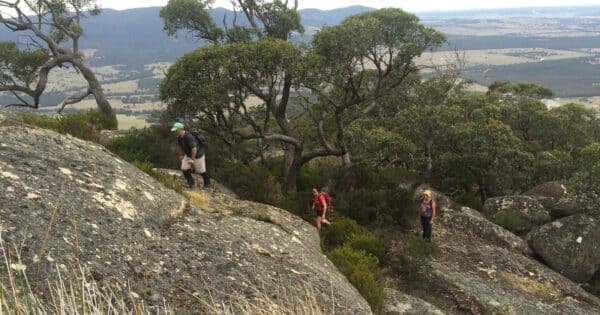
Granite Peaks and Wooded Slopes at Langi Ghiran
Overview
Langi Ghiran State Park sits about 220 km west of Melbourne, just east of Ararat, and protects a striking mix of mountain country and lower woodland. The park takes in Mount Langi Ghiran in the north, Mount Gorrin in the south and the saddle between them, with broad open woodland spreading out on the western side. It feels quite distinct in this part of western Victoria, rising abruptly from surrounding farmland and vineyards as a rugged, easily recognised range.
The character of the park comes from that contrast. Granitic peaks and steeper forested slopes give way to gentler country below, so the landscape changes quickly as you move through it. Even though it is not a large park, it holds a good spread of native vegetation communities that were once more typical of the district.
Highlights
The biggest draw here is the shape of the range itself. Mount Langi Ghiran and Mount Gorrin stand out strongly above the plains, and their connecting saddle gives the park much of its visual character. The mountains were formed from granitic intrusions, and that geology still defines the place, from the rocky upper slopes to the sandy flats below.
Scenically, this is a park of contrast rather than drama for its own sake. Higher ground looks out across the surrounding agricultural country, with views towards Mount Buangor and, farther west, the Grampians. From a distance, the range is just as memorable, forming a prominent backdrop from both Ararat and Beaufort.
Best Time to Visit
Spring is one of the best times to be here, when wildflowers and orchids are in bloom and the woodland feels at its most varied. Autumn also suits the park well, especially for clearer views and comfortable walking weather.
Winter has its own appeal, particularly in the quieter lower country, though the granitic sands can leave some flats quite wet. In summer, the higher rocky sections and shaded areas around the forested slopes can still make for a rewarding visit, but the park tends to show its gentler side most clearly in the cooler months.
Plants and Animals
Langi Ghiran holds a surprising variety of plant communities for a relatively compact park. The peaks and slopes support open forest dominated by Red Stringybark and Long-leaf Box, while elevated gullies and saddles carry Messmate and Manna Gum. On the western side, the country opens into Yellow Box and River Red Gum woodland, with Candlebark locally prominent.
The flora includes species that are especially significant in Victoria, including the Langi Ghiran Grevillea, which is confined to near the summit of Mount Langi Ghiran, along with rare orchids and other locally important plants. Across the park, woodland and forest habitat support Eastern Grey Kangaroos, wallabies, echidnas and a wide range of birdlife. Large old trees and fallen timber add to that habitat value, especially for hollow-dependent wildlife.
Culture and Heritage
Langi Ghiran has a direct and specific connection with Djab Wurrung Country. The place is also known as Lar-ne-jeering, and the park lies within an area once used by the Ngutuwul balug, or Mountain people, clan of the Djab Wurrung language group. The name has been associated with Yellow-tailed Black Cockatoos, and the mountain itself carries long-held cultural meaning.
The park contains a rich concentration of Aboriginal cultural places, including rock art sites, rock shelters, scarred trees and stone artefact scatters. Several art sites are described as distinct to the Langi Ghiran area, and one has been recognised on the Register of the National Estate. There is also later historic heritage here in the granite-built reservoir and water supply structures dating from the 1870s and 1880s, which remain part of the park’s story.
Find more places to explore…
Help expand the trail collection!
Know of an official trail not listed on Trail Hiking Australia? I’m focused on showcasing the best tracks managed by land managers, and I’d love your help! Sharing a trail adds to our community and helps others discover safe, new adventures.
Submit your trail here

