Sorry, no records were found. Please adjust your search criteria and try again.
Sorry, unable to load the Maps API.
Explore stunning hiking trails of Kanangra-Boyd National Park
Discover the diverse trails of Kanangra-Boyd National Park, New South Wales, offering hikes and walks for all skill levels and interests. Find your perfect adventure today.
Discover 3 hiking trails in Kanangra-Boyd National Park
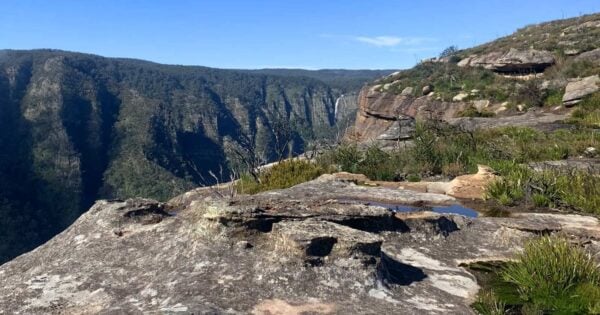




Cliffs, Plateaux and Deep River Country at Kanangra-Boyd
Overview
Kanangra-Boyd National Park sits on the south-western side of the Greater Blue Mountains Area World Heritage Property, around 180km from Sydney. It covers more than 68,000 hectares of rugged tableland, escarpment and river country, with the headwaters of the Kowmung, Kanangra and Jenolan river systems rising here. The scale of the landscape is a big part of what makes the park feel so distinctive: high plateaux break suddenly into deep valleys and gorges, and much of the park forms a continuous ecological link with neighbouring Blue Mountains country.
Highlights
This is a park defined by contrast. Sheer sandstone walls, high open plateaux and deeply cut river valleys give it a dramatic, strongly layered look that feels different from the more familiar edges of the Blue Mountains. Kanangra Walls is the best-known scenic feature, with cliff country dropping away toward remote ridges and peaks including Mount Cloudmaker.
There is more to the park than sandstone scenery alone. Limestone and karst landscapes add another dimension, and the mix of escarpments, swampy depressions and incised valleys gives the whole area a striking geological variety.
Best Time to Visit
Kanangra-Boyd can be rewarding across the year, but the feel of the place shifts with altitude and terrain. The warmer months are often a good time to see wildlife, while the higher parts of the park can be cool and exposed outside summer. Spring and autumn usually suit visitors who want clearer, milder conditions for taking in the escarpments, plateaux and forested valleys without the harsher extremes of midsummer or winter.
Plants and Animals
The park protects a wide spread of habitats shaped by geology, altitude and shelter. These include heathlands, swamps, rainforest, wet and dry sclerophyll forest, rock outcrops and karst systems. Rainforest survives in sheltered valleys cut into the Bindook, Werong and Boyd escarpments, where long protection from fire and aridity has allowed remnant communities to persist.
Higher, cooler parts of the park support sub-alpine swamps, bogs and snow gum communities, while the broader World Heritage landscape is recognised for its eucalypt-dominated ecosystems. Wildlife commonly associated with the park includes birds and ground-dwelling mammals, with lyrebirds and echidnas regularly noted in the area.
Culture and Heritage
Kanangra-Boyd National Park is in the traditional Country of the Gundungurra and Darug people. Earlier park planning also recorded cultural connections involving the Kanangra region and noted spiritual significance to Gundangarra people, alongside Aboriginal site records within the park itself. Because the landscape sits within a broader cultural country that has been described in different ways over time, it is best understood as a place with deep and continuing Aboriginal connection rather than a single simple boundary.
Find more places to explore…
Help expand the trail collection!
Know of an official trail not listed on Trail Hiking Australia? I’m focused on showcasing the best tracks managed by land managers, and I’d love your help! Sharing a trail adds to our community and helps others discover safe, new adventures.
Submit your trail here

