Sorry, no records were found. Please adjust your search criteria and try again.
Sorry, unable to load the Maps API.
Explore stunning hiking trails of Evercreech Forest Reserve
Discover the diverse trails of Evercreech Forest Reserve, Tasmania, offering hikes and walks for all skill levels and interests. Find your perfect adventure today.
Discover 3 hiking trails in Evercreech Forest Reserve




Among Tasmania’s tallest white gums
Overview
Evercreech Forest Reserve is a compact patch of tall wet forest in north-east Tasmania, known for its exceptional stand of white gums. The reserve protects forest near the headwaters of the South Esk River, where moist gullies, flowing water and steeply rising slopes create a cooler, greener feel than the surrounding farming country. It sits inland from the north-east coast, not far from Fingal and Ringarooma, and is one of those places that feels bigger once you are under the trees.
What gives Evercreech its character is scale. The forest here includes Eucalyptus viminalis, or white gum, growing to more than 90 metres, with some of the tallest examples of that species in Australia. Alongside these giants are wetter mixed forest elements and regrowth stands, so the reserve shows both the grandeur of mature trees and the layered structure of a living Tasmanian wet forest.
Highlights
The defining feature here is the grove of towering white gums. Their pale trunks rise straight out of the slope and dominate the forest canopy, creating a strong sense of height even before you notice just how far the crowns sit above the ground. This is not a broad alpine landscape or a coast with big open views. Its appeal is vertical, enclosed and deeply forested.
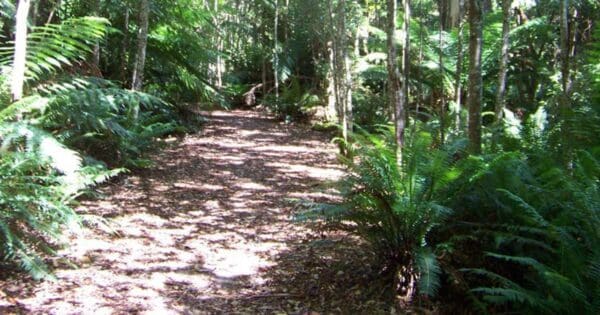
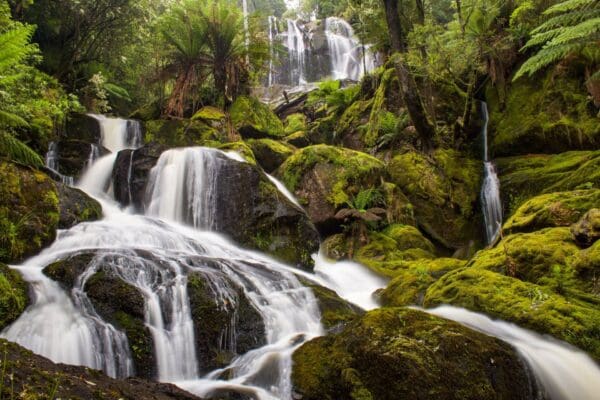
Evercreech also has a pleasing mix of scenery within a relatively small area. The reserve combines tall eucalypt forest with damper pockets of ferny understorey and creek-fed country near the South Esk headwaters, so the natural character shifts from lofty trunks to sheltered, green gullies.
Best Time to Visit
Evercreech suits a visit through most of the year, but the cooler months tend to bring out the reserve’s wet-forest character best. Autumn, winter and spring usually give the forest a fresher, deeper green look, and the creek lines and falls are often at their most appealing after wetter periods. In summer, the height of the canopy still helps the forest feel shaded and sheltered.
If you are choosing purely for atmosphere rather than convenience, a calm day after recent rain is often when this place feels most like itself, with the pale trunks standing out against darker foliage and the gullies carrying more moisture.
Plants and Animals
The reserve is centred on wet sclerophyll forest dominated by white gum, with blackwood, silver wattle and other eucalypts appearing through parts of the forest. In wetter sections, the vegetation shifts toward mixed forest, with a denser, softer understorey and more fern cover. Shrubs such as dogwood, musk and native currant are part of this forest mix, especially where moisture is higher.
Tree ferns are a characteristic feature in damp sites, while bracken and drier shrubs appear on less fertile or more open ground. This variety in moisture and forest structure supports a typical north-east Tasmanian bush fauna, with the reserve’s creek lines and mature forest adding to its value as habitat.
Find more places to explore…
Help expand the trail collection!
Know of an official trail not listed on Trail Hiking Australia? I’m focused on showcasing the best tracks managed by land managers, and I’d love your help! Sharing a trail adds to our community and helps others discover safe, new adventures.
Submit your trail here

