Hike at a Glance
Max elevation: 106m
Min elevation: 48m
Total Ascent: 161m
Hike overview
The Epping to Eastwood walk via the Lane Cove River is the longer and more immersive bush route between the two stations, offering a welcome contrast to nearby suburbia. Stretching for 10.2 kilometres through Lane Cove National Park, this grade 3 hike usually takes around four hours and rewards steady walking with a series of creek crossings, shaded gullies, and some of the most peaceful river scenery in northern Sydney. Water is a constant presence on this walk, shaping the valleys you move through and providing natural places to pause along the way.
From Epping Station, leave on the Oxford Street side and follow the footpaths past the local shops, heading downhill along Oxford Street before turning left into Derby Street. At the end of the road, the route slips past a yellow gate and onto a concrete driveway that curves gently left. Just before reaching a tunnel beneath the M2, an intersection marks the transition from suburban edges into bushland.
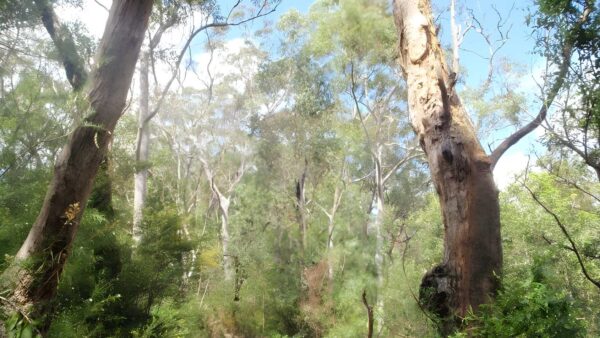
Following the Great North Walk signage, the track passes through the tunnel and immediately begins to feel more secluded. Dense vegetation closes in as the path winds through a gully, skirting a fenced sewage vent before reaching the sign that marks entry into Lane Cove National Park. Soon after, a signposted junction leads you left toward Whale Rock, where the trail narrows and follows Devlins Creek deeper into the valley.
The path eventually broadens again near the Cheltenham service trail before continuing toward Big Ducky Waterhole. This quiet bend in the creek is a natural place to stop, with a rock overhang providing shelter and good birdwatching opportunities. Sadly, rubbish can sometimes be an issue here, and even carrying out a small amount makes a difference. From the waterhole, the track continues through the valley toward Whale Rock, a large boulder whose shape and markings resemble a whale resting among the trees. It is an easy place to linger, explore, and take a short break.
Beyond Whale Rock, the route follows service trails through the valley, crossing small concrete creek crossings and gradually approaching the Pennant Hills area. After descending a short, steep hill, the track reaches a causeway crossing of the Lane Cove River before climbing gently again along wide management trails. The walking here is generally straightforward, with the river often visible to your right and tall forest surrounding the path. Power lines briefly cut across the landscape, offering an open outlook over the river below before the track reaches Browns Waterhole.
Browns Waterhole is a broad, shallow section of the river below a concrete weir and is another highlight of the walk. A shared cycle and footpath crosses the top of the weir, and on the western side there is a picnic table and small clearing overlooking the water. After rain, the causeway can be slippery or impassable, so care is needed. Leaving the waterhole, the walk heads uphill on a concrete trail toward Terry’s Creek Walking Track.
The character of the walk changes again as the route follows Terry’s Creek through dense bush, metal walkways, wooden steps, and shaded gullies. The track weaves under the M2 and continues through a network of bush paths, repeatedly crossing creeks and passing sewage access points that serve as practical navigation markers. Although there are many junctions, clear signage for Eastwood Station keeps the route easy to follow.
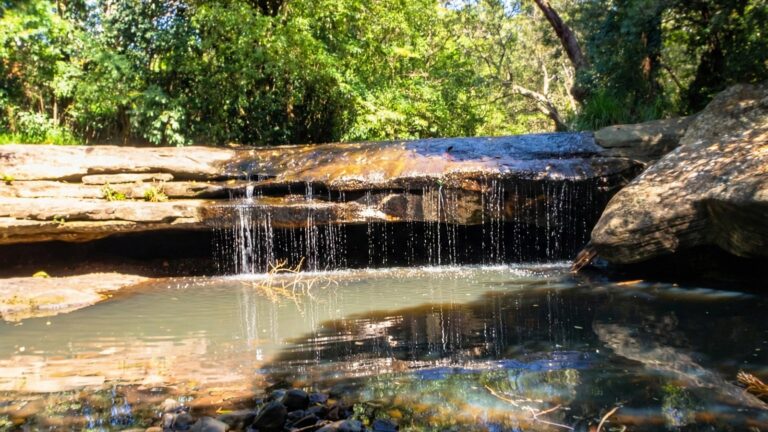
A short side trip leads to Terry’s Creek Waterfall, a small but pleasant cascade tucked into a fern filled gully. It is well worth the brief detour and makes a calm place to rest before returning to the main track. From the waterfall, the walk continues upstream through more open forest, crossing Terry’s Creek and gradually transitioning back toward parkland.
The final section passes through Forrester Park and along nearby streets, briefly returning to suburbia. After crossing Terry’s Creek again, the route follows Vimiera Road, then Balaclava Road and Blaxland Road, before turning into Ethel Street. Eastwood Railway Station appears at the end of the road, marking the conclusion of a walk that feels surprisingly remote for much of its length.
This route suits walkers looking for a longer day out with plenty of variation, reliable shade, and frequent access to water. While navigation requires attention at times, the well signed tracks and changing landscapes make this a rewarding way to travel between Epping and Eastwood on foot.
Track grade
Grade 3 (Moderate) - Walks for Most Fitness Levels: Grade 3 on the AWTGS represents moderate walking tracks. These are ideal for walkers with some fitness who are comfortable with some hills and uneven terrain. While suitable for most ages, some bushwalking experience is recommended to ensure a safe and enjoyable experience. Tracks may have short, steep hill sections, a rough surface, and many steps. The total distance of a Grade 3 walk can be up to 20 kilometers.
Walk map and GPX file
Max elevation: 106 m
Min elevation: 48 m
Total climbing: 161 m
Total descent: -191 m
Content use
Please don’t copy GPX files or content from this site to AllTrails or other platforms. Each trail has been personally mapped, documented, and refined to support Australia’s bushwalking and hiking community. While some details come from land managers, every listing reflects significant personal effort. This is a free, community-driven initiative—your respect helps keep it that way.
Gallery
Got any photos from this hike? Your photos can help others plan. Share shots from along the trail so fellow hikers know what to expect.
Click to add your photos >>
Getting there
Getting to the trailhead: Lane Cove National Park.
This walk can be completed in either direction, starting at Epping Railway Station or Eastwood Railway Station. The route description above is written beginning at Epping Railway Station.
If starting at Epping, the walk begins directly from Epping Railway Station. Epping is well serviced by public transport, with regular train services on the Sydney Trains network and multiple bus routes stopping nearby. If you are driving, there is free parking available in surrounding streets, though availability can vary depending on the time of day.
If finishing at Eastwood, the walk concludes at Eastwood Railway Station, making the return journey straightforward. Eastwood Station is also serviced by regular train services and local buses. For those driving, free street parking is available in the surrounding area, allowing flexibility if you choose to start or finish the walk by car.
Access to Lane Cove National Park is straightforward. Public transport links include North Ryde Station and bus services from Chatswood. By car, the park can be reached from Chatswood via the Pacific Highway and Fullers Road, turning into Lady Game Drive just before the bridge. Max Allen Drive provides access to the northern side of the river, while crossing Fullers Bridge and turning into Riverside Drive leads to the southern side. From Ryde, Lane Cove Road connects directly to Riverside Drive just past Eden Gardens. There are also several pedestrian access points from Pennant Hills, including entrances via Britannia Street and Ferguson Avenue.
Need a rental car to get you to the hike? Find one here.
Find a place to stay
Wondering where to stay near this hike? Find accommodation close to the trailhead — hotels, cabins and campgrounds nearby. Click the button to view the interactive map.
Closest towns to this walk: Artarmon, Chatswood, East Lindfield, East Ryde, Epping, Gladesville, Gordon, Greenwich, Hunters Hill, Lane Cove, Lane Cove West, Lindfield, Longueville, Macquarie Park, Mount Colah, North Ryde, Pennant Hills, Riverview, Roseville, Thornleigh
Let someone know
Heading out? Fill in a trip intentions form so someone knows your plans. If things go wrong, they can raise the alarm fast, giving you peace of mind on the trail.
About the region
Lane Cove National Park is a peaceful pocket of bushland tucked surprisingly close to Sydney’s city centre, following the gentle curves of the Lane Cove River from East Ryde through to Pennant Hills and West Chatswood. It feels removed from the surrounding suburbs, offering a calm, green escape that suits everything from a quiet walk to a full family day out.
The park is well set up for relaxed outdoor time. Numerous picnic areas are scattered along the river and through the forest, many with tables, barbecues, open grassy spaces and nearby walking tracks. Some areas also include children’s play equipment and easy access to bike friendly paths, making it simple to plan a low key day that works for all ages. Whether you are stopping for lunch or settling in for the afternoon, there is no shortage of pleasant spots to spread out and unwind.
Once you are ready to move, the park offers plenty of ways to explore. Walking tracks wind through forest, gullies and along the river, ranging from gentle strolls to longer bush walks. You can hire a boat from the Lane Cove Boatshed and paddle quietly along the river, cycle along the park roads, or ride the fire trail between Pennant Hills and West Pymble if you are looking for something more energetic. The park also has a rich past, with historic features best discovered on the self guided Heritage Walk. Brochures are available from the Lane Cove park office. For those wanting to extend their stay, Lane Cove Holiday Park offers campsites and cabins right within the park.
Wildlife is a constant presence, even close to picnic areas and main tracks. Kookaburras often announce themselves with their familiar call, rainbow lorikeets flash between the treetops, and eastern water dragons are frequently seen basking near the riverbanks. Early mornings and quieter times of day tend to offer the best chances for birdwatching.
The park changes character with the seasons. Autumn brings crisp, sunny days that suit picnics and long lunches outdoors, while spring fills the park with new life, from ducklings on the river to wildflowers lining the walking tracks. At any time of year, Lane Cove National Park offers a welcoming place to slow down, explore, and enjoy a natural setting that feels far removed from the city around it.
Similar walks nearby
Looking for more walks in or near Lane Cove National Park? Try these trails with a similar difficulty grade.
Explore safe
Plan ahead and hike safely! Carry enough water, pack layers for changing conditions, and bring safety gear like a torch, PLB, and reliable communication device. Check official sources for trail updates, closures, and access requirements, and review local weather and bushfire advice. Most importantly, share your plans with someone before you go. Being prepared makes for a safer and more enjoyable hike! Stay Safe, Explore More, and Always #ExploreSafe.
Packing checklists
What you carry in your pack depends on factors like weather, terrain, and your adventure type. Not sure what to bring? My free planning, food, and packing checklists are a great starting point, covering day hikes, overnight trips, and multi-day adventures. Use them to customise your kit and always prioritise safety.
Suggest an edit
Notice something different about this trail? Whether it’s a new feature, a route change, or a closure, share your update so we can keep our info accurate and helpful for fellow hikers.
Click to suggest edits >>
Acknowledgement of Country
Trail Hiking Australia acknowledges the Traditional Owners of the lands on which we hike and pay respects to their Elders, past and present, and we acknowledge the First Nations people of other communities who may be here today.