Essential techniques for hiking uphill and downhill
Hiking hills places different demands on the body depending on whether you are climbing or descending. Ascents challenge cardiovascular fitness and muscle endurance, while descents place greater stress on joints, balance, and control. By adjusting your pace, stride length, posture, and technique, you can move more efficiently, reduce fatigue, and protect your knees on both uphill and downhill terrain.
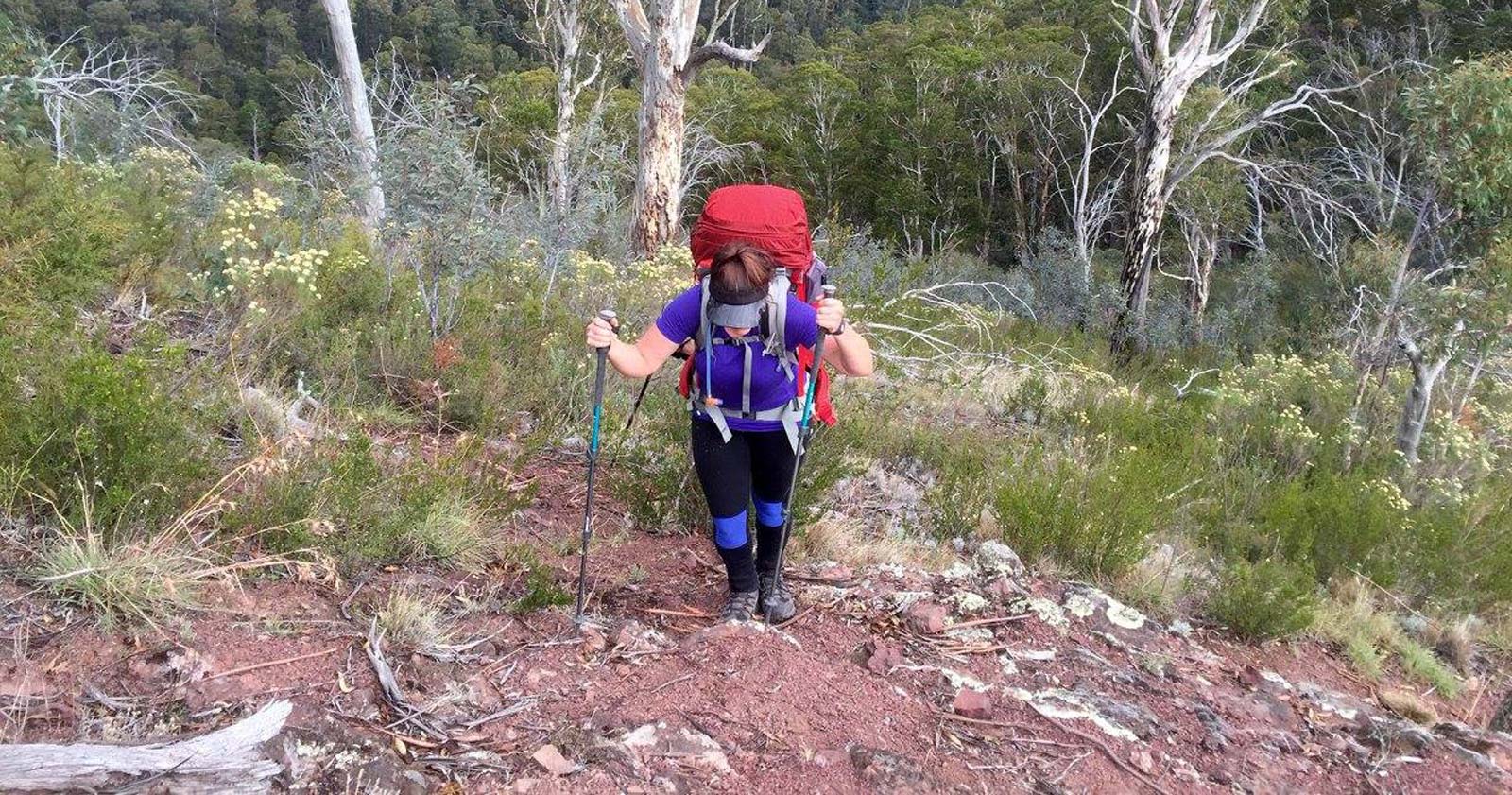
Hiking uphill: move efficiently and conserve energy
A controlled, steady approach to climbing will help you cover more ground with less fatigue.
- Warm up before climbing: Spend a few minutes walking on flat ground before starting a climb to prepare muscles and reduce early fatigue.
- Shorten your stride: Smaller steps reduce strain on the knees and hips, improve balance, and help maintain an upright posture.
- Maintain an upright position: Avoid excessive forward leaning. Staying upright improves breathing efficiency and keeps your core engaged.
- Set a sustainable pace: Move at a pace you can maintain without frequent stops. Slowing slightly is often better than stopping repeatedly.
- Use zigzags on steep slopes: Traversing diagonally reduces gradient stress and helps conserve energy on very steep sections.
- Use trekking poles if available: Poles provide additional propulsion and reduce leg load. Adjust them so elbows sit at roughly 90 degrees and plant them slightly behind your body with each step.
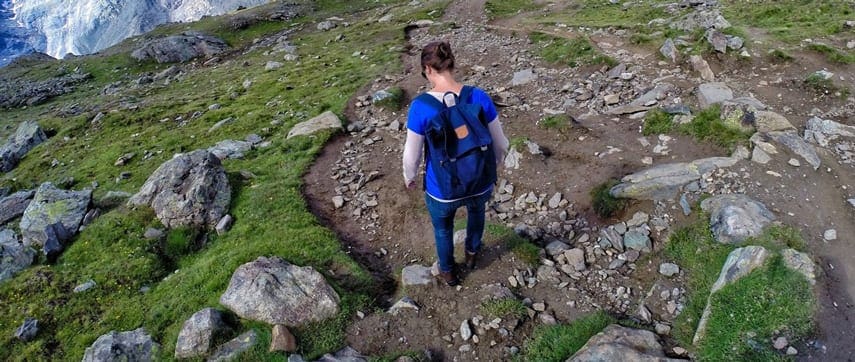
Hiking downhill: maintain control and protect your knees
Descending requires focus, balance, and restraint to avoid slips and joint strain.
- Take short, controlled steps: Long strides increase impact forces and reduce control. Smaller steps help manage speed and stability.
- Land midfoot where possible: Avoid heavy heel striking, which increases knee stress. Slight knee flexion acts as a natural shock absorber.
- Read the terrain carefully: Loose gravel, wet rock, and leaf litter increase slip risk. Adjust speed and foot placement accordingly.
- Maintain an upright posture: Avoid leaning back, which reduces balance. Keep your weight centred over your feet.
- Avoid grabbing vegetation: Branches and shrubs can snap or pull you off balance. Rely on stable foot placement instead.
- Adjust poles for descents: Lengthen poles by 5–10 cm for downhill travel and plant them slightly ahead of your body for added stability.
Stride length matters on hills
One of the most effective adjustments for hill hiking is managing stride length.
- Uphill: Short, steady steps help maintain posture, conserve energy, and reduce muscle fatigue.
- Downhill: Smaller steps improve control and reduce braking forces through the knees.
On very steep terrain, further shorten your stride and slow your pace to maintain balance and safety.
Additional tips for all terrain
- Stay adaptable: Adjust pace and stride based on slope, surface conditions, and fatigue levels.
- Use poles correctly: When used properly, poles reduce strain on legs and improve balance on both ascents and descents. Learn more in using hiking poles effectively.
Want more detailed guidance?
For a deeper look at technique, see The art of hiking uphill and The art of hiking downhill.




Shortening your stride makes a huge difference. Took me a while to figure that out.
Darren Edwards you’re a bit slow but you get there in the end.. In every sense of that sentence🤔🤣
Darren, good tip!
Poles!!!!
Julie Roberts totally agree, they help a lot too
Julie Roberts yep agree totally👍