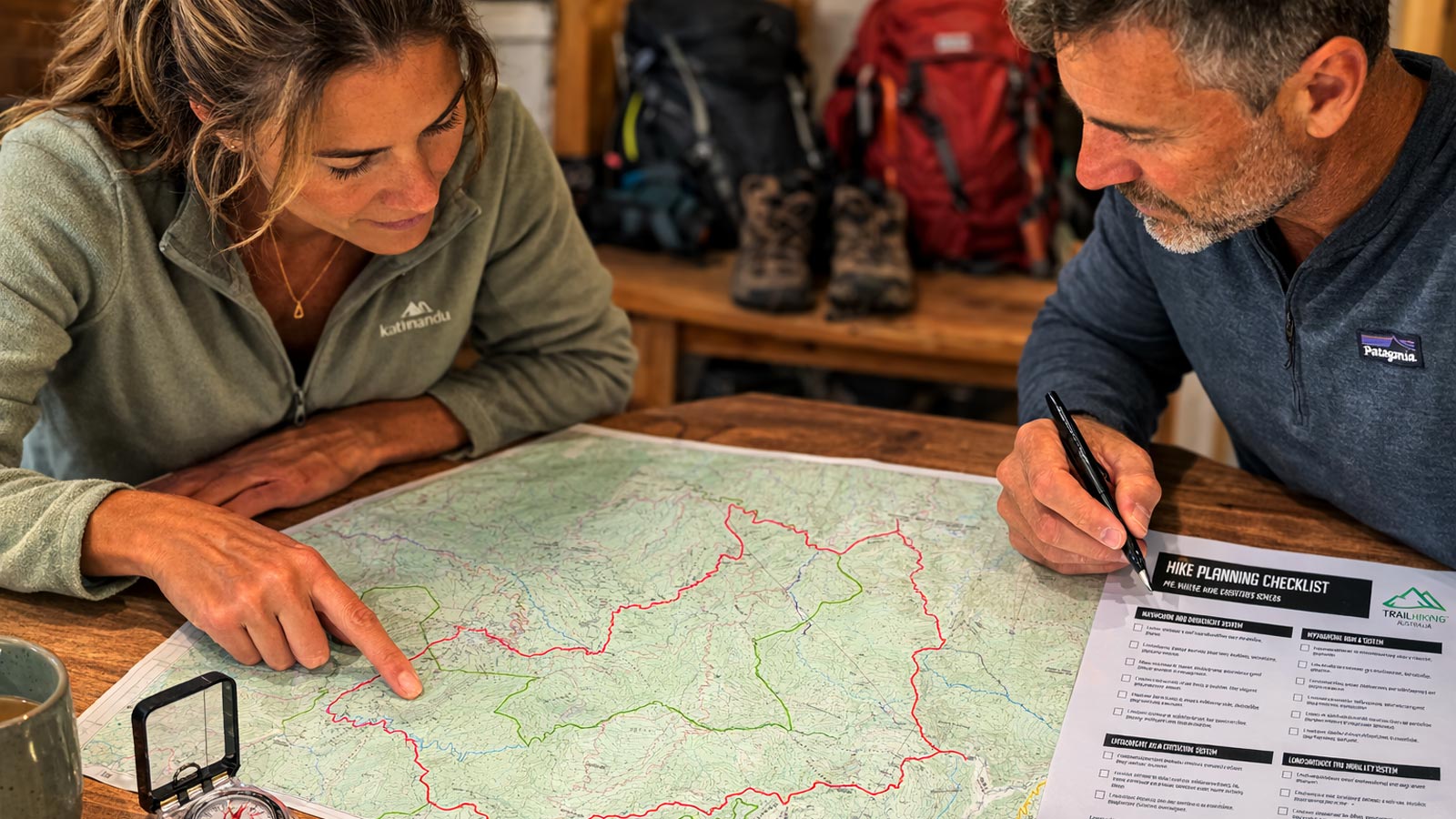
Environmental Protection Planner
What clothing and protection system is recommended for this hike?
This tool recommends the level of clothing and environmental protection required for your planned hike. It considers temperature, weather, terrain exposure, movement pattern and the consequences of getting it wrong.
Recommendations cover your moving system and your stop and camp protection — because these two states place different demands on your clothing.
Based on the conditions selected — not a definitive gear list. Adapt to your own experience and judgement.
Your Recommendation
Recommended Environmental Protection System
For the hike you have planned, it is recommended to use:
Suggested Layering System
Key Specifications
Key Drivers
This tool provides planning guidance based on the information you enter. Results are estimates, not confirmation that a hike is safe or suitable for your group. Check current conditions and access, consider everyone's capabilities, and adjust your plan when circumstances change.
Before you leave, share your trip plan and expected return time with a trusted person, and agree what they should do if you do not return.
Clothing recommendations are based on the conditions you selected. Check the forecast on the day and carry the means to adjust.
Environmental Protection Planner
Why clothing planning is more than checking the forecast
A temperature forecast tells you one thing. How that temperature feels on an exposed ridgeline in 30 km/h wind, after four hours of movement, two kilometres from the nearest road, is a different question entirely. The gap between what conditions look like at the trailhead and what they demand on the track is where most environmental protection decisions fail. Layers are chosen based on an optimistic reading of conditions at the start of the day. They are not adjusted until the body is already stressed. The Environmental Protection Planner is designed to close that gap by building a recommendation from the actual combination of conditions your hike involves, not just the temperature band.
What the tool assesses
The tool asks nine questions across four sections. The first section covers environmental conditions: expected temperature (seven bands, from very cold below -5°C, through cold, cool, mild and warm, to hot and very hot at 35°C or above), likely weather (dry and stable through to severe and alpine), and terrain exposure (sheltered through to highly exposed ridgeline). The second section covers movement and trip context: expected duration, movement pattern (continuous versus extended stops), and trip type (day, overnight, or multi-day). For overnight and multi-day hikes there is one optional extra: the expected overnight low in degrees Celsius. If the overnight low falls in a colder band than your daytime temperature, stop and backup protection follow the colder band. The third section covers consequence and support: remoteness and whether you are hiking solo. The fourth section asks about personal tolerance to cold or heat, which applies a final adjustment to the recommendation. Each input works through a modifier stack, with later modifiers adjusting the outputs produced by earlier ones, to produce a contextually calibrated result. Warm, hot and very hot days share one set of recommendations, since sun protection is the main issue in all three. Where wet or windy conditions are possible, the planner recommends a waterproof shell from mild temperatures down.
What the result covers
The output is organised into a recommendation summary, a suggested layering system, key specifications, key drivers, and adjustment guidance. The recommendation summary shows levels across six dimensions: base layer standard, insulation level, outer shell standard, sun protection level, stop and stationary protection, and backup and redundancy. The layering section translates those levels into a practical sequence of garments with descriptions. The key specifications also cover gloves and a buff, which matter for wind chill and for keeping your hands working well enough to navigate. The key drivers section explains which specific conditions are elevating the recommendations beyond a baseline. Callout notes are added when sun protection, stop protection, or backup redundancy reach elevated thresholds, because these are the dimensions most often underestimated. The adjustment guidance note is always present and reminds the user to adjust proactively, before discomfort or stress forces a reactive response.
The stop and camp protection distinction
One of the most practically important outputs of this tool is the stop and stationary protection level. When a hiker is moving, metabolic heat offsets environmental exposure. When movement slows or stops, that offset disappears. In cool, exposed, or windy conditions, heat loss at rest can be rapid. This tool calculates stop protection separately from moving protection, accounting for movement pattern, duration, trip type, remoteness, and solo status. For overnight and multi-day hikes, the stop layer also covers camp protection. The output is specific about accessibility: a stop layer that requires unpacking is not useful when you need it most.
Connecting to the Environmental Protection system
Within the Hiking Safety Systems Framework, the Environmental Protection system exists to manage exposure to heat, cold, wind, and rain across the full duration of a hike, including when movement slows or stops unexpectedly. When this system degrades, the downstream effects are felt quickly: cognitive function drops, decision quality narrows, fatigue accelerates, and the risk of heat illness or hypothermia increases. The Environmental Protection Planner provides a structured, conditions-specific starting point for clothing decisions, replacing general advice with guidance calibrated to what your particular hike actually demands.
Using the result
The recommendations are based on the conditions you selected. They are a starting point, not a complete or personalised gear list, so check the forecast on the day and carry the means to adjust. For what else to carry, see the Hiking Equipment Planner, and for shelter, sleeping bag and pad on an overnight trip, the Hiking Sleep System Planner. Before you leave, share your trip plan and expected return time with a trusted person, and agree what they should do if you do not return.
Plan Your Hike in Six Steps
The tools below help you assess whether a hike is achievable, understand terrain difficulty, estimate walking time, plan hydration, identify key risks, and determine what equipment to carry before heading out.
Explore more planning tools
Hiking Calculators collection →