Embracing the outdoors safely
ExploreSafe is a framework for helping people make better decisions before, during and after outdoor adventures. It brings together the essential principles of safer hiking and outdoor recreation into a practical approach that supports planning, preparation, awareness and responsible decision-making in Australian conditions.
The outdoors offers incredible opportunities for connection, challenge and discovery. From accessible local trails to remote wilderness routes, every adventure involves making decisions about where to go, how to prepare, what conditions may be encountered and what to do when circumstances change.
ExploreSafe is not a replacement for local knowledge, land manager advice or emergency services guidance. Instead, it provides a common way of thinking about outdoor safety, helping people understand the reasons behind safety advice and apply it to the environment, activity and conditions they are facing.
Why outdoor safety matters
Australia’s outdoor environments are diverse and constantly changing. A short walk close to a city, a mountain route, a desert trail or a multi-day wilderness journey all present different challenges. Weather, terrain, distance from assistance, navigation requirements, communication limitations and individual capability all influence the level of preparation required.
Outdoor incidents are often not caused by a single mistake. They usually develop when several factors combine: a walk takes longer than expected, conditions deteriorate, fatigue increases, communication becomes difficult or a decision is delayed until options become limited. Good preparation is not about removing all risk from outdoor activities. Risk is part of exploration and adventure. The goal is to build capability, maintain a margin of safety and recognise when a situation is changing before a manageable problem becomes a serious one.
The changing outdoor landscape
More people than ever are exploring natural areas, which is a positive reflection of the value people find outdoors. However, participation growth also means more people are entering environments where they may have limited experience with navigation, weather, terrain, preparation and decision-making. Many people begin with good intentions but may underestimate the difference between a familiar recreational walk and a more demanding outdoor experience. Distance, elevation, exposure, track conditions, weather and remoteness can significantly change the demands of an adventure.
Information is also increasingly fragmented. Advice is available from many sources, including land managers, emergency services, outdoor organisations, apps and online communities. While this provides access to valuable information, it can also make it difficult to understand what matters most. ExploreSafe aims to help bridge that gap by focusing not only on what people should do, but why those actions matter and how they can be applied when conditions change.

The ExploreSafe approach
Outdoor safety is not simply a checklist of equipment or rules to follow. A person can carry all the recommended items and still be unprepared if they do not understand how to use them, recognise changing conditions or make decisions when the original plan no longer fits.
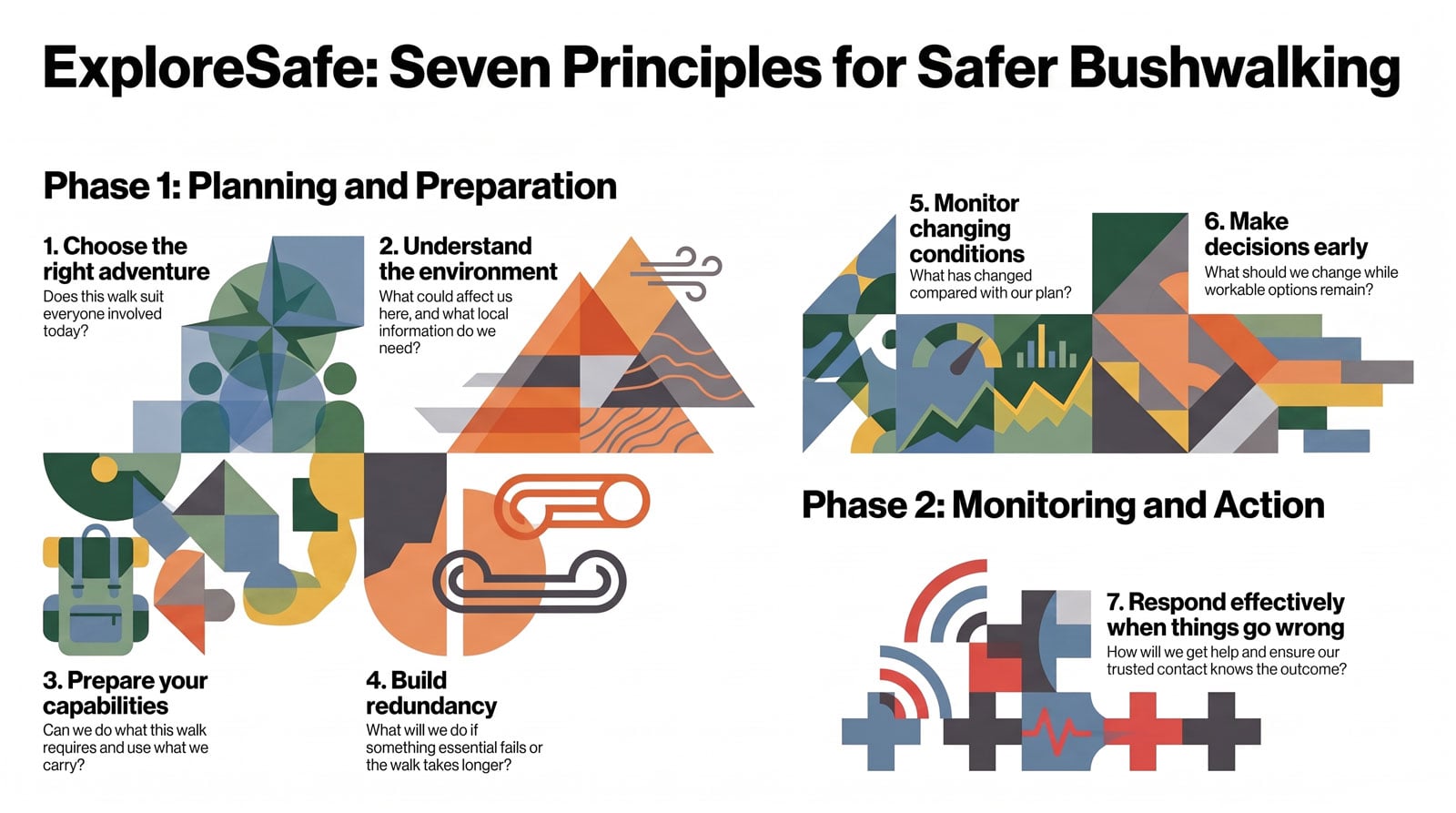
ExploreSafe is built around seven principles that support safer outdoor decision-making:
- Choose the right adventure
- Understand the environment
- Prepare your capabilities
- Build redundancy
- Monitor changing conditions
- Make decisions early
- Respond effectively when things go wrong
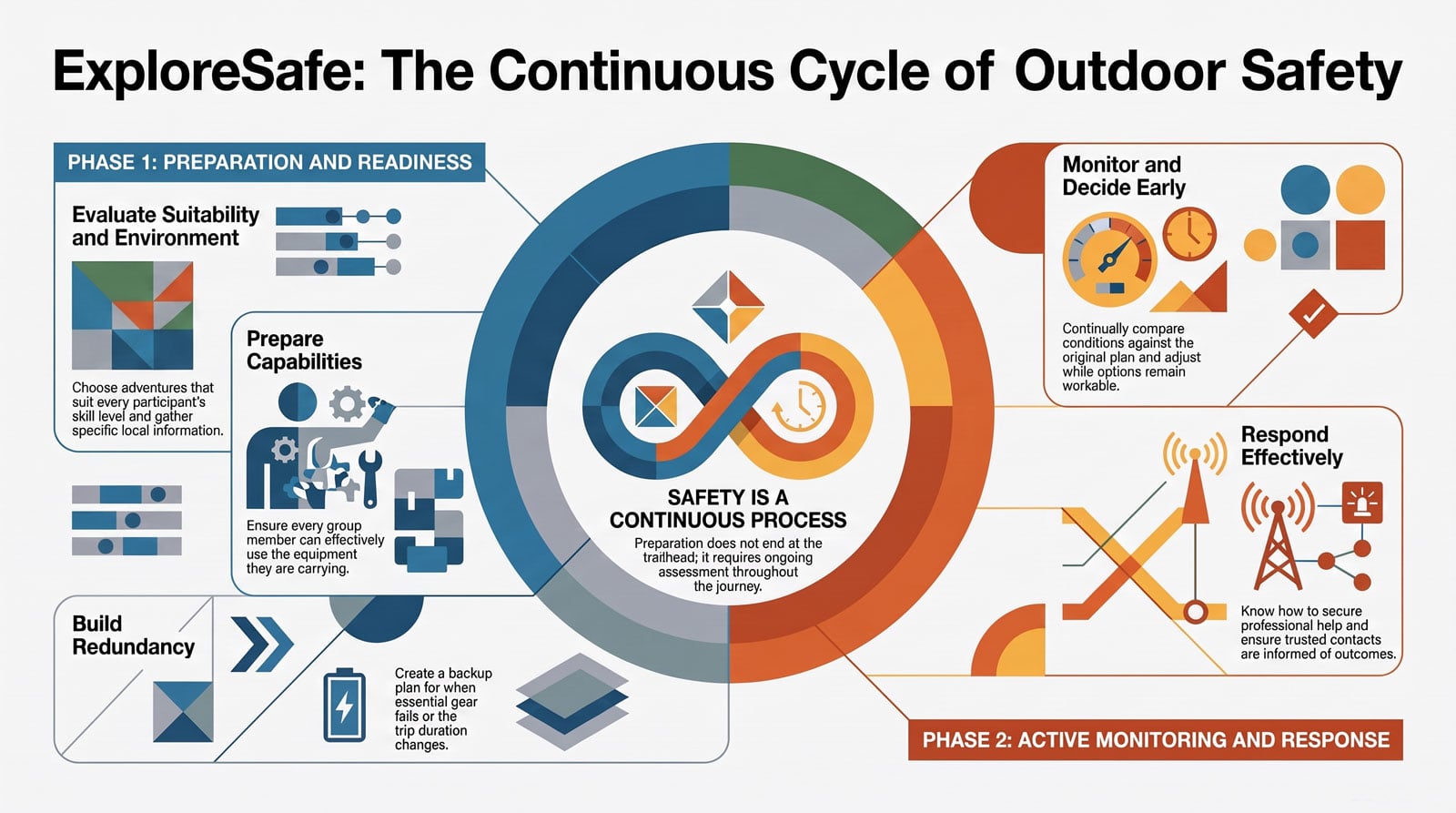
Together, these principles create a continuous process. Preparation does not end when a walk begins. Good decisions continue throughout an adventure as people compare their plan with the conditions they are actually experiencing.
1. Choose the right adventure
Every adventure begins with choosing an activity that matches the people taking part, the environment and the conditions expected on the day.
A suitable walk is not determined by distance alone. A route’s demands may include elevation gain, terrain, navigation difficulty, exposure, weather sensitivity, remoteness and the availability of assistance. The same distance can represent a very different challenge depending on where it is located and the conditions encountered.
Before setting out, consider whether everyone in the group has the experience, skills, fitness and preparation needed for the adventure. Understand what the route requires and identify alternatives if circumstances change.
Choosing a different walk, shortening the route or postponing an adventure is not failure. It is part of responsible outdoor decision-making.
2. Understand the environment
Every outdoor environment has its own characteristics and potential challenges. Understanding where you are going helps you prepare for what you may encounter.
Consider the factors that may influence your adventure, including weather, temperature, terrain, water availability, fire conditions, wildlife, exposure, access restrictions and communication limitations. Local knowledge matters because hazards and conditions vary significantly between regions.
Weather forecasts, park alerts, fire information, track updates and local warnings are not just information to collect. They are information to interpret. The important question is not simply “What is the forecast?” but “What does this mean for my plan?”
ExploreSafe encourages people to understand the environment they are entering and use the most current advice from the responsible land manager or authority.
3. Prepare your capabilities
Equipment is important, but capability is what allows equipment to be used effectively.
Preparation involves understanding what skills an adventure requires and whether those skills are available within the group. This includes navigation, first aid, communication, understanding weather, managing exposure and knowing how to use the equipment being carried.
A map and compass are only useful if someone knows how to use them. A communication device is only valuable if people understand its limitations. A first aid kit is only part of preparation if someone has the knowledge and confidence to use it.
Good preparation is not about carrying everything possible. It is about matching skills, equipment and experience to the demands of the adventure.
4. Build redundancy
Outdoor environments are unpredictable, and even well-planned adventures can encounter unexpected problems. Building redundancy means considering what will happen when something important fails.
Think about the essential functions your adventure depends on:
- How will you navigate if your usual method fails?
- How will you communicate if there is no mobile coverage?
- How will you manage an unexpected delay?
- How will you stay warm, hydrated and protected if circumstances change?
A backup should provide a genuinely different option, not simply repeat the same dependency. Several applications on one phone may provide useful functions, but they do not provide protection if that phone is lost or damaged.
Redundancy is not about carrying unnecessary equipment. It is about maintaining the ability to respond when things do not go according to plan.
5. Monitor changing conditions
A successful adventure requires ongoing awareness. The conditions you planned for may not be the conditions you experience.
Monitor the factors that influence your ability to continue safely, including progress, daylight, weather, route conditions, group energy, available resources and confidence in navigation.
A common mistake is continuing because the original plan has already been committed to. Good decision-making means regularly asking whether the current situation still matches the assumptions made before departure.
Changes do not automatically mean a problem exists. They are simply information that may require a decision.
6. Make decisions early
Good outdoor decisions are usually made before they become urgent.
When circumstances change, consider the available options while choices remain. This may involve continuing, modifying the route, shortening the adventure, returning, seeking additional information or requesting assistance.
Changing plans is a normal part of responsible outdoor recreation. Experienced walkers are not those who always complete their original objective. They are those who recognise when the situation requires a different decision.
The earlier a decision is made, the more options usually remain available.
7. Respond effectively when things go wrong
Preparation also includes thinking about what happens when normal plans are no longer enough.
If something goes wrong, the priorities are to protect people, understand the situation, communicate effectively and seek appropriate assistance when required.
This includes knowing how to describe your location, understanding available communication options, carrying suitable emergency equipment for the environment and ensuring someone outside the group understands the intended trip and return arrangements.
Different situations require different responses. Being lost, injured, delayed or affected by severe weather are not the same circumstances. The right response depends on the situation, available resources and authoritative emergency guidance.
Respect the environment
Outdoor safety and environmental responsibility are closely connected. The same decisions that protect people often protect the places they visit. Stay aware of local requirements, respect access restrictions, minimise environmental impact and follow Leave No Trace principles where appropriate. Responsible outdoor recreation means recognising that every adventure takes place within a larger environment shared with wildlife, other visitors, local communities and future generations.
Learn from every adventure
Every outdoor experience provides an opportunity to improve. After an adventure, consider what worked well, what could be improved and where decisions relied on preparation rather than luck. Review your equipment, skills, planning process and assumptions. Over time, experience becomes more valuable when it is reflected upon. Each adventure can build knowledge, confidence and capability for the next one.
ExploreSafe: making better decisions outdoors
ExploreSafe is about helping people enjoy outdoor adventures while developing the knowledge and judgement needed to respond to changing situations. It does not replace local trail information, weather warnings, park regulations or emergency advice. Those sources remain essential because they provide the specific information needed for each location and situation.
Instead, ExploreSafe provides a framework for thinking:
Choose carefully. Understand the environment. Prepare your capabilities. Build backup options. Monitor change. Decide early. Respond effectively.
These principles help people make informed choices and enjoy the outdoors with greater confidence, capability and responsibility.
Download the ExploreSafe Framework (PDF) →
For further guidance, visit the Trail Hiking Australia Hiking Safety Systems pages or the ExploreSafe website.