A Remote Coastal Walk Through Flinders Chase National Park
Julie and I hiked the Kangaroo Island Wilderness Trail in December 2018. This guide brings together what we learned on the trail, along with the practical details required to plan the walk properly, including timing, logistics, costs, camping, water, navigation, fitness requirements, and safety considerations. It is intended as a planning reference rather than a day-by-day story.
1. Overview of the Trek
The Kangaroo Island Wilderness Trail is a 66-kilometre, point-to-point walk through the remote southwest corner of Kangaroo Island in South Australia. The route passes through Flinders Chase National Park and the Ravine des Casoars Wilderness Protection Area before finishing at Kelly Hill Caves, traversing some of the island’s most isolated and ecologically significant landscapes.
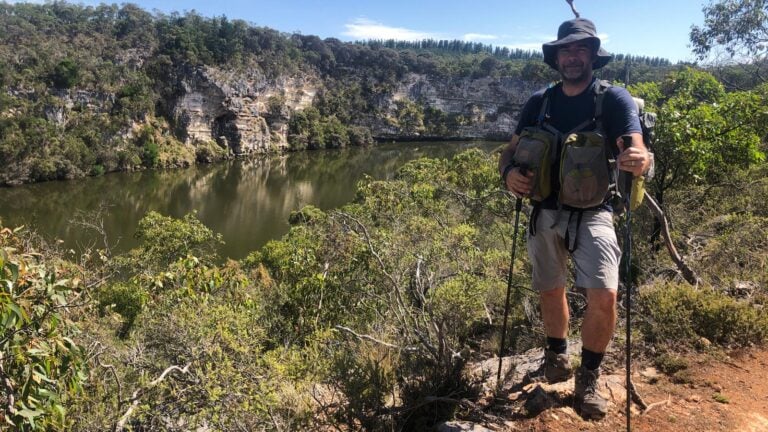
The trail moves through a diverse mix of environments, including river corridors, mallee scrub, towering eucalypt forest, freshwater lagoons, and exposed limestone cliffs overlooking the Southern Ocean. Coastal sections are particularly dramatic, with long stretches of walking along windswept headlands where weather conditions can change rapidly.
Access is tightly managed, with hiker numbers capped to preserve the environment and maintain a sense of remoteness. Despite the high quality of campsite infrastructure, the walk requires full self-sufficiency and a high level of preparation. Heat, wind exposure, and variable track conditions mean that this is a trek suited to experienced bushwalkers who are comfortable operating in a remote coastal environment.
2. Key Facts at a Glance
The following table provides a concise summary of the essential data for the Kangaroo Island Wilderness Trail.
| Feature | Details |
| Total Distance | 66 km (approximately 73–77 km with side trips) |
| Typical Duration | 5 days / 4 nights |
| Trail Type | Point-to-point (west to east) |
| Highest Elevation | 153 m |
| Minimum Elevation | 0 m (sea level) |
| Total Elevation Gain | Approximately 1,458 m to 1,676 m |
| Difficulty Level | Grade 4 (hard / moderate–hard) |
| Best Time to Hike | March to November (autumn to spring) |
| Start Point | Flinders Chase Visitor Centre |
| End Point | Kelly Hill Caves |
| Permit Requirements | Mandatory via National Parks South Australia |
The Grade 4 classification indicates that the trail is suitable for experienced bushwalkers with a high level of fitness. The tracks are often rough and may be steep in sections, requiring a high degree of self-reliance.
3. Where the Trek Is and How to Get There
Kangaroo Island is Australia’s third-largest island, and the Wilderness Trail is located at its furthest western reach, making it one of the most remote sections of the state. Reaching the trailhead requires careful coordination of mainland travel, water crossings, and island logistics.
Reaching the Island
There are two primary modes of transport from the South Australian mainland to Kangaroo Island:
- Ferry Access: Most hikers travel via the vehicle and passenger ferry from Cape Jervis, located approximately 2.5 hours’ drive or coach journey south of Adelaide. The ferry takes about 45 minutes to reach Penneshaw on the eastern end of the island.
- Air Access: Regional flights operate from Adelaide Airport to Kingscote, the island’s main administrative hub. The flight duration is approximately 35 minutes.
Transit to the Trailhead
The distance from the entry points of Penneshaw or Kingscote to the Flinders Chase Visitor Centre is considerable, often exceeding 100 kilometres. There is no public transport on the island, so hikers must rely on the following:
- Car Rental: Vehicles can be hired from Kingscote Airport or Penneshaw. If you choose to self-drive, you will need to leave your car at the Visitor Centre and arrange a shuttle back from the trail’s end.
- Private Shuttles: Specialist transfer operators meet ferry and flight arrivals to transport hikers directly to the park.
- Internal Transfers: An internal bus transfer is available from the finish point at Kelly Hill Caves back to the start point at the Flinders Chase Visitor Centre. This must be booked in advance, ideally at the time of permit purchase.
The Flinders Chase Visitor Centre is the mandatory starting point where all hikers must check in for an induction before commencing the trek.
✈️ Find flights →
🚗 Compare car hire →
4. Best Time to Hike and Seasonal Conditions
The maritime climate of Kangaroo Island means weather conditions are influenced heavily by the Southern Ocean, leading to volatile and often unpredictable patterns.
Seasonal Patterns
- Autumn (March to May): This is the premier window for hiking. The temperatures are mild, and the harsh heat of summer has dissipated. Walking conditions are generally stable, and the risk of bushfire is declining.
- Spring (September to November): Spring offers a spectacular explosion of wildflowers and active wildlife. The island is vibrant and green, though the weather can be highly changeable, often shifting from sunshine to rain within the same hour.
- Winter (June to August): Winter is for those who enjoy wild, moody landscapes. The coastline is at its most dramatic with massive swells, and the Rocky River is often in full flow. However, temperatures are low, rain is frequent, and the trail can be quite muddy and slippery.
- Summer (December to February): This is the most challenging and potentially dangerous season. Heatwaves are common, and the coastal sections offer no shade. Importantly, summer coincides with the peak fire danger season.
Weather Risks and Impacts
Heat exposure is the primary risk during the warmer months, with temperatures occasionally exceeding 35°C. Conversely, the wind chill on clifftops can be severe even in shoulder seasons. Hikers must be prepared for Total Fire Ban days, during which the use of any fuel stove is strictly prohibited. During these periods, you must be prepared to eat meals that do not require cooking.
5. Track Conditions and Terrain
The Kangaroo Island Wilderness Trail is a Grade 4 trek, meaning it features varied and often demanding terrain that requires good balance and sturdy footwear.
Surface Types and Landscapes
The trail surface changes significantly across its 66-kilometre length:
- Limestone and Calcarenite: Large sections of the coastal cliffs are composed of weathered limestone. These are often sharp, jagged, and uneven, requiring careful foot placement to avoid injury.
- Sand and Dunes: You will encounter several beach sections, most notably at Maupertuis Bay. Walking on soft sand with a full pack can be physically taxing.
- Eucalypt Forest and Scrub: Inland sections feature compacted dirt tracks that weave through dense mallee and sugar gum forests.
- Boardwalks and Pavement: Around sensitive areas like the Platypus Waterholes and Remarkable Rocks, high-quality timber boardwalks provide easy walking and environmental protection.
Elevation Profile
While the island is not mountainous, with a maximum trail elevation of just 153 metres, the profile is consistently undulating. The constant rising and falling from clifftops to sea level means the cumulative elevation gain is significant, totaling approximately 1,458 metres over the five days.
Technical Sections
There are no technical scrambles or vertical climbs, but the unevenness of the limestone and the exposure to high winds can make for slow progress on the coastal sections. Additionally, Day 4 involves a river crossing via a hand-hauled punt, which is a unique and highlight feature of the trail.
6. Daily Distances and Typical Itinerary
The trail is designed to be walked over five days, with four nights spent at designated hike-in campgrounds. The direction of travel is strictly west to east.
| Stage | Route | Distance | Duration |
| Day 1 | Visitor Centre to Cup Gum Campsite | 12.4 km | 4–5 hours |
| Day 2 | Cup Gum to Hakea Campsite | 14.1 km | 6–7 hours |
| Day 3 | Hakea to Banksia Campsite | 13 km | 5–6 hours |
| Day 4 | Banksia to Tea Tree Campsite | 13.5 km | 6 hours |
| Day 5 | Tea Tree to Kelly Hill Caves | 7.5 km | 2.5 hours |
Day-by-Day Experience
Day 1: Rocky River Section: The trek begins at the Flinders Chase Visitor Centre. You will follow the Platypus Waterholes Walk through the Black Swamp, an area formerly inhabited by ancient megafauna. The trail then follows the course of the Rocky River through dense eucalypt woodland toward the Cup Gum Campsite.
Day 2: Maupertuis Section: This is arguably the most spectacular day. You will follow the Rocky River as it meets the Southern Ocean, then climb onto the massive clifftops. The trail descends for a 1.5 km stretch along the soft sands of Maupertuis Bay beach before turning inland toward Hakea Campsite.
Day 3: Sanderson Section: Day 3 offers a series of iconic views. You will pass the Cape du Couedic Lighthouse and the world-renowned Remarkable Rocks, massive granite boulders perched precariously above the sea. The day ends at Banksia Campsite overlooking Sanderson Bay.
Day 4: Grassdale Section: The trail traverses the cliffs of Cape Younghusband, where you have an excellent chance of spotting dolphins and whales in the surf below. You will reach the South West River and use the hand-hauled boat system to cross before arriving at the Tea Tree Campsite near the historic Grassdale property.
Day 5: Kelly Hill Section: The final day is a gentle conclusion through freshwater lagoons and sugar gum woodlands. The trail culminates at the Kelly Hill Caves, where you can take a guided tour of the underground limestone caverns to celebrate your journey.
7. Navigation and Wayfinding
Navigation on the trail is generally considered excellent, provided you remain observant.
- Signage: The trail is marked with consistent blue and yellow trail markers. These are located at all major junctions and at regular intervals along the track.
- Map and Induction: Every hiker is provided with a detailed waterproof map and a trail guide during the mandatory induction at the Visitor Centre. You must carry these at all times.
- Markers in Rocky Terrain: On the limestone headlands where a visible footpad is difficult to maintain, navigation relies on spotting the next marker post. It is essential to scan the horizon for the next post before moving forward.
- Offline Navigation: Since there is no mobile reception for the vast majority of the trail, it is highly recommended to have a mapping application with the trail’s GPX file downloaded for offline use.
8. Accommodation Options
On the trail, accommodation is limited to the four purpose-built hike-in campgrounds. These sites are designed to provide a high level of comfort while maintaining a sense of isolation.
Campground Facilities
Each campground includes:
- Shelter: A communal kitchen and dining shelter with park benches and stainless-steel benches for food preparation.
- Sleeping Platforms: A combination of timber tent platforms and gravel tent pads.
- Storage: Animal-proof cupboards are provided under the benches to secure your food bags from possums and rats.
- Toilets: Clean, waterless composting toilets.
- Washbasins: Basic basins for personal hygiene.
Outside of the trail, the western end of Kangaroo Island has very limited accommodation. Most hikers stay in Parndana, Kingscote, or American River before and after their trek.
9. Food, Water, and Resupply
This is a self-sufficient trek; there are no shops, cafes, or resupply points once you leave the start point.
Water Strategy
- Tanks: Rainwater tanks are located at every campground.
- Treatment: The water is collected from shelter roofs and is officially classified as non-potable. You must treat all water using a filter, UV purifier, or chemical tablets before consumption.
- Daily Carry: You must carry enough water for the entire day’s walking. A minimum of 3 litres per person per day is recommended, increasing to 4 or 5 litres in hot weather.
Food Requirements
- Total Carry: You must carry five days’ worth of food from the start.
- Waste: All rubbish and food scraps must be carried out. Do not leave any waste in the cupboards or toilets.
- Fire Ban Meals: During Total Fire Ban days, no fuel stoves may be used. It is essential to have at least one or two “no-cook” meals (such as wraps, tuna, or trail mix) in your pack as a backup.
10. Permits, Fees, and Regulations
Permits are mandatory and strictly limited to 48 starters per day to preserve the environment and the hiker experience.
Costs and Booking
- Fees: As of early 2026, the trail fee for independent walkers is approximately $212 for adults, with concessions available.
- What is Included: The fee covers national park entry, four nights of camping, the trail map/guide, and vehicle parking at the start.
- Induction: You must attend a safety and trail induction at the Visitor Centre before starting.
Regulations
- Stay Duration: You are permitted to stay only one night at each campground.
- Rubbish: The trail is a strict “Pack In, Pack Out” zone.
- Prohibited Items: Pets, drones, and solid-fuel fires are not allowed.
11. Safety Considerations and Risks
The remoteness of the trail means that self-reliance and sound judgment are critical for safety.
Major Risks
- Ocean Dangers: The Southern Ocean is famous for its rogue waves and powerful undercurrents. Swimming is not recommended at beaches along the trail due to unpredictable surf conditions, rogue waves, and strong undercurrents.
- Heat and Exposure: Much of the trail is on exposed limestone cliffs with no shade. Heatstroke and severe sunburn are significant risks.
- Bushfire: The western end of the island is highly flammable. Always check the fire danger rating before starting and carry a reliable method of emergency communication.
- Communication: Mobile phone reception is almost non-existent. Carrying a Personal Locator Beacon (PLB) or satellite messenger is considered essential for independent hikers.
Wildlife
- Snakes: Tiger snakes and pygmy copperheads are present on the island. They are generally shy but should be given a wide berth. Gaiters provide good protection.
- Ticks: Ticks are present in the scrub; perform regular checks.
12. Fitness and Experience Required
The Grade 4 classification means this is not a suitable trail for absolute beginners.
Requirements for Success
- Fitness: You must be capable of walking 14 to 18 kilometres a day for five consecutive days with a pack weight of 15 to 20 kilograms.
- Balance: The rocky limestone sections require good balance and joint stability.
- Endurance: This is an endurance trek. The cumulative fatigue of four nights of camping and long days in the sun and wind should not be underestimated.
- Experience: You should have completed at least one or two multi-day overnight hikes before attempting this trail.
13. Gear and Packing Considerations
Your gear selection should prioritise durability and protection from the elements.
Essential Packing List
| Category | Recommended Items |
| Footwear | Sturdy, waterproof hiking boots with ankle support. |
| Shelter | High-quality 3-season tent. |
| Tent Pegs | Sand pegs or “fish-bone” pegs for timber platforms. |
| Clothing | Moisture-wicking base layers, fleece mid-layer, waterproof outer shell. |
| Sun Gear | Broad-brimmed hat with chin strap, high-SPF sunscreen, sunglasses. |
| Cooking | Gas or liquid fuel stove (note fire ban restrictions). |
| Safety | Personal Locator Beacon (PLB), comprehensive first aid kit. |
| Poles | Highly recommended for stability on uneven limestone. |
14. Guided vs Independent Hiking
There are two primary ways to experience the trail, and the choice depends on your preference for comfort and self-reliance.
Independent Hiking
This is the traditional way to experience the trail. You carry all your own gear, cook your own meals, and manage your own schedule. It offers the greatest sense of accomplishment and solitude but requires the highest level of fitness and experience.
Guided Hiking
Several licensed operators offer fully guided “pack-free” experiences. You carry only a day pack, while your main luggage is transported to a lodge or camp. Meals are provided, and guides offer professional navigation and historical context. This is an excellent option for those who want the scenery without the heavy physical burden.
🥾 Explore nearby experiences →
15. Environmental and Cultural Respect
Kangaroo Island is a fragile ecosystem that has been under immense pressure.
- Leave No Trace: Adhere strictly to Leave No Trace principles. The recovery of the bush is a delicate process, and any disturbance can set it back years.
- Phytophthora (Pc): Use the boot-cleaning stations provided at the start and end of sections to prevent the spread of root rot, which is a major threat to native flora.
- Indigenous Connection: The island is Karta Pintingga, a landscape of profound spiritual importance to the Kaurna, Ngarrindjeri, and Ramindjeri peoples. Treat the land with the reverence it deserves.
16. Is This Trek Right for You?
The Kangaroo Island Wilderness Trail is a spectacular journey, but it is not a casual walk. It is ideal for those who love the raw beauty of the ocean, the challenge of a Grade 4 trek, and the chance to see a landscape in a unique state of rebirth.
If you prefer shaded forest walking, minimal exposure, or constant mobile reception, this trail may feel demanding. For hikers who are physically prepared, comfortable with self-sufficiency, and willing to adapt to rapidly changing coastal conditions, the Kangaroo Island Wilderness Trail offers a challenging but rewarding planning-driven experience.
Photo Gallery
/Guide%20to%20the%20Kangaroo%20Island%20Wilderness%20Trail%20(19).jpg "Complete Guide to the Kangaroo Island Wilderness Trail (South Australia)")
/Guide%20to%20the%20Kangaroo%20Island%20Wilderness%20Trail%20(8).jpg "Complete Guide to the Kangaroo Island Wilderness Trail (South Australia)")
/Guide%20to%20the%20Kangaroo%20Island%20Wilderness%20Trail%20(11).jpg "Complete Guide to the Kangaroo Island Wilderness Trail (South Australia)")
/Guide%20to%20the%20Kangaroo%20Island%20Wilderness%20Trail%20(2).jpg "Complete Guide to the Kangaroo Island Wilderness Trail (South Australia)")
/Guide%20to%20the%20Kangaroo%20Island%20Wilderness%20Trail%20(6).jpg "Complete Guide to the Kangaroo Island Wilderness Trail (South Australia)")
/Guide%20to%20the%20Kangaroo%20Island%20Wilderness%20Trail%20(9).jpg "Complete Guide to the Kangaroo Island Wilderness Trail (South Australia)")
/Guide%20to%20the%20Kangaroo%20Island%20Wilderness%20Trail%20(16).jpg "Complete Guide to the Kangaroo Island Wilderness Trail (South Australia)")
/Guide%20to%20the%20Kangaroo%20Island%20Wilderness%20Trail%20(7).jpg "Complete Guide to the Kangaroo Island Wilderness Trail (South Australia)")
/Guide%20to%20the%20Kangaroo%20Island%20Wilderness%20Trail%20(13).jpg "Complete Guide to the Kangaroo Island Wilderness Trail (South Australia)")
/Guide%20to%20the%20Kangaroo%20Island%20Wilderness%20Trail%20(17).jpg "Complete Guide to the Kangaroo Island Wilderness Trail (South Australia)")
/Guide%20to%20the%20Kangaroo%20Island%20Wilderness%20Trail%20(14).jpg "Complete Guide to the Kangaroo Island Wilderness Trail (South Australia)")
/Guide%20to%20the%20Kangaroo%20Island%20Wilderness%20Trail%20(1).jpg "Complete Guide to the Kangaroo Island Wilderness Trail (South Australia)")
/Guide%20to%20the%20Kangaroo%20Island%20Wilderness%20Trail%20(3).jpg "Complete Guide to the Kangaroo Island Wilderness Trail (South Australia)")
/Guide%20to%20the%20Kangaroo%20Island%20Wilderness%20Trail%20(10).jpg "Complete Guide to the Kangaroo Island Wilderness Trail (South Australia)")
/Guide%20to%20the%20Kangaroo%20Island%20Wilderness%20Trail%20(5).jpg "Complete Guide to the Kangaroo Island Wilderness Trail (South Australia)")
Do you have any photos from this hike?
Your photos can help others plan. Share shots from along the trail so fellow hikers know what to expect.
Plan carefully, hike safely: These guides are for inspiration and general planning only. Trails can change, conditions vary, and you are responsible for your own decisions, preparation, and safety. Use judgement, maps, and the Hiking Safety Systems to help you prepare effectively.