AllTrails is a community-sourced platform designed to help outdoor enthusiasts access trail guides and maps for hiking, camping, and running. AllTrails states that users can explore over 300,000 hand-curated trail maps, along with reviews and photos crowdsourced from millions of hikers, mountain bikers, and trail runners.
The platform provides a mobile app that allows users to follow trails using their phone’s GPS, with the intention of helping people navigate unfamiliar areas. Users can also load routes that have been created and shared by others. These features are appealing, and as a result, AllTrails has grown rapidly in popularity. It is now frequently mentioned in discussions about hiking navigation.
At first glance, AllTrails appears to offer significant value. Over time, a consistent pattern of issues has emerged around reliance on the platform, particularly in real-world hiking conditions. This prompted a closer look at how the app is used in practice, the risks that can arise, and alternative approaches that may better support safe hiking.
Smartphones are commonly used on the trail for navigation, but they have clear limitations. For that reason, a phone should not be relied on as the sole navigation method. I use a smartphone app as a secondary tool to confirm my location when needed, with offline maps available, but it is always backed up by traditional navigation.
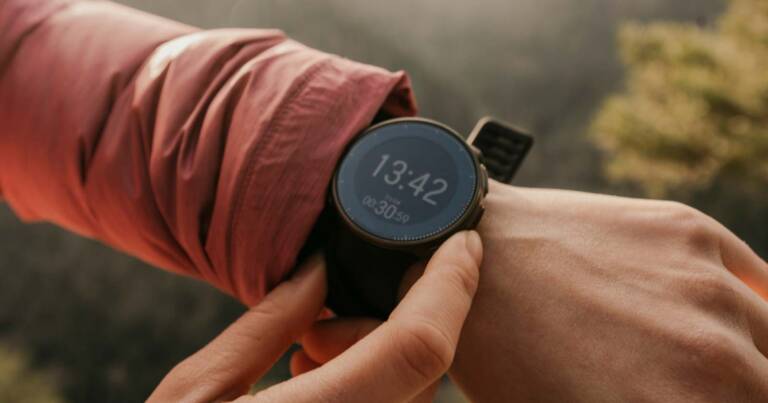
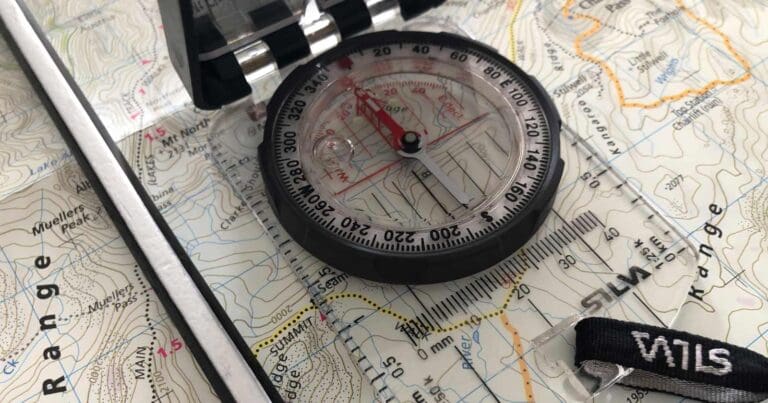
Regardless of whether you use a phone for navigation, it is important to always carry multiple forms of navigation, such as a map and compass or a dedicated GPS, and know how to use them. Having at least two reliable navigation methods significantly reduces risk. If a battery goes flat or a device is lost or damaged, relying on a single electronic tool can quickly become a serious safety issue.
Issue 1: Inaccurate information
One of the most common concerns raised about AllTrails relates to its reliance on crowd-sourced data. Trails, descriptions, and supporting information are submitted and maintained by users rather than being independently verified. While this approach allows a large number of routes to be shared, it also introduces variability in accuracy and consistency.
Because information depends on individual contributors, issues such as incorrect trail names, inaccurate routes, and misleading time or difficulty estimates are not uncommon. These discrepancies are often not obvious to users, particularly those unfamiliar with the area.
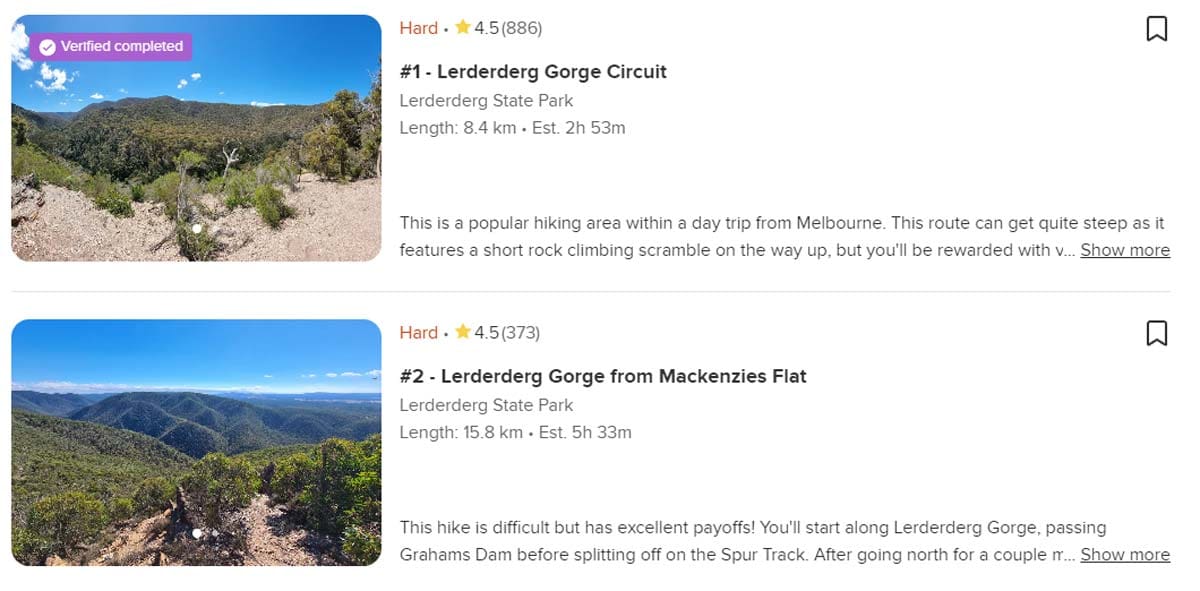
A quick search for hikes in the Lerderderg State Park in Victoria highlights several examples of this. The screenshot below shows multiple routes presented as recognised trails, including one marked as “Verified complete”. However, the trails shown do not exist as officially recognised walks.
- The first hike, labelled ‘Lerderderg Gorge Circuit’, corresponds to the officially named ‘Link 1 and 2 Circuit Walk’. However, the uploaded route follows a section of Link 2 Track that does not exist on official maps and omits the recognised trail that branches off the spur partway down.
- The second hike, labelled ‘Lerderderg Gorge from Mackenzies Flat’, is officially known as ‘The Scenic Rim’. The description lists an average walking time of 5.5 hours, whereas for most walkers this circuit typically takes closer to 7 hours.
While these differences may appear minor, their impact can be significant in real-world conditions. I am a volunteer with an SES unit local to this park. During a seven-week period in 2022, Police and SES were repeatedly called to assist lost hikers in the gorge. In these incidents, AllTrails was being used as the primary navigation reference. The issues involved following routes that did not exist, relying on inaccurate time or difficulty information, or running out of battery power.
In the examples above, the hikes utilise existing trails, but users have assigned non-official names. This becomes a problem when emergency assistance is required. If a call to 000 is made, or if a trip plan is provided to a third party, the trail name is often a key reference point. Referring to a trail name that does not exist makes it much harder for search and rescue crews to determine where to begin.
In one incident, rescue crews were told a group was on Spur Track in the Lerderderg. Spur Track is an official and well-known trail in the park and appears on all maps. After several hours searching that area overnight, the group could not be located. A police helicopter was later deployed and found the group several kilometres deeper in the gorge. They were on a spur, but the spur was Long Point Spur and the trail was ‘Long Point Track’. The group was eventually returned to their vehicles several hours later.
The route they were following in AllTrails was labelled ‘Lerderderg Gorge from Mackenzies Flat’, which is officially known as ‘The Scenic Rim’.
Issues related to crowd-sourced data are not unique to Australia and can occur anywhere the platform is used.
Issue 2: Unofficial trails
AllTrails allows users to upload recorded GPS tracks regardless of whether they follow an official or maintained trail. As a result, there is no clear distinction between established walking tracks and informal or off-track routes. These routes can range from well-worn pads to complex off-trail bushwalks.
This approach can create challenges when supporting information is limited or inaccurate. For hikers unfamiliar with an area, it may not be immediately clear whether a route follows an official trail network or involves off-track navigation, which can increase the likelihood of navigation errors.
There have been reports of routes passing through closed reference areas, private property, or active forestry operations. In these situations, hikers have been required to turn back or reroute, sometimes resulting in lengthy detours along public roads to return safely.
There have also been reports of hikes described as easy proving to be significantly more demanding than expected. This naturally leads into the next issue.
Issue 3: Incorrect grade
The Australian Walking Track Grading System is a nationally consistent framework used to communicate the difficulty of walking tracks. Trails are graded from one to five based on a defined set of criteria intended to describe the overall walking experience.

- Grade One (all abilities) is suitable for people with a disability with assistance
- Grade Two (easy) is suitable for families with young children
- Grade Three (moderate) is recommended for people with some bushwalking experience
- Grade Four (hard) is recommended for experienced bushwalkers
- Grade Five (difficult) is recommended for very experienced bushwalkers
The Australian Walking Track Grading System
Determining an appropriate grade is a complex process. It takes into account factors such as terrain, distance, steepness, signage, navigation requirements, and surface conditions. Grades are designed to reflect how an average walker is likely to experience a trail and can change with seasonal conditions.
By contrast, grades applied to routes uploaded by users are often based on individual experience rather than a consistent assessment framework. This can result in the same hike being listed under different names, with varying time estimates and difficulty ratings.
When incorrect trail names, unofficial routes, personal time estimates, and inconsistent grading are combined, hikers may be exposed to conditions they are not prepared for. This increases the risk of navigation errors and, in some cases, the need for search and rescue assistance.
Issue 4: Encourages complacency
The use of navigation apps is increasingly common, but there is a risk that some users place a high level of trust in them. While hiking is generally a safe activity, safety depends on preparation, awareness, and an understanding of how to navigate effectively.
Knowing where you are, where you are heading, and how to return safely is fundamental. Poor planning remains one of the most common contributors to incidents and can include unfamiliarity with trail names, limited understanding of topography, or difficulty estimating time and distance.
I have encountered hikers relying on a location marker on their phone without being aware of which trail they are on or how the surrounding trail network connects. From a safety perspective, this reduced situational awareness can increase risk, particularly in complex or unfamiliar terrain.
On one hike, my wife and I encountered a group at a junction of three clearly signposted trails late in the afternoon. They appeared uncertain about which direction to take. When asked which hike they were doing, they explained they were following a route in AllTrails but were unsure of its name. Based on their location and pace, it became clear that completing the hike would take significantly longer than the app suggested. After some discussion, the group decided that turning back was the safer option.
If you are unable to read a topographic map, use a compass, or navigate without relying solely on a phone app, it is important to carefully consider the hikes you choose. Some routes require navigation skills and experience that are not always clearly conveyed through crowd-sourced platforms.
So, what are the alternatives?
I am not opposed to modern technology. I regularly use a smartphone or a handheld GPS on hikes to confirm my location when needed. However, route planning is always done using a scaled topographic map, and a map and compass remain my primary navigation tools.
There are many navigation apps available, each with different strengths and limitations. Rather than recommending a single option, it is more useful to highlight tools that avoid some of the issues outlined above and are better suited to supporting safe navigation.
Technology can be a valuable aid when it genuinely improves safety and decision making on the trail.
So, what are the alternatives to AllTrails? Here is a selection of trail navigation apps I’ve used, listed in no particular order of recommendation.
I’m keen to hear which tools others find useful and why.





Completely I share your opinion. It is excellent idea. I support you.
Hi Darren,
Until recently, I too always had a paper map and compass. (And for the first half or so of my walking life, that’s all there was anyway.) The batteries never run out and they still work when wet. But now I use only a phone (plus PLB, plus backup battery, plus plastic bags to put my phone in). Why? Because on some very long hikes (Hume and Hovell, Bibbulmun) the large number of maps will significantly add to the weight (not that you have to carry them all at once – change them at food drops) and, perhaps more importantly, I want to reduce the amount of paper (ie trees) that I use. (Well, yes, a phone plus backup battery is not impact free. But the number of maps I’m not buying is quite significant, and the phone is doing much else besides.) I’m careful about battery life (I’ve never come even close to running my modest backup battery down even over 9 – 10 days). And my phone screen will respond to touch even through a thick plastic bag. Didn’t have a problem even on an all-day deluge on the Bibbulmun – I was soaked, but even though I checked my position several times, the phone was dry (as was everything in my rucksack). Recently used on a couple of wet days in New Zealand, again with no problem.
To be fair. I’m mostly walking on well marked trails which anyone with navigation experience and landscape sense could, if forced, probably walk without a map, or in areas that I know well enough to navigate much by memory (Snowies, Namadgi).
As for AllTrails, I’ve never used it. I use Avenza sometimes for maps in the GeoTiff format, but mostly I use AlpineQuest Lite with OpenTopoMaps, and I download the relevant area together with a gpx file of the route onto my phone storage before I set off, With pre-stored maps, GPS (location) turned on only when I need it, and the phone in flight mode, navigation uses very little battery.
The other thing to remember is that apps like AllTrails trap you into only focusing on that trail that you want to walk. Having a proper map allows you to adjust your plans quickly in the event of an emergency or otherwise. On a solo hike I did a while back, having the physical paper map meant that I always knew what alternative routes I could take, as well as warning of poor trail conditions when wet (which was especially relevant with rain passing nearby). In addition, it allowed me to plan bugout ‘routes’ for if a bushfire occured and I was forced to go bush in order to flee (could be summed up as: Dash down the hill as fast as I could to reach the relative safety of a river, or run up the hill to where a chopper can rescue me).
I am confused. You don’t like AllTrails because the data is crowdsourced and can’t be trusted? But important data on Trailhiking website is also crowdsourced and unverified for example you ask people to contribute GPX files and photos and trails – so how do we know we can we trust Trailhiking? And other sections of the website appears to be auto-generated by some sort of AI, like the address of the start of the trail and the directions, and I’ve noticed many of these are somewhat misleading.
Surely it is better to go direct to the source for the most up to date and accurate information? Read the Vic Parks information on their website. That’s the primary source.
Hi Petra, very valid questions. At least 99% of the GPX files that are on my site are from hikes I have done personally. From time to time, people have uploaded a GPX file for me to include but to be honest, this is very rare and to date, I have only had a handful uploaded by others. Whenever people do send me a GPX file, I cross check the route against both online and topographic maps to ensure that it is an actual trail and they they remained on the trail. It is time consuming to do this, but also very important. I also do the same if any users upload a trail. If it’s an official trail, I’ll give it the correct name, if it’s an unrecognised trail, I’ll research the area first to be certain the information can be verified. With regards to AllTrails, people can just upload whatever they want and the data is never verified. Hope that helps clarify.
To your comment about the start points being generated by AI. I wish it were that easy. Maybe it is? I haven’t used AI so I’m not sure what it’s capable of. Iv’e spend thousands of hours in front of my computer over the past few years, locating the start points, extracting the longitude and latitude for every hike and creating spreadsheets so I can easily import the data. Sometimes I get it wrong so if you know of any that you think are incorrect, please feel free to suggest an edit so I can correct it. I can assure you that everything on this website has been verified by me before it is published.
Regarding going direct to the source. I always recommend people research multiple sources, such as the Parks Vic website that you mentioned. The challenge with them is that they often have very limited information. I spoke with Parks Vic a few years ago about syncing information and working together but they told me the information I have is much better than their data so I’d be better off continuing the way I am.