Sorry, no records were found. Please adjust your search criteria and try again.
Sorry, unable to load the Maps API.
Explore stunning hiking trails of Wingham Brush Nature Reserve
Discover the diverse trails of Wingham Brush Nature Reserve, New South Wales, offering hikes and walks for all skill levels and interests. Find your perfect adventure today.
Discover 1 hiking trail in Wingham Brush Nature Reserve
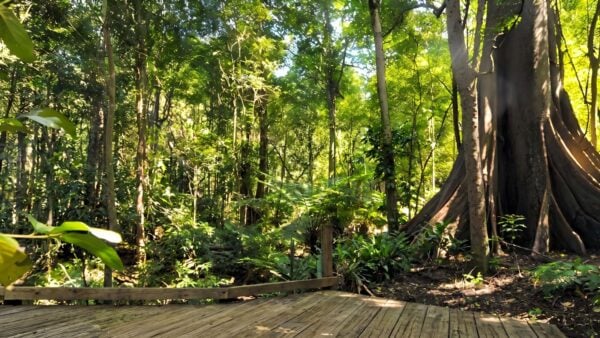

Floodplain Rainforest and Flying Fox Country at Wingham Brush
Overview
Wingham Brush Nature Reserve protects a small but unusually important pocket of lowland rainforest on the Manning River floodplain, right in the township of Wingham, about 12 kilometres north-west of Taree. Although it covers only around 9 hectares, it holds one of the few surviving remnants of this kind of floodplain rainforest on the NSW Mid North Coast.
The reserve is also known for its long-running rainforest regeneration work. What began in 1980 as a serious effort to recover a badly weed-affected patch of brushland became the first scientifically assessed rainforest regeneration project in Australia, and the methods developed here went on to influence restoration work elsewhere.
Highlights
The distinctive character of Wingham Brush comes from its setting on a flat, river-fed floodplain, where subtropical rainforest grows beside a small tidal lagoon connected to the Manning River. This mix of water, rich alluvial soils and dense canopy gives the reserve a very different feel from the drier forests and hill country found through much of the wider region.
Some of the most memorable features are the big emergent figs rising above the canopy, especially Moreton Bay figs and strangler figs, along with the layered structure of the rainforest itself. The reserve also protects a rare surviving patch of floodplain subtropical rainforest that was once far more widespread through the Manning Valley.
Best Time to Visit
Spring and summer are especially good if you want to see the reserve at its liveliest, when breeding activity in the grey-headed flying fox colony reaches a peak and the rainforest canopy feels at its fullest. Autumn has its own quieter appeal, with white cedar leaves adding seasonal colour that stands out against the deep green of the brush.
Winter is a rewarding time for wildlife watching as well, particularly for seasonal rainforest visitors such as fruit pigeons and bowerbirds feeding through the reserve.
Plants and Animals
Plant life here is remarkably rich for such a small reserve. More than 195 plant species and over 70 tree species have been recorded, with floodplain subtropical rainforest making up most of the site. The canopy includes giant stinging tree, white cedar, black apple, pepperberry and hairy rosewood, with large Moreton Bay figs towering above them. There are also smaller areas of dry rainforest, including weeping lilly pilly and watergum near the river side of the reserve.
Wingham Brush is best known as a major maternity roost for the grey-headed flying fox, and this colony is one of the reserve’s defining features. The rainforest also supports a wide spread of other wildlife, including osprey, black-necked stork, wompoo fruit-dove, regent bowerbird, green catbird, mountain brushtail possum and land mullet. Nearly 100 bird species have been recorded here, and the reserve is also an important winter foraging area for rainforest birds and bats moving down from higher country.
Culture and Heritage
The reserve has a direct Aboriginal connection, with the Biripi people known to have used the rainforests of the Manning Valley for gathering plants and animals for food and medicine. One Aboriginal site is recorded within the reserve.
Its later history is also closely tied to conservation in New South Wales. Because the area was once part of a wharfage reserve, it escaped the complete clearing that removed so much floodplain rainforest elsewhere in the valley. Wingham Brush also became historically significant as the site of Australia’s first formal rainforest restoration project, with decades of work by bush regenerators and community volunteers helping shape the forest seen today.
Find more places to explore…
Help expand the trail collection!
Know of an official trail not listed on Trail Hiking Australia? I’m focused on showcasing the best tracks managed by land managers, and I’d love your help! Sharing a trail adds to our community and helps others discover safe, new adventures.
Submit your trail here

