Sorry, no records were found. Please adjust your search criteria and try again.
Sorry, unable to load the Maps API.
Explore stunning hiking trails of Willandra National Park
Discover the diverse trails of Willandra National Park, New South Wales, offering hikes and walks for all skill levels and interests. Find your perfect adventure today.
Discover 1 hiking trail in Willandra National Park

Open Plains, Creek Country and Pastoral Heritage at Willandra
Overview
Willandra National Park sits in western New South Wales, about 64km west of Hillston and 150km north-west of Griffith. It covers 19,385 hectares and protects a representative stretch of the grassland and cottonbush plains of central western NSW, along with part of the Riverine Plain in the Murray-Darling Basin lowlands.
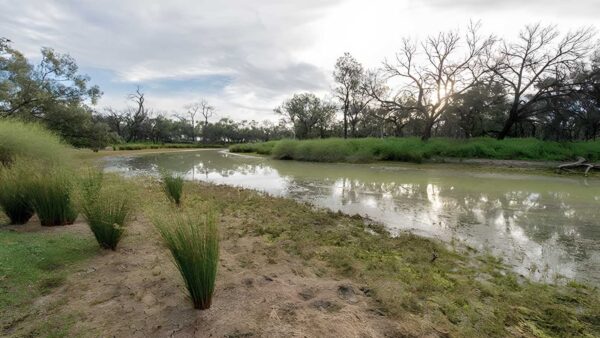
What stands out here is the sense of space. This is a park of broad plains, long horizons and quiet creek country rather than steep ranges or dense forest. Willandra Creek threads through the landscape, and when water moves through the system it changes the feel of the park completely, drawing birds and giving shape to the otherwise open country.
Highlights
The natural character of Willandra comes from its contrast between wide, mostly level plains and the more sheltered line of Willandra Creek. The open country has an expansive, pared-back look, with cottonbush and saltbush country stretching away across the flats, while black box depressions and the creek corridor break up the horizon.
Ephemeral lakes and flood-prone depressions add another layer to the scenery. In dry times they read as part of the plain, but after water they become important wetland pockets within a largely semi-arid landscape. That mix of open plains, creek vegetation and temporary wetlands gives the park much of its visual character.
Best Time to Visit
Willandra can be rewarding at different times of year, but the most appealing periods are usually the cooler months, when walking through open country is more comfortable. Seasons with decent rainfall also bring a different side of the park, with Willandra Creek, wetland areas and grasses responding in ways that soften the plains and attract more birdlife.
Because this is a semi-arid landscape, the park changes noticeably with the weather. Dry years emphasise its spare, open character, while good seasons bring more colour, ground cover and activity around the creek and low-lying areas.
Plants and Animals
The plains are characterised by cottonbush, saltbush and native grasses, with sandy rises carrying remnants of open woodland. Along intermittent creeks and ephemerally flooded depressions, black box and river cooba are the main tree species, with lignum, nitre goosefoot, cane grass, common reed and cumbungi appearing in wetter spots.
Willandra is an important refuge for wildlife in this part of the Riverina. Willandra Creek and the park’s ephemeral lakes support wetland species, including ducks and other waterbirds, and the park provides habitat for sixteen threatened animal species and two threatened plant species. Recorded threatened fauna include the plains-wanderer, freckled duck, blue-billed duck, Australasian bittern, Australian bustard and Major Mitchell’s cockatoo.
Culture and Heritage
Willandra National Park lies within the traditional and contemporary country of the Ngiyampaa Wangaaypuwan people. Willandra Creek was an important travel route and food source, and the park contains a range of Aboriginal sites including scarred trees and open campsites. The creek also marks a shared boundary with Wiradjuri country to the south.
The park also preserves part of the former Big Willandra pastoral station, including the homestead, shearing precinct and outstation remains. These places show how a large western NSW station operated over more than a century, and the homestead is recognised on the NSW State Heritage Register as a rare and intact example of post-World War One rural domestic architecture.
Find more places to explore…
Help expand the trail collection!
Know of an official trail not listed on Trail Hiking Australia? I’m focused on showcasing the best tracks managed by land managers, and I’d love your help! Sharing a trail adds to our community and helps others discover safe, new adventures.
Submit your trail here

