Sorry, no records were found. Please adjust your search criteria and try again.
Sorry, unable to load the Maps API.
Explore stunning hiking trails of Wellington National Park
Discover the diverse trails of Wellington National Park, Western Australia, offering hikes and walks for all skill levels and interests. Find your perfect adventure today.
Discover 4 hiking trails in Wellington National Park





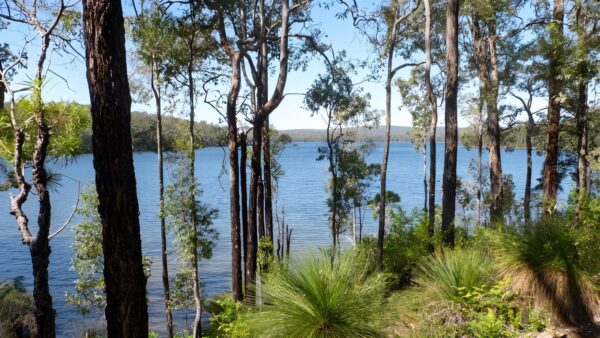
Jarrah Forest and the Deep-Cut Collie River Valley
Overview
Wellington National Park sits on the western edge of the Darling Plateau, about 195 km south of Perth and just west of Collie. It is a large forested park shaped by the Collie River and the long, steep valley the river has cut through the landscape. That mix of upland jarrah country, sheltered river flats and reservoir edges gives the park a feel that is quite different from the more open country found elsewhere in the South West.
The landscape is defined by forest, water and relief. In the lower Collie River valley, the slopes are deeply incised and the vegetation reflects a cooler, damper microclimate than the surrounding uplands, which is a big part of why the scenery here feels so varied over relatively short distances.
Highlights
The standout natural feature is the lower Collie River valley itself. It is one of the striking incised river valleys along the Darling escarpment, with steep slopes, rocky sections and a strong sense of depth through the landscape. Around the river and reservoir, the combination of forested hillsides, water and exposed rock gives the park much of its scenic character.
Another distinctive feature is the contrast between the broader upland forest and the more sheltered valley floor. In some parts of the lower valley, richer loamy soils support a noticeably different forest character, which adds to the sense that Wellington is not just a single uniform block of bush but a park with real landscape variety.
Best Time to Visit
Spring is one of the best times to be here, with mild weather and wildflower displays adding colour through the forest. It is also a good season for appreciating the broader scenery, when the vegetation is fresh and the river country tends to feel at its liveliest.
Summer and autumn bring attention back to the river and reservoir edges, while the park’s winter rainfall pattern helps sustain the cooler, greener feel of the lower valley. If you are coming mainly for the landscape rather than the heat, the cooler months and spring generally show the park at its best.
Plants and Animals
Wellington National Park lies within the Jarrah Forest bioregion, and its forest is centred on jarrah and marri, with Swan River blackbutt becoming prominent on the deeper valley soils. Along the lower Collie River, riverside species such as flooded gum, swamp paperbark, peppermint and river banksia add another layer to the vegetation, and the damp valley conditions support plant communities that differ from the drier uplands.
The park is also important for native fauna of the south-west forests. Chuditch occur here and have increased in number, while species recorded in or associated with the park include quokka, quenda, woylie, western ringtail possum, Baudin’s cockatoo and forest red-tailed black cockatoo. That mix reflects the range of habitats across the park, from riparian vegetation to mature forest.
Culture and Heritage
Wellington National Park is recognised as Country for Kaniyang and Wiilman people. That connection is explicitly acknowledged for the park itself and remains part of how the place is understood today.
Find more places to explore…
Help expand the trail collection!
Know of an official trail not listed on Trail Hiking Australia? I’m focused on showcasing the best tracks managed by land managers, and I’d love your help! Sharing a trail adds to our community and helps others discover safe, new adventures.
Submit your trail here

