Sorry, no records were found. Please adjust your search criteria and try again.
Sorry, unable to load the Maps API.
Explore stunning hiking trails of Walpole-Nornalup National Park
Discover the diverse trails of Walpole-Nornalup National Park, Western Australia, offering hikes and walks for all skill levels and interests. Find your perfect adventure today.
Discover 2 hiking trails in Walpole-Nornalup National Park

Where Forest Meets the Southern Ocean at Walpole-Nornalup
Overview
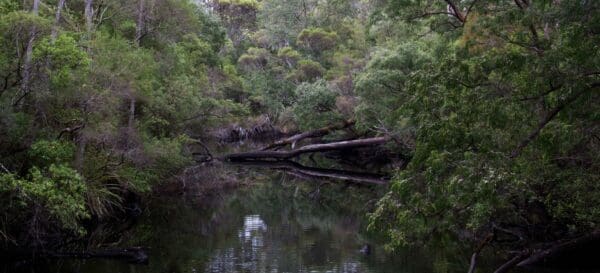
Walpole-Nornalup National Park sits on Western Australia’s south coast around Walpole, Nornalup and Peaceful Bay, in a landscape where tall forest, rivers, estuaries and wild shoreline all meet in the one park. It is one of the few places in the state where the forest reaches right to the coast, which gives the whole area a distinct feel compared with inland forest parks or more open coastal reserves.
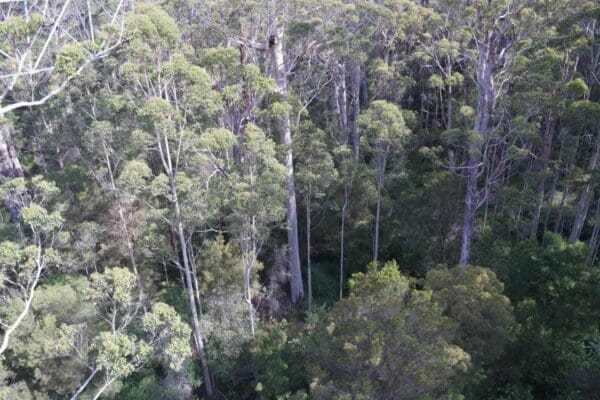
The country here is varied rather than uniform. Karri and tingle forest gives way to heath, wetlands, river valleys and inlets, with long stretches of coast adding another layer again. That mix of landforms is a big part of why the park feels so rich and changeable from one part to the next.
Highlights
The defining feature of the park is its meeting of giant forest and southern coastline. Forested hills are cut by rivers and estuaries, then open out to inlets, sandy beaches and coastal cliffs, so the scenery shifts quickly between enclosed, towering woodland and broad coastal outlooks.
Large tingle forest is central to the character of the place, especially around the Valley of the Giants area, which has long been one of the best-known parts of the park. Elsewhere, the inlets and lower river country bring a softer, quieter side to the landscape, contrasting with the more exposed coastal sections near places such as Conspicuous Beach and Mandalay Beach.
Best Time to Visit
Spring is an especially rewarding time to be here, particularly from October to December when flowering peaks across the park and the wildflower display is at its best. The mix of orchids, heaths and other high-rainfall plants gives the forest floor and heathland a lot more colour than many visitors expect from this part of Western Australia.
Outside spring, the park’s tall forests and inlet country have appeal year-round, but winter is the quietest period for flowering. If your interest is more in the mood of the place than in wildflowers, the cooler months still suit the deep forest, rivers and coastline well.
Plants and Animals
This is an unusually rich botanical area, with at least 698 native plant species recorded and 104 orchid species. The park is also notable for eucalypts that are closely tied to the Walpole area, including red tingle, yellow tingle, Rates tingle and red flowering gum. Plant communities range from karri-tingle forest to sedgelands and wetlands, which helps explain the strong sense of variety across the park.
The animal life is just as distinctive. Mammals associated with the park include quokka, honey possum, western ringtail possum, southern brown bandicoot and chuditch, while bird conservation work has included sites used in the management and translocation of the threatened noisy scrub-bird. The park also supports unusual invertebrates with ancient Gondwanan links, and some wetland habitats around Walpole hold species found only in a very small part of the south coast.
Culture and Heritage
Aboriginal occupation of this area extends back at least 40,000 years, and the park also contains Aboriginal sites and cultural values recognised in park management. The cultural history is not presented as a single simple story, but as a place with long-standing Aboriginal connections as well as later European settlement and land use.
European history in and around the park reaches from early coastal contact in the 1600s to settlement in the early 1900s, with traces of grazing, timber use and early park management forming part of the area’s more recent past. Some sections of the park are among the older protected landscapes in Western Australia, which adds another layer to how the place is understood today.
Find more places to explore…
Help expand the trail collection!
Know of an official trail not listed on Trail Hiking Australia? I’m focused on showcasing the best tracks managed by land managers, and I’d love your help! Sharing a trail adds to our community and helps others discover safe, new adventures.
Submit your trail here

