Sorry, no records were found. Please adjust your search criteria and try again.
Sorry, unable to load the Maps API.
Explore stunning hiking trails of Wallumatta Nature Reserve
Discover the diverse trails of Wallumatta Nature Reserve, New South Wales, offering hikes and walks for all skill levels and interests. Find your perfect adventure today.
Discover 1 hiking trail in Wallumatta Nature Reserve
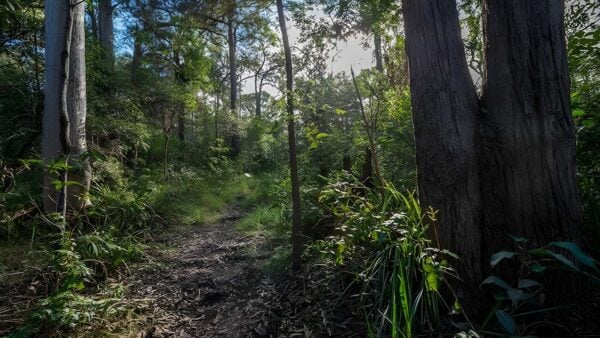

Shale Forest in the Suburbs at Wallumatta
Overview
Wallumatta Nature Reserve is a very small patch of bush in East Ryde, about 10km from central Sydney, but it protects something increasingly scarce in the city: native forest growing on Wianamatta shale. At 6.195 hectares, it sits within a built-up suburban setting, yet it still holds one of the last remaining areas of this kind of open forest in metropolitan Sydney.
What makes the reserve especially interesting is its position in a transition zone between Wianamatta shale and Hawkesbury sandstone. That shift in soils shapes the bush itself, so the vegetation changes across the reserve rather than staying uniform from one end to the other. It is also an important place for environmental education and research, as well as a link in a broader wildlife corridor running along Kittys Creek toward Lane Cove National Park.
Highlights
The big draw here is the character of the bush itself. Wallumatta protects the largest remnant forest of Sydney turpentine and ironbark forest, with open forest on shale soils that has become uncommon across the region. Even within a small area, there is a noticeable change in scenery as shale country gives way to sandstone influence.
That mix creates a reserve with distinct natural zones: turpentine and grey ironbark forest on the shale, scribbly gum and Sydney peppermint forest on the sandstone, and an intermediate band where the two blend together. It gives the place a layered, varied feel that is unusual for such a compact reserve so close to the CBD.
Best Time to Visit
Wallumatta can be visited at any time of year, but the cooler months tend to make the experience more pleasant, especially in Sydney’s built-up north where summer heat can linger. Spring is also a rewarding time to see the reserve at its liveliest, when fresh growth and flowering shrubs add extra detail to the forest understorey.
Plants and Animals
The plant life reflects the reserve’s changing soils. On the shale you’ll find turpentine and grey ironbark with an understorey that includes pittosporum, hop bush and wattles, while the sandstone section carries scribbly gum, Sydney peppermint, banksias and flannel flower. The transition zone between them is part of what gives Wallumatta its ecological value, bringing together species more typical of wetter north shore forests and drier shale woodlands farther west.
Wildlife records are incomplete, but the reserve still supports a solid range of native animals for its size. More than 30 native bird species have been recorded here, including tawny frogmouths, kookaburras, sacred kingfishers and several parrots. Brush-tailed possums and grey-headed flying-foxes have also been recorded, along with reptiles and amphibians such as eastern blue-tongue lizards, red-bellied black snakes and long-necked tortoises.
Culture and Heritage
Wallumatta lies within Country occupied by the Kuring-gai people, and the immediate area around the reserve was occupied by a clan or group known as the Wallumedegal. The reserve’s name recognises that connection. Although a survey found no Aboriginal sites within the reserve itself, the place still carries that older cultural association in its name and in the history of the surrounding district.
There is also a more recent layer of heritage here. The bushland was once part of the Field of Mars Common, set aside in 1804, and much later became the focus of local efforts to stop suburban development from consuming one of the last surviving patches of shale forest in this part of Sydney.
Find more places to explore…
Help expand the trail collection!
Know of an official trail not listed on Trail Hiking Australia? I’m focused on showcasing the best tracks managed by land managers, and I’d love your help! Sharing a trail adds to our community and helps others discover safe, new adventures.
Submit your trail here

