Sorry, no records were found. Please adjust your search criteria and try again.
Sorry, unable to load the Maps API.
Explore stunning hiking trails of Tweed Heads Historic Site
Discover the diverse trails of Tweed Heads Historic Site, New South Wales, offering hikes and walks for all skill levels and interests. Find your perfect adventure today.
Discover 1 hiking trail in Tweed Heads Historic Site
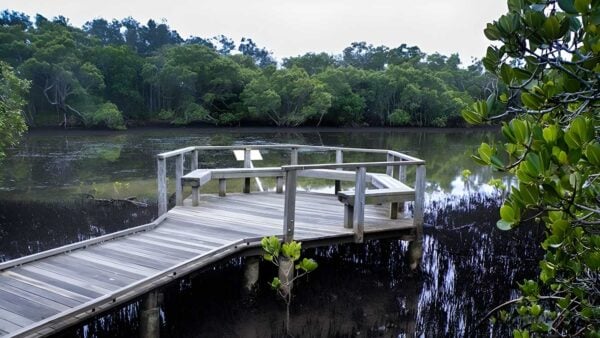

Coastal Wetlands and Living Culture at Tweed Heads Historic Site
Overview
Tweed Heads Historic Site sits in South Tweed Heads, on the lower Tweed River about 1km south of the New South Wales and Queensland border. Though compact at around 8 hectares, it protects an important patch of coastal country in a heavily developed part of the far north coast, with estuarine edges, low-lying wetlands and forested sections all close together.
It is also one of the most culturally significant places in the Tweed, bringing together natural bushland, a ceremonial site and the Minjungbal Aboriginal Cultural Centre. That combination gives the area a very different feel from a typical coastal reserve. It is as much a place of meaning and continuity as it is a place of open green space.
Highlights
What stands out here is the variety of landscapes packed into a small area. Around the estuary there are open salt couch grasslands between the tide lines, while nearby sections shift into eucalypt forest, woodland and swamp forest with broad-leaved paperbark and swamp she-oaks. That quick change in vegetation gives the site a layered, distinctly coastal character.
The setting beside Ukerebagh Passage adds to the sense of place. This is a low-lying riverside landscape rather than a dramatic headland or mountain park, and its appeal is in the quiet detail of wetlands, tidal influence and remnant vegetation that has survived around the edges of suburban Tweed Heads.
Best Time to Visit
This part of the far north coast can be visited year-round, but the more comfortable months are usually the milder stretch from autumn to spring, when humidity is lower and it is easier to appreciate the site’s open grasslands, forest edges and wetland country at a slower pace. Summer brings a greener, more lush look, though conditions are often warmer and heavier.
Because the site is small and close to the coast, it is best suited to an unhurried visit when you can take in both the natural setting and the cultural atmosphere rather than rushing through.
Plants and Animals
Tweed Heads Historic Site conserves a useful cross-section of coastal vegetation communities that have become increasingly scarce in built-up lowland areas. Within a short distance you can see salt couch grasslands near the estuary, eucalypt forest and woodland near the cultural centre, and swamp forest dominated by broad-leaved paperbark and swamp she-oaks.
Those wetland and estuarine habitats also support birdlife, which is one reason the site is known for quiet wildlife watching as much as for its cultural importance. The value of the area lies less in a single standout species and more in the way these plant communities persist together in an isolated remnant on the Tweed coast.
Culture and Heritage
This is a place of strong Aboriginal cultural significance, with sacred sites including a ceremonial Bora Ring and the Minjungbal Aboriginal Cultural Centre interpreting both past and living culture. The site is recognised as an important meeting place, and its cultural meaning is central to understanding the landscape itself.
The historic site was reserved to protect Aboriginal places of special significance, and its role today still reflects that purpose. Rather than separating culture from country, Tweed Heads Historic Site holds them together, which is what gives the place its depth and identity.
Find more places to explore…
Help expand the trail collection!
Know of an official trail not listed on Trail Hiking Australia? I’m focused on showcasing the best tracks managed by land managers, and I’d love your help! Sharing a trail adds to our community and helps others discover safe, new adventures.
Submit your trail here

