Sorry, no records were found. Please adjust your search criteria and try again.
Sorry, unable to load the Maps API.
Explore stunning hiking trails of The Humps Nature Reserve
Discover the diverse trails of The Humps Nature Reserve, Western Australia, offering hikes and walks for all skill levels and interests. Find your perfect adventure today.
Discover 2 hiking trails in The Humps Nature Reserve


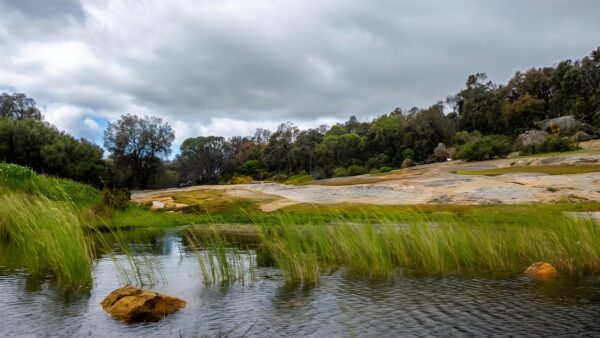

Granite Shapes, Rock Pools and Cave Country at The Humps
Overview
The Humps Nature Reserve sits near Hyden in Western Australia’s southern Wheatbelt, in the same broad granite country that includes Wave Rock. This is a landscape shaped by one of the region’s great granite outcrops, where weathering has produced rounded rock forms, shallow rock pools and overhangs that stand out against the surrounding farmland.
More than a simple rock rise, The Humps is part of a wider Wheatbelt pattern of granite outcrops that function as ecological islands. These exposed granite surfaces, their seasonal pools and the pockets of soil around them create a mix of habitats that is quite different from the country around them.
Highlights
The defining feature here is the granite itself. The Humps has the bulky, rounded character typical of Wheatbelt granite outcrops, with weathered slopes, scattered boulders and natural hollows that collect water after rain. Those rock pools, known as gnamma holes, are one of the details that give the reserve its distinct feel.
What makes the place memorable is that contrast between hard exposed stone and the fine-scale patterns of weathering across it. Even within a relatively compact reserve, the outcrop shifts in texture and shape, from broad curving rock faces to broken sections with caves, overhangs and sheltered pockets.
Best Time to Visit
The cooler months, from autumn through spring, are usually the most comfortable time to spend time around The Humps. Winter and early spring often show the granite at its most varied, when recent rain can leave water in the rock pools and the surrounding Wheatbelt country is greener.
Spring is also a strong season for the wider Hyden district, when milder days and flowering plants add colour around the granite edges. In the hotter part of the year, the exposed rock and open setting can feel stark and intense, which changes the experience of the place even when the scenery is still striking.
Plants and Animals
Granite outcrops in the Wheatbelt support a surprising range of life, and The Humps fits that pattern. Seasonal freshwater pools on granite are important habitat for aquatic invertebrates, while caves, rock piles and larger boulder formations can provide shelter for native mammals and other fauna.
The reserve’s plant life is tied closely to the thin soils, drainage lines and sheltered edges around the rock. Across the Wheatbelt, granite outcrops are recognised as biologically important because they hold habitat types that are patchy, isolated and often quite specialised compared with the surrounding agricultural landscape.
Culture and Heritage
The Humps includes Mulka’s Cave, an Aboriginal rock art site of major significance near Hyden. The cave contains an unusually large and diverse body of artwork for the region, including many hand stencils, and it has long been an important place for Noongar people.
Find more places to explore…
Help expand the trail collection!
Know of an official trail not listed on Trail Hiking Australia? I’m focused on showcasing the best tracks managed by land managers, and I’d love your help! Sharing a trail adds to our community and helps others discover safe, new adventures.
Submit your trail here

