Sorry, no records were found. Please adjust your search criteria and try again.
Sorry, unable to load the Maps API.
Explore stunning hiking trails of Richmond Range National Park
Discover the diverse trails of Richmond Range National Park, New South Wales, offering hikes and walks for all skill levels and interests. Find your perfect adventure today.
Discover 2 hiking trails in Richmond Range National Park
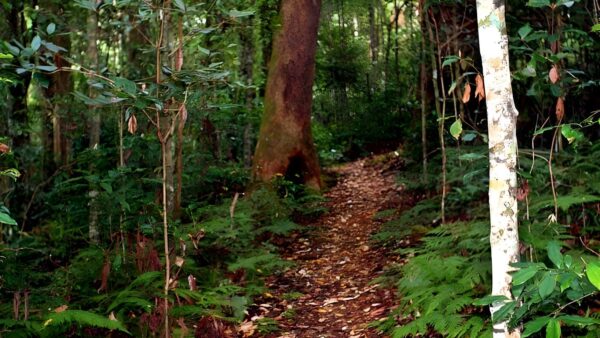

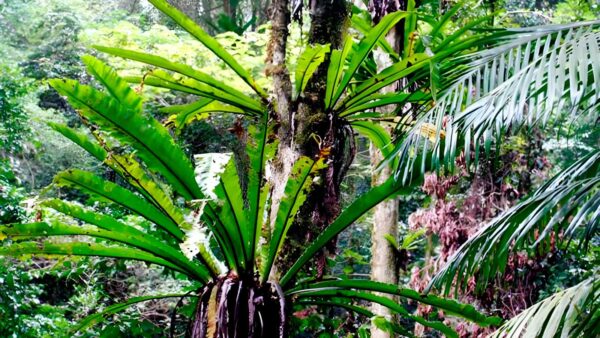

World Heritage Rainforest and Forested Ridges of Richmond Range
Overview
Richmond Range National Park sits in the north-east of New South Wales, about 50 kilometres west of Lismore, with Kyogle and Casino the nearest major centres. It forms part of the northern Richmond Range, a broad forested upland that links with other protected areas across this section of the state. The park covers a large tract of mountain country and upper catchments that feed the headwaters of the Richmond and Clarence river systems.
What gives the park its character is the mix of forest types across the range. There are dry and subtropical rainforests, wet and dry sclerophyll forest, and patches of heath, with extensive old growth forest still present in places. Parts of the park are also included in the Gondwana Rainforests of Australia World Heritage Area, reflecting the age and ecological importance of these rainforest communities.
Highlights
Richmond Range National Park is defined by long forested ridges, cool upland country and a strong sense of elevation over the surrounding valleys. One of its standout scenic areas is Cambridge Plateau, where the range opens to wide views across the Richmond Valley towards the Nightcap and Tweed ranges.
The park also holds two World Heritage rainforest areas at Bungdoozle and Cambridge Plateau. These pockets of ancient forest sit within a larger sweep of mountain country, giving the park a landscape that shifts from open eucalypt forest to dense, shaded rainforest in a relatively short distance.
Best Time to Visit
The cooler months are often the most comfortable time to spend time in Richmond Range National Park, especially for longer walks and full days outside. Higher elevation and extensive forest cover can make the park feel cooler and damper than the surrounding lowlands, while summer is typically warmer and more humid.
That said, the park’s rainforests and wet forests have a strong year-round appeal. After periods of rain the forest is especially lush, creeks are fuller, and the contrast between tall eucalypt forest and enclosed rainforest is at its clearest.
Plants and Animals
This is one of the biologically rich parts of north-eastern New South Wales, with vegetation ranging from subtropical rainforest and wet sclerophyll forest to rocky outcrops and montane heath. Large areas of old growth subtropical rainforest remain, along with old growth wet sclerophyll forest. The World Heritage sections are recognised for ancient rainforest lineages, including tree ferns, hoop pine, cycads and other plant groups with deep evolutionary connections.
The park supports a long list of significant native animals. Recorded species include koala, spotted-tailed quoll, long-nosed potoroo, Parma wallaby, yellow-bellied glider and red-legged pademelon, along with threatened frogs such as the giant barred frog, green-thighed frog and pouched frog. This variety reflects the way Richmond Range brings together rainforest, eucalypt forest and upland habitats in one connected landscape.
Culture and Heritage
Richmond Range National Park is part of the country recognised in the Githabul Indigenous Land Use Agreement, which includes the park within a joint management arrangement in north-east New South Wales. The broader northern Richmond Range is also described as containing cultural sites of importance to local Bundjalung people.
Find more places to explore…
Help expand the trail collection!
Know of an official trail not listed on Trail Hiking Australia? I’m focused on showcasing the best tracks managed by land managers, and I’d love your help! Sharing a trail adds to our community and helps others discover safe, new adventures.
Submit your trail here

