Sorry, no records were found. Please adjust your search criteria and try again.
Sorry, unable to load the Maps API.
Explore stunning hiking trails of Queenstown
Discover the diverse trails of Queenstown, Tasmania, offering hikes and walks for all skill levels and interests. Find your perfect adventure today.
Discover 1 hiking trail in Queenstown
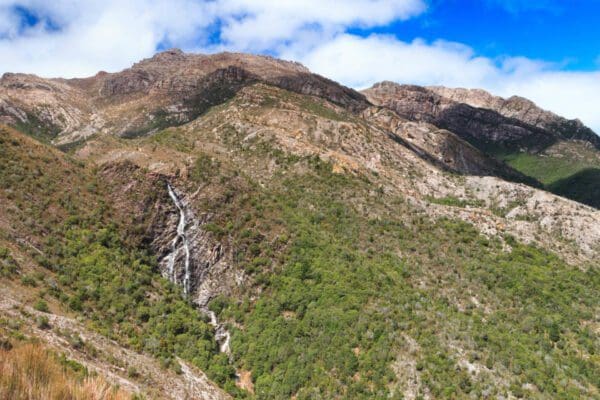

Where Bare Hills Meet the West Coast Range
Overview
Queenstown sits on Tasmania’s West Coast, surrounded by steep mountains, high rainfall country and a landscape that looks markedly different from most other walking regions in the state. The town is framed by the West Coast Range, with reserves north and east of Queenstown protecting rugged uplands, glacial landforms, lakes and broad tracts of native vegetation. Hobart is roughly 260 km away by road, which gives you a sense of how deep into Tasmania’s western country this area feels.
What makes Queenstown distinctive is the contrast. Around town, exposed slopes and open regrowth reflect a landscape heavily altered in the mining era. Beyond that, the country quickly shifts into wetter, more intact mountain terrain, with buttongrass moorland, scrub, rocky high ground and lake-filled basins shaping the character of the surrounding reserves.
Highlights
The scenery around Queenstown is defined by the West Coast Range and the Tyndall area just to the north, where steep slopes, rugged ridgelines, cliffs and freshwater lakes create a stark, high-country setting. Glacial shaping is a big part of the story here, and you can see it in the basin-like landforms, lake country and the broad sweep of the mountains.
There is also a strong visual contrast between Queenstown’s bare, weathered hills and the denser vegetation found further out in the surrounding reserve country. That shift gives the region a character all its own, from open mineral-toned slopes near town to wetter, darker mountain landscapes beyond.
Best Time to Visit
Queenstown can be visited at any time of year, but the most comfortable conditions for walking are generally in the milder months from late spring to autumn, when daylight is longer and the mountain country is often easier to appreciate. Even then, this is a wet West Coast landscape, so changeable conditions are part of the experience rather than the exception.
Cooler months bring a moodier feel to the ranges, with low cloud, mist and colder temperatures adding to the atmosphere of the high country. If you enjoy dramatic mountain scenery, winter and early spring can be especially memorable for that reason.
Plants and Animals
The country around Queenstown supports a mix of western Tasmanian vegetation types. In the higher reserve country north of town, buttongrass moorland, subalpine scrub and lichen-covered rocky ground are all part of the pattern, with large areas of native vegetation remaining in very good condition.
Closer to Queenstown itself, some hillsides are covered by western regrowth complex, a disturbance-adapted vegetation community found on severely altered ground around old mining areas on the West Coast. This gives parts of the district their sparse, open look, while nearby mountain areas carry much denser native plant communities. The broader district also provides habitat for threatened flora and fauna, reflecting the ecological value of these wet, elevated landscapes.
Find more places to explore…
Help expand the trail collection!
Know of an official trail not listed on Trail Hiking Australia? I’m focused on showcasing the best tracks managed by land managers, and I’d love your help! Sharing a trail adds to our community and helps others discover safe, new adventures.
Submit your trail here