Sorry, no records were found. Please adjust your search criteria and try again.
Sorry, unable to load the Maps API.
Explore stunning hiking trails of Pilliga National Park
Discover the diverse trails of Pilliga National Park, New South Wales, offering hikes and walks for all skill levels and interests. Find your perfect adventure today.
Discover 2 hiking trails in Pilliga National Park
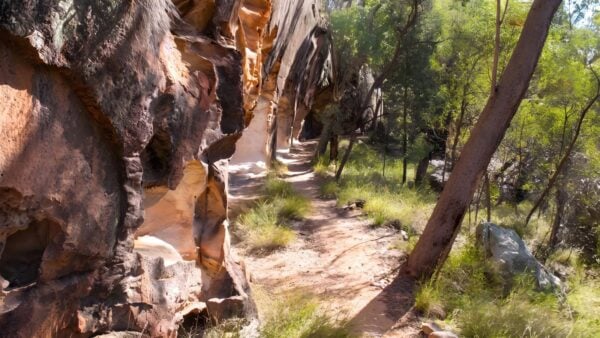

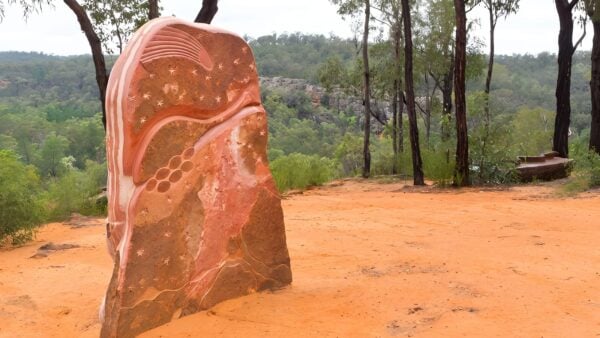
Sandstone, scrub and wide inland forest country
Overview
Pilliga National Park sits within the much broader Pilliga forest near Baradine, in north-western New South Wales. This is a big inland bush landscape, known for its dry forest, sandy country and long stretches of cypress pine and eucalypt woodland. The wider Pilliga forest spans more than half a million hectares, and the national park forms part of that larger block of protected country.
What stands out here is the sense of scale. The country is mostly low and undulating, but it is broken by sandstone outcrops, cliffs and rugged pockets that give the forest real shape. That mix of broad scrub and sudden rock country is a large part of what makes the Pilliga feel so distinctive.
Highlights
The scenery here is defined by Pilliga Sandstone. In places it rises as small peaks and escarpments, while elsewhere it forms gorges, gullies and low cliff lines. Across much of the park the terrain is gently rolling and sandy, then without much warning it shifts into rockier, more broken country.
That contrast gives Pilliga National Park its character. It is not an alpine or coastal landscape, but a vast inland forest with occasional elevated points, rocky edges and far-reaching views that make the surrounding country feel even bigger.
Best Time to Visit
Cooler months are generally the most comfortable time to spend longer periods walking in the Pilliga. Autumn, winter and spring usually suit this dry inland country best, when temperatures are milder and the forest is easier to enjoy at a slower pace.
Spring can be especially rewarding when native plants are flowering, while the clearer, cooler conditions of winter often make the sandstone country and open woodland feel at their best.
Plants and Animals
Pilliga National Park protects plant communities typical of the Pilliga Scrub, including extensive dry forest and woodland on sandy, low-fertility soils. The park is part of one of the largest remaining areas of dry sclerophyll forest west of the Great Dividing Range in New South Wales, which helps explain the scale and continuity of habitat here.
The wider Pilliga is known for its birdlife and for mammals that can be hard to spot elsewhere in heavily cleared inland landscapes. Wildlife recorded in the park area includes barking owls, malleefowl, eastern pygmy possums, squirrel gliders and the south-eastern long-eared bat, along with common inland species such as kangaroos and wallabies.
Culture and Heritage
Pilliga National Park is part of a landscape with strong Aboriginal cultural connections. Within the Pilliga, Sandstone Caves is identified as an important Aboriginal site, and the park is managed in a broader co-management setting that acknowledges Aboriginal connections to this country through the Gawambaraay Pilliga Co-management Committee.
Find more places to explore…
Help expand the trail collection!
Know of an official trail not listed on Trail Hiking Australia? I’m focused on showcasing the best tracks managed by land managers, and I’d love your help! Sharing a trail adds to our community and helps others discover safe, new adventures.
Submit your trail here

