Sorry, no records were found. Please adjust your search criteria and try again.
Sorry, unable to load the Maps API.
Explore stunning hiking trails of Paluma Range National Park
Discover the diverse trails of Paluma Range National Park, Queensland, offering hikes and walks for all skill levels and interests. Find your perfect adventure today.
Discover 7 hiking trails in Paluma Range National Park



Where the Wet Tropics Meet the Dry Country at Paluma Range
Overview
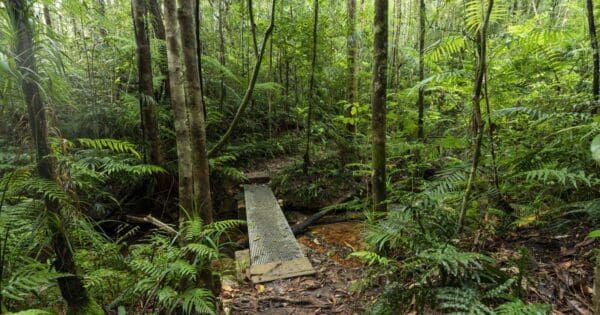
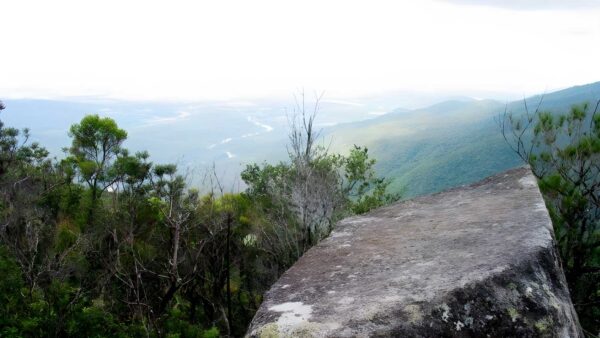
Paluma Range National Park sits north of Townsville and protects a big slice of the Paluma and Seaview ranges, including the Mount Spec and Jourama Falls sections. It covers about 80,000 hectares, with country that shifts from dry foothill woodland to cool upland rainforest and steep escarpments. Around three quarters of the park lies within the Wet Tropics World Heritage Area, and Mount Spec marks the southern edge of that World Heritage landscape.
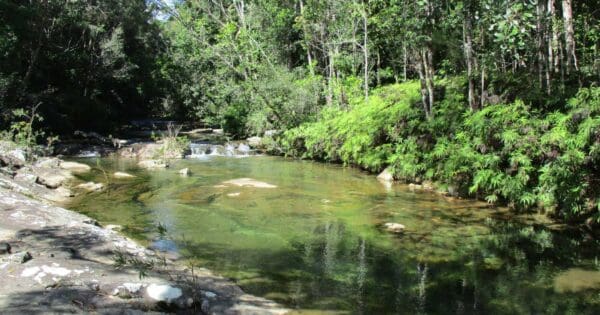
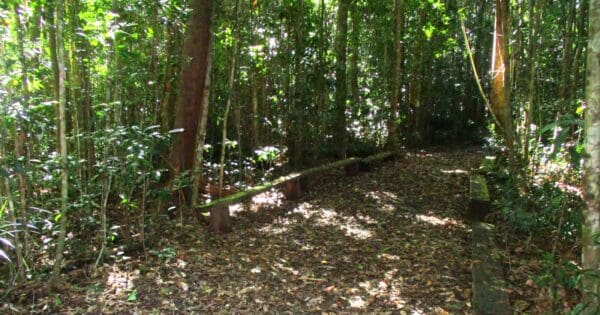
This is a place of strong contrasts. Higher slopes and sheltered valleys carry tropical rainforest, while the lower country supports open eucalypt woodland, creekside paperbarks and casuarinas. That mix gives the park its distinct feel, with misty mountain country above and rocky creek systems and drier forest below.
Highlights
The standout character here is the range itself. Mount Spec rises about 1,000m above the Big Crystal Creek floodplain, and the escarpment creates broad views east towards the Coral Sea as well as a more folded, rugged inland landscape of boulders, chasms, cascades and forested slopes.
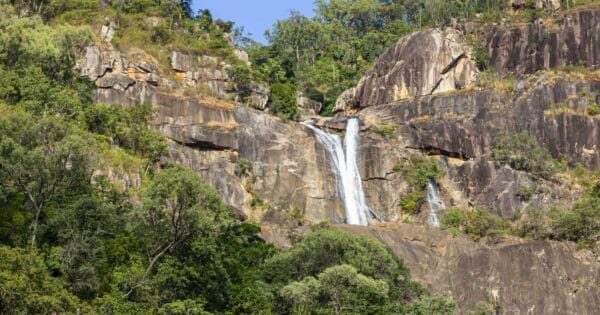
In the northern part of the park, the Jourama Falls section protects Waterview Creek and a striking waterfall set among rainforest, vine forest and open woodland in the foothills of the Seaview Range. Across the park as a whole, exposed rock, huge boulders and clear creeks give the scenery a more rugged edge than many rainforest parks.
Best Time to Visit
The most comfortable time to spend time here is usually the cooler, drier months from about May to September, when temperatures are milder and the upland sections can feel especially pleasant. The high country around Paluma is notably wetter than the lowlands, with almost 3m of average annual rainfall, much of it from summer cyclones and monsoonal weather.
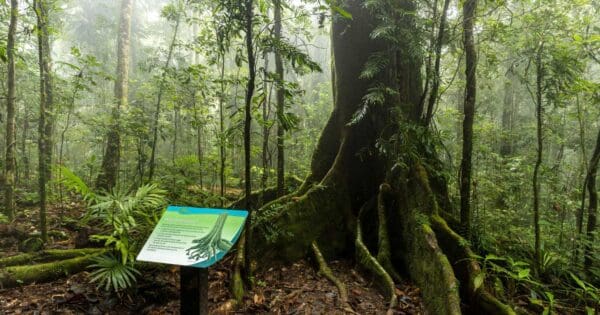
If you like seeing the creeks, waterfalls and rainforest at their fullest, the wetter months can be very atmospheric, with cloud and mist often hanging over the range. The trade-off is that this is the park’s wetter, more humid season.
Plants and Animals
Paluma Range National Park protects an unusually rich spread of habitats, with 75 mapped regional ecosystems and many of them recognised for their conservation significance. The vegetation changes quickly with altitude and aspect, from tall open forest with red-wooded stringybarks in the drier west to wet tropical forest on the cooler mountain tops and along sheltered slopes.
The park is also important for wildlife found in the Wet Tropics. Birds recorded around Mount Spec include chowchilla, mountain thornbill and golden bowerbird, alongside more familiar species such as the Australian brush-turkey and Lewin’s honeyeater. Male bowerbirds build display bowers here, and the park also provides habitat for notable Wet Tropics species such as the southern cassowary and stream-dwelling rainforest frogs.
Culture and Heritage
Traditional Owners affiliated with the Girringun Aboriginal Corporation have interests in parts of Paluma Range National Park and are involved in cooperative park management. The park also holds shared-history heritage from later periods, including remnants of tin and tungsten mining, old huts and sluices, and Depression-era stonework associated with the road and bridge at Little Crystal Creek.
There are also traces of the Second World War in the Mount Spec area, where a radar station operated from 1942 to 1945. Together these layers give the park a history that sits alongside its better-known rainforest and mountain scenery.
Find more places to explore…
Help expand the trail collection!
Know of an official trail not listed on Trail Hiking Australia? I’m focused on showcasing the best tracks managed by land managers, and I’d love your help! Sharing a trail adds to our community and helps others discover safe, new adventures.
Submit your trail here

