Sorry, no records were found. Please adjust your search criteria and try again.
Sorry, unable to load the Maps API.
Explore stunning hiking trails of Newnes Plateau
Discover the diverse trails of Newnes Plateau, New South Wales, offering hikes and walks for all skill levels and interests. Find your perfect adventure today.
Discover 1 hiking trail in Newnes Plateau
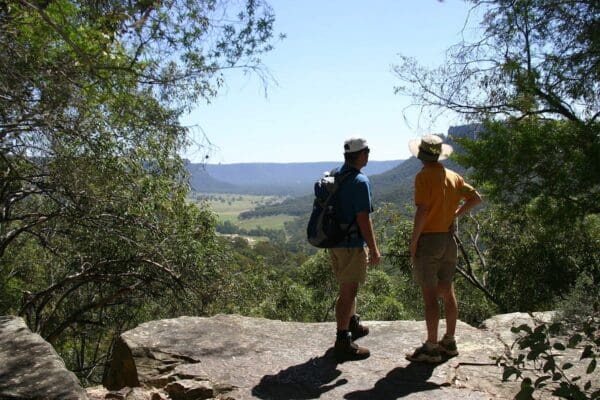

Pagoda Country and High Swamps on the Newnes Plateau
Overview
Newnes Plateau sits in the upper Blue Mountains, west of Sydney and close to Lithgow, where a high sandstone tableland breaks into cliffs, gorges and broad headwater valleys. Much of the plateau falls within Gardens of Stone State Conservation Area and nearby national parks, and the country is known for its combination of elevated swamps, rocky escarpments and striking sandstone landforms.
What gives this area its particular character is the meeting of dry, exposed sandstone country with permanently or seasonally wet upland swamps. Those swamps form in low-slope headwaters on deep sandy organic soils, creating a landscape that can feel open and rugged in one moment and soft, peaty and densely vegetated in the next.
Highlights
The Newnes Plateau is best known for its pagoda landscapes, where weathered sandstone has formed clustered domes, pinnacles, ridges and broken cliff edges across the plateau. These landforms give the country a sculpted look that is quite different from the better-known valley scenery elsewhere in the Blue Mountains.
Another defining feature is the pattern of long, narrow swamps spread through subdued headwater valleys at around 900 to 1200 metres above sea level. Set against sandstone catchments and cliff-lined country, they add a softer layer to the plateau’s scenery and are a big part of what makes this landscape feel so distinctive.
Best Time to Visit
Spring is one of the best times to see the plateau at its most lively, with milder weather and fresh growth around the swamps and heath. The higher elevation also gives the area a cooler feel than lower country, which can make warmer months more comfortable for walking.
Autumn is another good period if you prefer clearer air and crisp conditions. In winter, the plateau’s altitude makes the landscape feel colder and more exposed, which can suit some walkers but gives the area a harsher character.
Plants and Animals
The plateau supports rich biodiversity, with eucalypt forest, heath, rocky shrubland and threatened swamp communities packed into a relatively small area. One of the most important plant communities here is the Newnes Plateau Shrub Swamp, an endangered ecological community found in waterlogged headwater valleys and dominated by shrubs and sedges.
These swamps are typically made up of species such as baeckea, grevillea, epacris and leptospermum, mixed with sedges including baloskion, empodisma, lepyrodia and lepidosperma. They also provide habitat for threatened fauna, including the Blue Mountains water skink, which has distinct populations on the Newnes Plateau.
Culture and Heritage
Newnes Plateau forms part of a broader Wiradjuri cultural landscape. Within the plateau country, swamps provided ongoing food resources, and rock shelters around them contain concentrations of artefact material. The wider area also holds Aboriginal sites including rock art, grinding grooves, wells, occupation deposits and artefact scatters.
The plateau also has a strong industrial history tied to mining and extraction, which has left a lasting mark on how parts of the landscape are understood and managed today.
Find more places to explore…
Help expand the trail collection!
Know of an official trail not listed on Trail Hiking Australia? I’m focused on showcasing the best tracks managed by land managers, and I’d love your help! Sharing a trail adds to our community and helps others discover safe, new adventures.
Submit your trail here

