Sorry, no records were found. Please adjust your search criteria and try again.
Sorry, unable to load the Maps API.
Explore stunning hiking trails of Nangar National Park
Discover the diverse trails of Nangar National Park, New South Wales, offering hikes and walks for all skill levels and interests. Find your perfect adventure today.
Discover 3 hiking trails in Nangar National Park
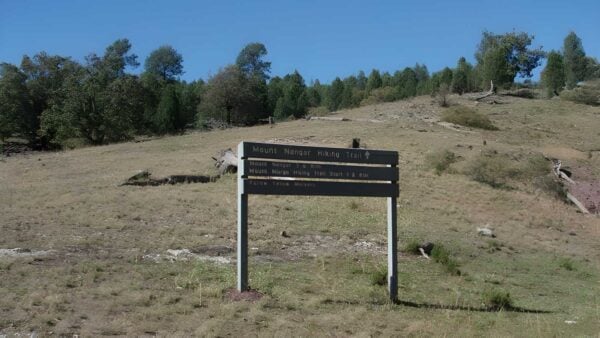

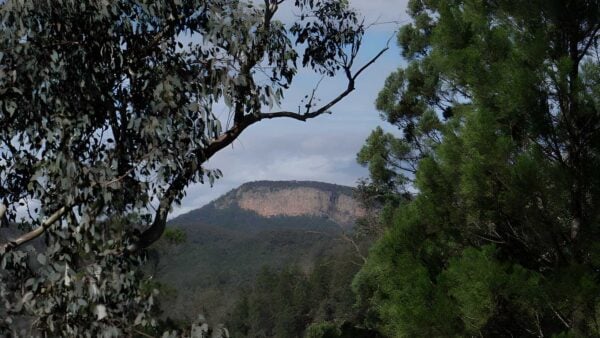
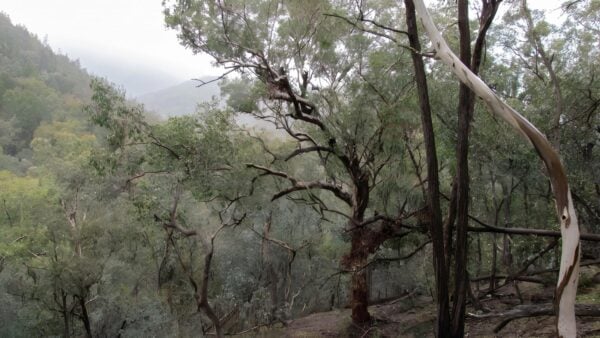
Red Cliffs and Wooded Slopes of the Nangar Range
Overview
Nangar National Park sits on the central western slopes of New South Wales, about 70km south-west of Orange and 40km east of Forbes. It protects a sizeable remnant of Central West woodland across low hills, creek flats and the rugged northern edge of the Nangar Range, giving the park a very different feel from the cleared farming country around it.
What stands out here is the contrast in terrain. The southern part of the park rolls more gently, while the north tightens into ridges, narrow valleys and a long escarpment capped by Mount Nangar, which rises to 770m. That shift in landform gives the park much of its character, from open creek country to rocky slopes and elevated views across the district.
Highlights
The defining feature of Nangar is the cliff line of red siltstone along its northern boundary. It is a striking piece of country, especially where the range lifts to Mount Nangar and the land falls away to surrounding paddocks and scattered rocky outcrops.
Elsewhere, the scenery changes from rugged ridges and narrow valleys to the broader flats of Terarra Creek. Natural springs in the upper Mogong Creek catchment and the park’s mix of wooded hills and exposed rocky slopes add to that sense of variety. In spring, patches of heath on Mount Nangar bring a flush of seasonal colour.
Best Time to Visit
Autumn through spring is the best stretch for most walkers. The cooler months generally suit longer days out, and spring is a particularly good time to see flowering heath on Mount Nangar and other seasonal wildflowers across the park.
At any time of year, Nangar tends to be more about clear air, open country and broad views than lush scenery. After rain, the creeks and falls are more animated, while cooler seasons are often the most comfortable for appreciating the ridgelines and woodland country.
Plants and Animals
Nangar is important because it protects a sample of the original plant and animal communities of the Central West in a landscape where so much native vegetation has been cleared. Its woodlands include red stringybark and scribbly gum across much of the park, along with smaller areas of white box, grey box, Blakely’s red gum, white cypress pine, mugga ironbark and tumbledown gum communities. Some of these woodland types are considered vulnerable or inadequately conserved in New South Wales.
The birdlife is especially rich, with 147 bird species recorded. Raptors are a real feature, including peregrine falcons, wedge-tailed eagles and brown falcons using the northern cliffs for nesting and perching. Kangaroos and wallabies are common through the open forest and along creeks, and the park also supports bats, reptiles and frogs, including the southern rainbow skink and eastern long-necked tortoise.
There is also a strong conservation story in the background. Parts of the park were logged or cleared in the past, but steeper and less accessible country still holds small patches of old growth, and native vegetation continues to regenerate across disturbed areas.
Culture and Heritage
Nangar National Park lies within Wiradjuri Country, and the Nangar Range has long been an important landmark in Aboriginal culture. Recorded evidence within the park includes scarred trees and scattered stone artefacts, and the area has the potential to contain many more sites associated with long occupation and use.
The park also holds traces of more recent history. Remains linked to earlier farming survive in parts of Nangar, and there is evidence of Chinese mining activity dating from the early 1900s.
Find more places to explore…
Help expand the trail collection!
Know of an official trail not listed on Trail Hiking Australia? I’m focused on showcasing the best tracks managed by land managers, and I’d love your help! Sharing a trail adds to our community and helps others discover safe, new adventures.
Submit your trail here

