Sorry, no records were found. Please adjust your search criteria and try again.
Sorry, unable to load the Maps API.
Explore stunning hiking trails of Nadgee Nature Reserve
Discover the diverse trails of Nadgee Nature Reserve, New South Wales, offering hikes and walks for all skill levels and interests. Find your perfect adventure today.
Discover 4 hiking trails in Nadgee Nature Reserve




Where NSW’s Far South Coast Turns Wild and Tidal
Overview
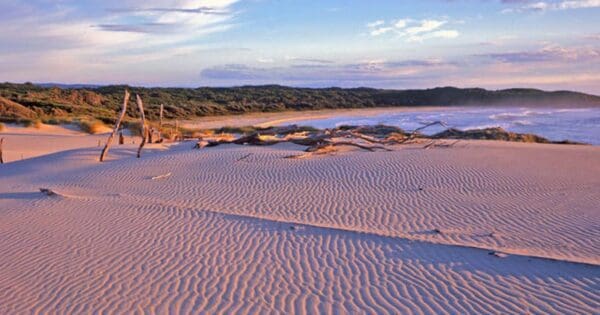
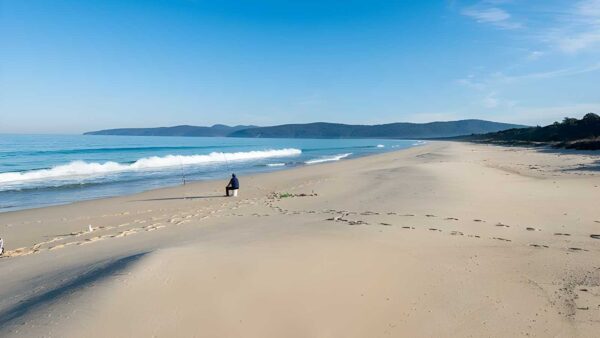
Nadgee Nature Reserve sits on the far south coast of New South Wales, between Wonboyn Lake and the Victorian border. It covers 20,671 hectares and protects a remarkably intact stretch of country made up of coastal ranges, a narrow coastal plain, estuaries, beaches, cliffs, dunes and forested catchments. The mix of landforms gives the reserve a strong sense of transition, from high rocky backdrops to low coastal country shaped by water, wind and shifting sand.
What stands out here is how little the broader landscape has been altered. Nadgee Lake, deep within the reserve, is recognised as near pristine, and its whole catchment remains undisturbed forest. That intact setting is a big part of why Nadgee is so important ecologically and why it has long been valued as a place for scientific research.
Highlights
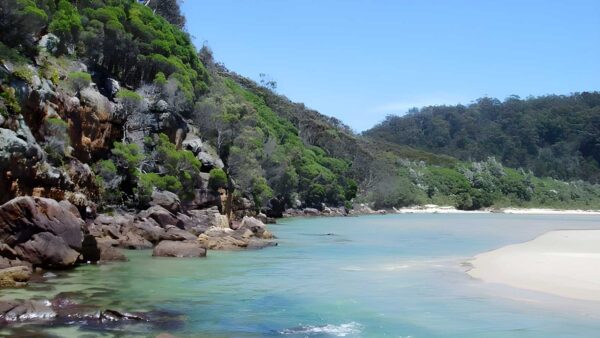
Nadgee is defined by contrast. Coastal ranges including Table Ridge, Howe Range and part of the Nadgee Range rise to more than 500 metres at Mount Nadgee, then fall sharply to a narrow plain cut by creeks and estuaries. Along the coast, the scenery shifts again through broken cliffs, rock platforms, sandy beaches, boulder beaches, lagoons and dune systems.
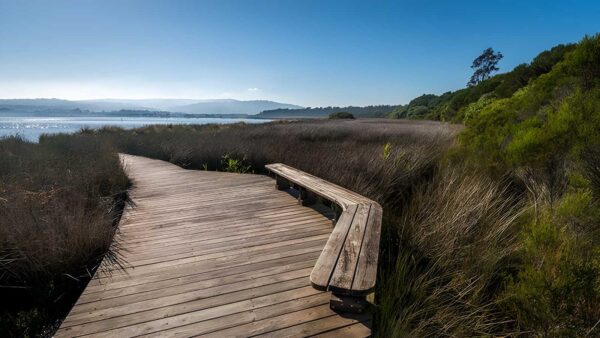
One of the most distinctive features is the way the coastline changes character around Cape Howe. This is a landscape shaped by active coastal processes, with noticeable variation between cliffed sections, barrier beaches and sheltered back-dune waters such as Nadgee Lake. The result is a reserve that feels broad and open in some places, then enclosed and intricate in others.
Best Time to Visit
Nadgee can be rewarding at any time of year, but the milder months are often the most comfortable for spending long periods outdoors. Its far south coast position places it in a zone where summer- and winter-dominant rainfall patterns overlap, so conditions can be variable rather than neatly seasonal. Outside the warmer holiday period, the area generally feels quieter and less busy than nearby coastal towns.
Plants and Animals
This reserve protects an unusually rich range of plant communities, including four types of rainforest and one of the four large heathland areas on the New South Wales south coast. Some of its smaller rainforest pockets are especially significant because of their coastal setting, while the heathlands and woodlands support species that depend on long-unburnt habitat and dense shrub cover.
Nadgee is also notable for the number of species at the edge of their range. Twenty-four plant species reach their southern limit here, reflecting the reserve’s position on a biogeographical boundary. Six rare plant species have been recorded, along with a large number of restricted plants, and 37 threatened native animal species have been recorded in the reserve. The heath around Nadgee Lake provides critical habitat for the eastern bristlebird, and Nadgee is also important for species such as the eastern ground parrot and striated fieldwren.
Culture and Heritage
Many Aboriginal sites have been recorded within Nadgee Nature Reserve, creating a detailed record of Aboriginal occupation along this part of the coast. The reserve also contains several historic places linked with earlier agricultural and other land uses.
Find more places to explore…
Help expand the trail collection!
Know of an official trail not listed on Trail Hiking Australia? I’m focused on showcasing the best tracks managed by land managers, and I’d love your help! Sharing a trail adds to our community and helps others discover safe, new adventures.
Submit your trail here

