Sorry, no records were found. Please adjust your search criteria and try again.
Sorry, unable to load the Maps API.
Explore stunning hiking trails of Murrumbidgee Valley National Park
Discover the diverse trails of Murrumbidgee Valley National Park, New South Wales, offering hikes and walks for all skill levels and interests. Find your perfect adventure today.
Discover 1 hiking trail in Murrumbidgee Valley National Park
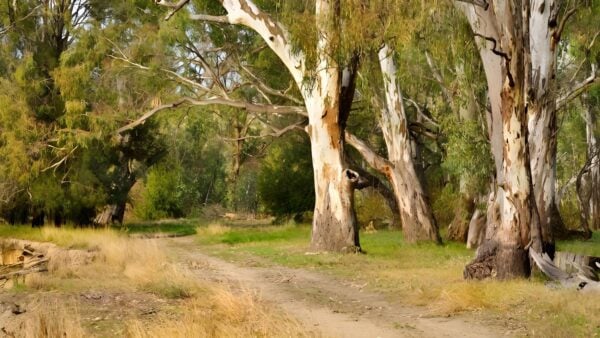

River Red Gum Country Along the Murrumbidgee
Overview
Murrumbidgee Valley National Park stretches along the Murrumbidgee River in the Riverina, near towns including Narrandera, Hay and Balranald. Created in 2010, it protects 12,378.6 hectares of river country within a much broader chain of reserves associated with the Murrumbidgee and its red gum forests. This is a park defined by water, floodplain country and long ribbons of forest rather than by one single mountain or escarpment.
The character of the place comes from its river frontage and the way the landscape shifts as you move west, from irrigation country near Narrandera and Leeton towards the plains around Hay and the edge of the mallee near Balranald. That gives the park a broad, open feel, with the river acting as the thread that ties the whole landscape together.
Highlights
The big draw here is the scenery of the Murrumbidgee itself and the river red gum forest that follows it. Broad trunks, deep red bark and overhanging limbs give the riverbanks a strong sense of scale, especially where the forest meets sandy edges and quieter backwaters.
Wetland pockets add another layer to the landscape, particularly around places such as the Turkey Flat wetlands and McCaugheys Lagoon, where the country opens out and the river system feels slower and more expansive. Across the park, the appeal is less about dramatic elevation and more about the calm, wide-set beauty of floodplain country shaped by water over time.
Best Time to Visit
Conditions are usually most pleasant in the cooler months, from autumn through spring, when daytime temperatures are generally milder and the river country is more comfortable for longer walks. Seasonal flooding also plays an important role in the life of the red gum forest, so the look and feel of the park can change noticeably depending on recent water movement through the floodplain.
Plants and Animals
River red gum is the defining plant of Murrumbidgee Valley National Park, and these forests support much of the wildlife that gives the area its character. Flooding helps recharge the subsoil, which in turn supports the health of the red gums along the river and channels.
The park is known for birdlife, with species such as white-bellied sea eagles, sacred kingfishers and threatened superb parrots recorded in the forest. Koalas may also be seen in the taller eucalypts, and the park supports reptiles and kangaroos as well. Wetland and woodland habitats sit side by side here, which helps explain the variety of animals you can encounter across the river corridor.
Culture and Heritage
Wiradjuri people are directly connected to Murrumbidgee Valley, and river red gums have long been important here for practical and cultural uses including canoes, shields, warmth, shelter and food. The continuing connection is still visible today, including through cultural woodcraft in nearby Narrandera using river red gum.
Find more places to explore…
Help expand the trail collection!
Know of an official trail not listed on Trail Hiking Australia? I’m focused on showcasing the best tracks managed by land managers, and I’d love your help! Sharing a trail adds to our community and helps others discover safe, new adventures.
Submit your trail here

