Sorry, no records were found. Please adjust your search criteria and try again.
Sorry, unable to load the Maps API.
Explore stunning hiking trails of Munghorn Gap Nature Reserve
Discover the diverse trails of Munghorn Gap Nature Reserve, New South Wales, offering hikes and walks for all skill levels and interests. Find your perfect adventure today.
Discover 1 hiking trail in Munghorn Gap Nature Reserve
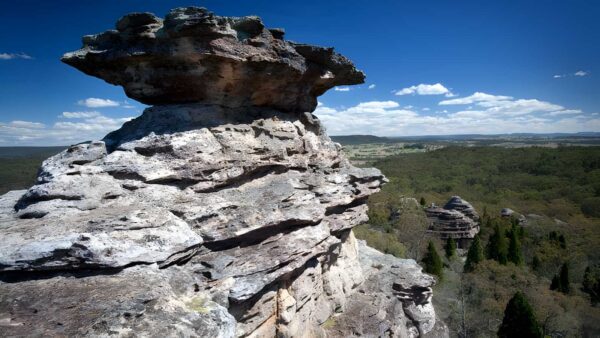

Sandstone Pagodas and Bird Country at Munghorn Gap
Overview
Munghorn Gap Nature Reserve sits about 34 kilometres north-east of Mudgee, in the headwaters of creeks that feed the upper Goulburn River. It covers 5,935 hectares of sandstone country and is part of a broader corridor linking the Central Western Slopes, Central Tablelands and the coast-facing ranges. That meeting point shows up clearly in the landscape and the vegetation, giving the reserve a character that feels a little different from the better known sandstone parks closer to Sydney.
This is one of the older protected areas in New South Wales, set aside to conserve fauna and the rugged pagoda country that shapes the reserve. Even within the wider Goulburn River area, Munghorn Gap stands out for its combination of sculpted rock formations, dry bushland and strong birdlife.
Highlights
The defining feature here is the sandstone pagoda country. These weathered rock formations rise out of the bush in clusters and broken ridges, giving the reserve a striking, almost ruin-like look. They are the sort of landforms that change character with the light, from pale and soft in the morning to deeper orange tones later in the day.
The reserve also sits in a dissected sandstone landscape shaped by creeks and steep-sided valleys. That mix of rocky outcrops, ridgelines and bush-covered slopes gives Munghorn Gap its scenic character and explains why even short walks here feel tied closely to the geology of the place.
Best Time to Visit
Autumn, winter and spring are usually the most comfortable times to spend time in Munghorn Gap, when cooler conditions make the exposed sandstone country easier to enjoy on foot. Spring is especially rewarding if you are interested in birdlife, with the reserve well known as a birdwatching spot.
At any time of year, the appeal of the place is less about a single seasonal event and more about the steady mix of rock formations, open bushland and wildlife. Clearer, milder days tend to suit the landscape best.
Plants and Animals
Munghorn Gap lies in an important transition zone where plant communities from south-eastern, north-western and western New South Wales overlap. Because the Great Dividing Range is at one of its lower points in this region, species from further west extend into the reserve, while some plants associated with Sydney sandstone reach their northern or western limits here.
The vegetation is varied for a reserve of this size. Eucalypt woodlands dominate much of the sandstone country, with restricted communities such as Eucalyptus dawsonii woodland in valley and tributary gullies, and low woodland dominated by Acacia doratoxylon on some ridges and slopes. This mix of habitats supports a rich fauna assemblage, including threatened species such as the Powerful Owl, Square-tailed Kite, Swift Parrot and Brush-tailed Rock-wallaby. Birdlife is a real strength of the reserve, with 164 species recorded.
Culture and Heritage
Munghorn Gap Nature Reserve has recognised Aboriginal heritage values, and Aboriginal sites are present within the reserve. The area is described as particularly important to Wiradjuri people, and Aboriginal sites across the reserve are treated as part of a broader cultural landscape rather than isolated points on a map.
Find more places to explore…
Help expand the trail collection!
Know of an official trail not listed on Trail Hiking Australia? I’m focused on showcasing the best tracks managed by land managers, and I’d love your help! Sharing a trail adds to our community and helps others discover safe, new adventures.
Submit your trail here

