Sorry, no records were found. Please adjust your search criteria and try again.
Sorry, unable to load the Maps API.
Explore stunning hiking trails of Mount Hyland Nature Reserve
Discover the diverse trails of Mount Hyland Nature Reserve, New South Wales, offering hikes and walks for all skill levels and interests. Find your perfect adventure today.
Discover 1 hiking trail in Mount Hyland Nature Reserve
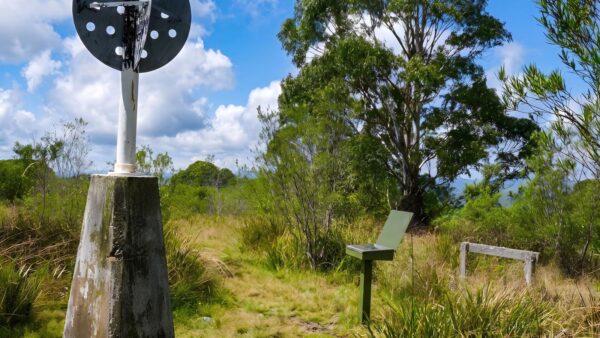

Rainforest Peaks and Escarpment Country at Mount Hyland
Overview
Mount Hyland Nature Reserve sits in north-eastern New South Wales, about 30 kilometres north-east of Dorrigo. It protects a compact but remarkably varied section of the Dorrigo Plateau, where high country rainforest, eucalypt forest and steep escarpment terrain meet. Part of the reserve is included in the Gondwana Rainforests of Australia World Heritage property, which gives a good sense of the ecological importance packed into this small area.
The landscape is shaped by three prominent peaks and deeply incised creek lines, with Hyland Gorge and the Blicks River marking part of the reserve’s eastern edge. Even within a relatively modest area, the reserve holds a strong mix of elevations, forest types and sheltered gullies, which is why it supports such a dense concentration of plant communities and wildlife.
Highlights
The standout character of Mount Hyland is its mix of high peaks, escarpment edges and cool rainforest. The three summits give the reserve a distinct skyline, and the elevated country looks out across the Dorrigo Plateau. In the gullies and along the creeks, the scenery shifts quickly to mossy, shaded rainforest with a much softer, enclosed feel.
Another distinctive feature is the contrast between ridgelines and sheltered valleys. Rainforest is concentrated around Obeloe and Blicks creeks, while eucalypt forest tends to sit up on the ridges, so the reserve feels varied rather than uniform. That change in scenery is a big part of what makes this pocket of the plateau memorable.
Best Time to Visit
Cooler months are usually the most comfortable time to spend longer in this high country, especially if you enjoy clear air and milder daytime temperatures. The reserve’s elevation and rainforest setting mean conditions can feel cooler and damper than lower country nearby, which is part of its appeal.
Spring is a particularly rewarding time if you are interested in plant life, when the forest is fresh and the mix of habitats is especially noticeable. Summer can also be appealing in the shaded rainforest sections, which tend to stay cool and sheltered.
Plants and Animals
Mount Hyland Nature Reserve protects at least 21 plant communities and associations, ranging across rainforest, wet and dry sclerophyll forest, dry sclerophyll woodland and semi-mesic grassy forest. Much of the reserve is dominated by rainforest, with old growth stands still present in places because core rainforest areas saw little logging and limited fire.
The rainforest includes species and assemblages typical of cool temperate and warm temperate country, with coachwood, sassafras, corkwood, mountain walnut and yellow carabeen among the characteristic trees. The reserve also contains an important population of the endangered Dorrigo daisy, a plant with a very restricted distribution on the northern fall of the Dorrigo Plateau.
Wildlife values are just as strong. Twenty-three threatened fauna species have been recorded in the planning area, including the Hastings River mouse and pouched frog, along with animals such as the powerful owl, sooty owl, glossy black-cockatoo, koala, parma wallaby and spotted-tailed quoll. The variety of habitats across rainforest, creek flats and ridges helps explain why so many significant species persist here.
Culture and Heritage
Mount Hyland is part of a broader landscape of traditional and contemporary cultural significance to the Gumbaynggirr Aboriginal nation. Forested country in and around the reserve has long been valued as a source of food, medicines and other resources, and as country with ongoing spiritual and cultural importance.
No formal Aboriginal cultural heritage surveys had been carried out in the planning area when the management plan was prepared, and no Aboriginal sites had been recorded within the reserve itself at that time. Even so, the cultural values of the area are recognised as part of the reserve’s significance and are managed in consultation with the Aboriginal community.
Find more places to explore…
Help expand the trail collection!
Know of an official trail not listed on Trail Hiking Australia? I’m focused on showcasing the best tracks managed by land managers, and I’d love your help! Sharing a trail adds to our community and helps others discover safe, new adventures.
Submit your trail here

