Sorry, no records were found. Please adjust your search criteria and try again.
Sorry, unable to load the Maps API.
Explore stunning hiking trails of Montague Island Nature Reserve
Discover the diverse trails of Montague Island Nature Reserve, New South Wales, offering hikes and walks for all skill levels and interests. Find your perfect adventure today.
Discover 1 hiking trail in Montague Island Nature Reserve

Where Penguins, Seabirds and Seals Gather Off the Far South Coast
Overview
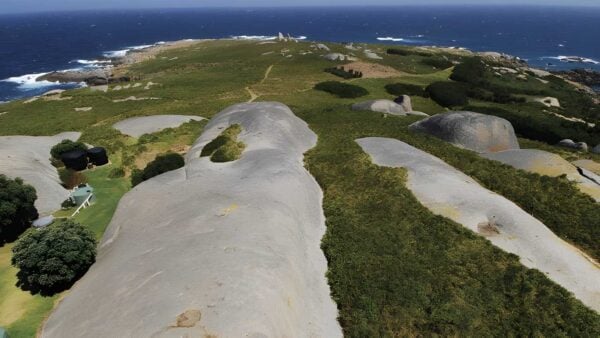
Barunguba Montague Island Nature Reserve sits in the Tasman Sea about 9 kilometres south-east of Narooma, on the Far South Coast of New South Wales. The reserve covers the whole island above the high-water mark, a compact but striking place with two higher sections separated by a narrow ravine. Its offshore position, close to the continental shelf and where the warm East Australian Current meets cooler southern waters, helps create an unusually rich marine setting around the island.
Despite its modest size, the reserve has an outsized ecological role. It supports breeding and sheltering habitat for seabirds, a colony of fur seals and one of the largest little penguin colonies in New South Wales. Gould’s petrel is important enough here that the reserve has been declared an asset of intergenerational significance for the protection of that species and its habitat.
Highlights
The first thing that sets this place apart is its island character. Barunguba Montague Island is long and narrow, with exposed rock, high cliffs in places and a clear split between the more developed south island and the undeveloped north island. Looking across the reserve, there is a strong sense of a self-contained outpost off the mainland rather than an extension of the coast.
The surrounding sea is just as much part of the picture as the land itself. Nutrient-rich waters and the nearby shelf edge support a remarkable concentration of marine life, which is why the island feels so animated by birds and seals. The contrast between rocky shoreline, open ocean and low coastal vegetation gives the reserve its distinct visual character.
Best Time to Visit
Season matters here because the island changes with the wildlife cycle. Spring into early summer is especially rewarding for seeing little penguins returning to nest, while late winter to early summer is a strong time for fur seals around the island. Birdlife is a major part of the reserve’s appeal throughout the warmer months, particularly when breeding activity is underway.
If you are more interested in the feel of the place than any one species, the cooler months through spring often suit the island well, with active wildlife and clear coastal light adding to the experience.
Plants and Animals
This reserve is best known for its seabirds. Little penguins breed here in large numbers, and the island also supports shearwaters, white-faced storm-petrels and the vulnerable Gould’s petrel. The seabird values are closely tied to habitat restoration work that has helped improve nesting conditions across the island.
Plant life is shaped by exposure, salt and a long history of change. Native vegetation now plays a crucial role in sheltering nesting birds, with species such as spiny-headed mat-rush and recovering sea berry saltbush providing cover in key areas. Around the cliffs, plants including coastal rosemary, white correa and sea box help define the island’s headland vegetation.
Marine mammals are another big part of the reserve’s identity. Fur seals gather here in significant numbers, and the waters around the island support the food webs that make the whole place so productive.
Culture and Heritage
Barunguba Montague Island is in Yuin Country and has deep Aboriginal cultural significance. The island was declared Barunguba Aboriginal Place in 2018, recognising the whole island, apart from operational areas, as a place of special significance to Aboriginal culture. It is recognised as a very significant ceremonial area and a significant resource gathering place, and it is connected to nearby Gulaga, Najanuka and the mainland through song lines.
The reserve also carries a strong historic layer through the lightstation on the south island. Montague Island Lighthouse was built from 1878 to 1881, with granite quarried on the island itself, and the broader lightstation became part of the chain of coastal navigation aids that shaped shipping along New South Wales. That history still gives the island a distinctive human presence, but it sits within a much older cultural landscape.
Find more places to explore…
Help expand the trail collection!
Know of an official trail not listed on Trail Hiking Australia? I’m focused on showcasing the best tracks managed by land managers, and I’d love your help! Sharing a trail adds to our community and helps others discover safe, new adventures.
Submit your trail here

