Sorry, no records were found. Please adjust your search criteria and try again.
Sorry, unable to load the Maps API.
Explore stunning hiking trails of Molonglo Gorge Nature Reserve
Discover the diverse trails of Molonglo Gorge Nature Reserve, ACT, offering hikes and walks for all skill levels and interests. Find your perfect adventure today.
Discover 1 hiking trail in Molonglo Gorge Nature Reserve
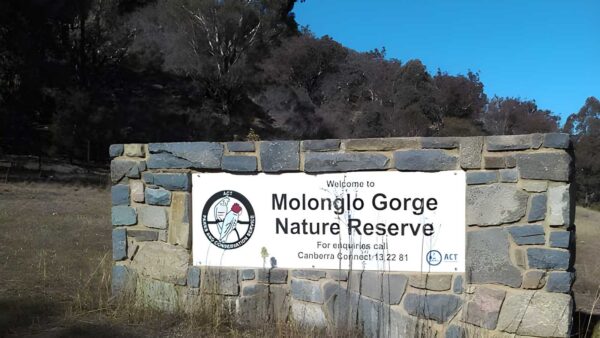

Cliffs, Cascades and the Fault-Scarp Forests of Molonglo Gorge
Overview
Molonglo Gorge Nature Reserve protects a 16 kilometre stretch of the Molonglo River on Canberra’s eastern edge, near Queanbeyan. It is a relatively compact reserve in area, around 506 hectares, but the landscape feels much bigger once the river cuts into the gorge. Cliffs rise to about 60 metres above the water, and the country opens out into a forested, deeply dissected plateau shaped by the Queanbeyan Fault Scarp.
This reserve is also important well beyond its boundaries. It forms part of a regional wildlife corridor linking the woodlands and open forest around Googong with habitat in northern ACT and nearby New South Wales, and ties into the broader Southern Flyway across the ACT and the southern slopes.
Highlights
The defining feature here is the gorge itself. Over several kilometres, the Molonglo River runs through a rocky, enclosed landscape of escarpment slopes, deep pools and small cascades. The contrast between the narrow river channel and the high, broken cliffs gives the reserve a much more rugged feel than many other bush reserves around Canberra.
There is also real geological interest in the exposed rock. Molonglo Gorge is recognised as an outstanding place to study bedded sediment geology, and even without knowing the science, the folded and layered rock along the river gives the whole area a distinct character.
Best Time to Visit
Spring and autumn are usually the most rewarding times to spend time in the reserve, when the temperatures are milder and the woodlands and river corridor tend to feel at their best. After decent rain, the cascades and pools in the gorge can look especially lively, while the cooler months often suit longer walks through the open forest and along the river.
Summer can still be appealing earlier in the day, particularly because the gorge and river bring a sense of relief to an otherwise dry landscape, but the reserve is generally more pleasant outside the hottest part of the year.
Plants and Animals
Molonglo Gorge Nature Reserve protects woodland and open forest habitat that supports a number of threatened woodland bird species. Its role as a wildlife corridor is one of the key reasons the reserve matters, with the uplifted forested land along the fault scarp helping connect habitat across a much wider region.
On the river flats and lower slopes, the reserve also contains about 40 hectares of critically endangered Yellow Box and Blakely’s Red Gum grassy woodland. That mix of river corridor, lower slope woodland and escarpment forest gives the reserve a richer ecological range than its size might suggest.
Culture and Heritage
Molonglo Gorge Nature Reserve is on Ngunnawal Country. Molonglo Gorge and the Burbong area have a special association for Aboriginal people as part of a traditional seasonal pathway south into alpine areas.
Two Aboriginal heritage sites are known within the reserve and are listed on the ACT Heritage Register. These surface stone artefact scatters point to a long history of Aboriginal presence here, and the landscape is considered likely to contain additional archaeological material.
Find more places to explore…
Help expand the trail collection!
Know of an official trail not listed on Trail Hiking Australia? I’m focused on showcasing the best tracks managed by land managers, and I’d love your help! Sharing a trail adds to our community and helps others discover safe, new adventures.
Submit your trail here

