Continental Islands on the Edge of the Whitsundays
Overview
Molle Islands National Park protects a group of continental islands in the Whitsundays, about 10km east of Airlie Beach. These are not coral cays but hilly landforms rising straight out of the sea, with forested slopes, sheltered bays and a mix of beaches, headlands and inshore waters that place the park within the Great Barrier Reef World Heritage Area.
The park’s character is shaped by contrast. Exposed hillsides carry open eucalypt forest and grassland, while more protected gullies hold pockets of rainforest. That combination gives the islands a more varied feel than their size might suggest, especially on the larger Molle islands where the terrain shifts quickly from dry ridges to greener, sheltered slopes.
Highlights
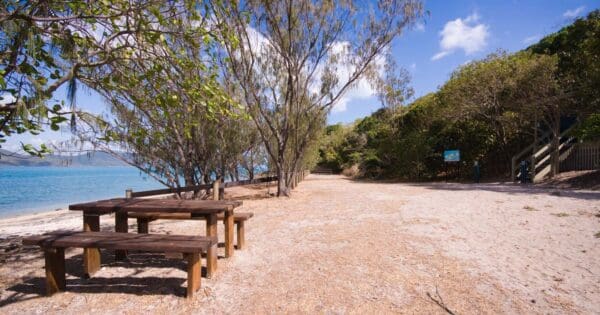
The most distinctive thing about Molle Islands National Park is its scenery as a cluster of rugged inshore islands rather than a single landmass. Pale beaches, low headlands and steep, rounded hills sit against clear blue water, creating the kind of layered coastal landscape the Whitsundays are known for.
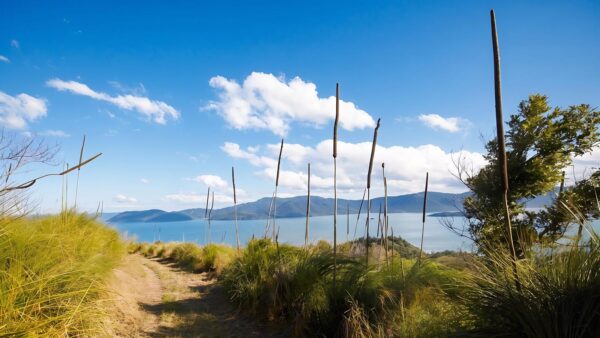
Because the islands are continental, the scenery has more relief and texture than flatter sand islands. Forested hills run down to small coves and mangrove-fringed edges, and the views often take in neighbouring islands scattered across the Whitsunday Passage.
Best Time to Visit
The drier months from around May to September are usually the most comfortable time to be out on the Molle islands, with milder temperatures and lower humidity. This is when the islands tend to feel clearest and most open, especially on exposed slopes and along the coast.
Outside that period, the warmer wet-season months bring heavier humidity and a greener look through sheltered parts of the park. Conditions can still be beautiful, but the feel of the place changes with the season, particularly where rainforest pockets and coastal vegetation respond to summer rain.
Plants and Animals
Vegetation changes noticeably across the islands. Open eucalypt forest covers many hillsides, rainforest persists in sheltered gullies, and grasslands appear on more exposed slopes. Around the shore, mangroves are part of the park’s smaller intertidal wetland areas, adding another layer to the island landscape.
The park also supports a mix of island wildlife, including coastal birds and a few notable mammals. Records for the park include the beach stone-curlew and the endangered Proserpine rock-wallaby, alongside species associated with mangrove edges and wooded slopes.
Culture and Heritage
Molle Islands National Park has a direct and recorded connection with the Ngaro people, who lived on and visited these islands for thousands of years. On South Molle Island, a stone quarry used to make tools and weapons survives as evidence of that long occupation. Fire was also used to help maintain the natural grasslands.
The islands later took on a very different land use history. South Molle was used for grazing before becoming national park, and a resort was established there in 1937.