Sorry, no records were found. Please adjust your search criteria and try again.
Sorry, unable to load the Maps API.
Explore stunning hiking trails of Mole Creek
Discover the diverse trails of Mole Creek, Tasmania, offering hikes and walks for all skill levels and interests. Find your perfect adventure today.
Discover 2 hiking trails in Mole Creek
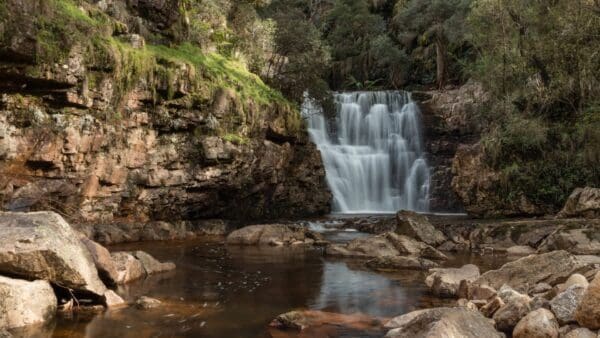

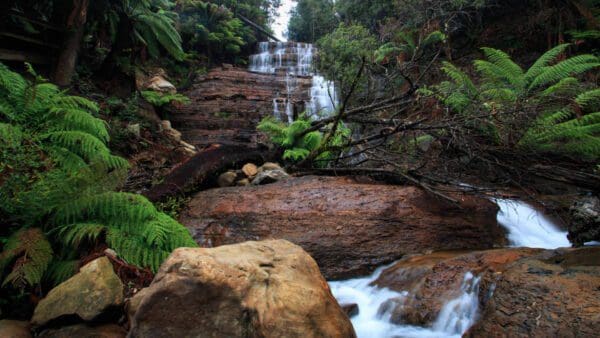

Where Tasmania’s Limestone Country Runs Underground
Overview
Mole Creek in northern Tasmania is best known for the Mole Creek Karst National Park, on the slopes of the Great Western Tiers west of Deloraine. This is an internationally significant karst landscape, with a maze of caves, sinkholes, gorges, springs and underground streams shaping the country above and below ground. It is also the only national park in Tasmania created specifically to protect karst landforms.
What makes the place memorable is the contrast between its quiet farming district setting and the complexity hidden underneath. The reserve is made up of separate pockets of protected country rather than one single block, and together they conserve part of a much larger limestone system.
Highlights
The defining feature here is the karst itself. Mole Creek’s limestone country is full of collapsed dolines, blind valleys, major springs and cave systems that give the landscape a very different character from the surrounding non-karst country. Around the surface, lush forest, ferny gullies and river flats soften the terrain, while the Great Western Tiers form a strong backdrop above the district.
Underground, the scenery shifts again. Marakoopa Cave is known for flowing water, large chambers and glow worms, while King Solomons Cave is drier and richly decorated with stalactites, stalagmites and delicate shawl formations. Beyond the better-known caves, the broader Mole Creek karst has long been recognised for its concentration of spectacular and scientifically important cave systems.
Best Time to Visit
Mole Creek suits most times of year, and the appeal is less about a short seasonal window than the character of the landscape itself. The caves keep a cool, steady temperature year round, so the underground environment changes far less than the forests and farmland outside. In the cooler months the surrounding country often feels especially green, while the warmer months tend to bring clearer days for appreciating the escarpments and forested edges of the Great Western Tiers.
Plants and Animals
Mole Creek protects more than geology. The limestone soils support notable areas of white gum and swamp gum forest, including grassy and wet sclerophyll communities that are not well reserved elsewhere in Tasmania. Along creeks and sheltered sections, the vegetation becomes lusher, with the damp, fern-rich feel that suits the district so well.
The animal life is especially distinctive underground. Several cave invertebrates are endemic to the Mole Creek karst, including Cockerill’s cave beetle, the cave harvestman and the extremely rare cave false scorpion. Marakoopa Cave also has the largest glow worm display in a public access cave anywhere in Australia. Around cave entrances and in the surrounding forest, there are bats, frogs and stream fish, along with more familiar wildlife such as pademelons, Bennett’s wallabies, wombats, owls, grey goshawks and Tasmanian wedge-tailed eagles.
Culture and Heritage
Historical records place the Mole Creek region within the territory of the Northern nation of Aboriginal people. The area was connected by well-developed tracks used for seasonal movement, trade, hunting and ceremony, and ochre was sourced from nearby Mount Vandyke and the Gog Range. This continuing cultural heritage remains an important part of the place.
European history is also closely tied to the caves. The karst system was recorded by surveyors in the 1830s, and by the early 20th century the tourism potential of the caves had already been recognised. Remains from that period, including old cave infrastructure and other historic features, still form part of the area’s heritage.
Find more places to explore…
Help expand the trail collection!
Know of an official trail not listed on Trail Hiking Australia? I’m focused on showcasing the best tracks managed by land managers, and I’d love your help! Sharing a trail adds to our community and helps others discover safe, new adventures.
Submit your trail here