Rainforest Cascades Beneath the Great Western Tiers
Overview
Liffey Falls Reserve sits in northern Tasmania, about an hour south-west of Launceston, in a cool, sheltered pocket below the Great Western Tiers. The reserve forms part of the Tasmanian Wilderness World Heritage Area, and its character is shaped by wet forest, river water and the abrupt rise of the plateau above.
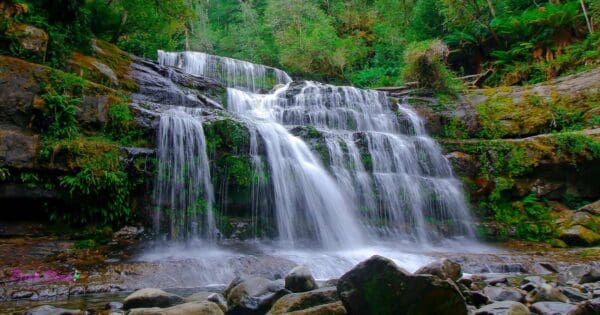
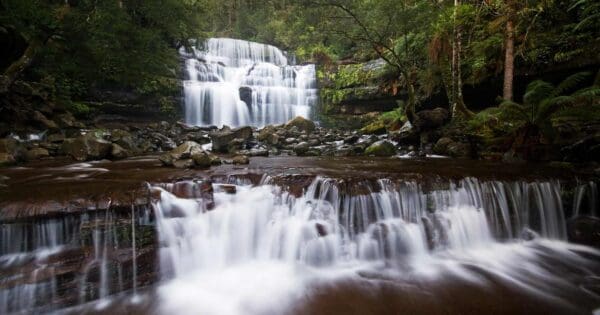
The falls are set on the Liffey River, where water coming off the plateau cuts through softer mudstone and leaves a series of sandstone steps. That combination gives the river its tiered, cascading look and creates a place that feels more like a forested river gorge than a single-drop waterfall site.
Highlights
The defining feature here is the chain of cascades on the Liffey River. Rather than one isolated fall, the river drops through a sequence of named sections, with Alexandra Falls, Hopetoun Falls, Albert Falls and Victoria Falls forming the main series. The water moves over broad rock shelves and ledges, which gives the reserve its layered, tumbling scenery.
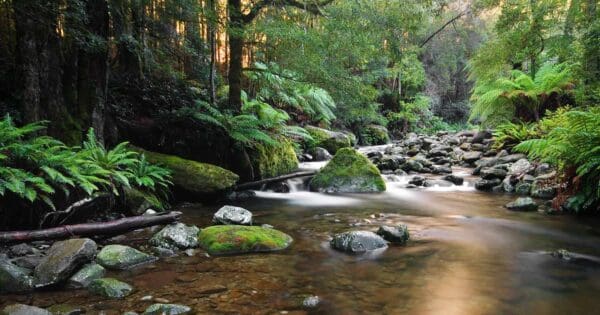
Just as memorable is the setting around the river. Deep mossy forest, tall wet eucalypts and the backdrop of the Great Western Tiers give the reserve a strong sense of enclosure, especially where the forest opens to glimpses of the escarpment above.
Best Time to Visit
Liffey Falls Reserve is appealing at any time of year, but the place tends to look its fullest after wetter periods, when the river is running strongly and the cascades show their full shape. The cool, temperate rainforest setting also makes it especially pleasant in the warmer months, when the dense forest stays shaded and green.
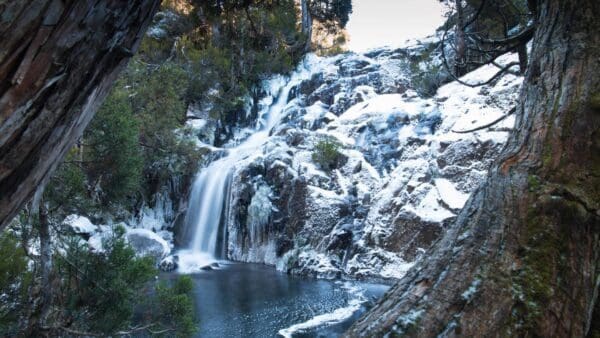
In the colder part of the year, the surrounding plateau and the Great Western Tiers can add a sharper alpine feel to the landscape, and Dry’s Bluff is sometimes dusted with snow.
Plants and Animals
The reserve is known for cool temperate rainforest and tall wet eucalypt forest, with mossy ground layers and tree ferns adding to the damp, sheltered feel around the river. One of the standout trees here is the gumtopped stringybark, including a well-known specimen about 50 metres tall with a trunk more than 3 metres across.
Wildlife is a regular part of the setting as well, and the reserve is noted for plentiful native animals within its forested habitat.