Sorry, no records were found. Please adjust your search criteria and try again.
Sorry, unable to load the Maps API.
Explore stunning hiking trails of Launceston
Discover the diverse trails of Launceston, Tasmania, offering hikes and walks for all skill levels and interests. Find your perfect adventure today.
Discover 1 hiking trail in Launceston
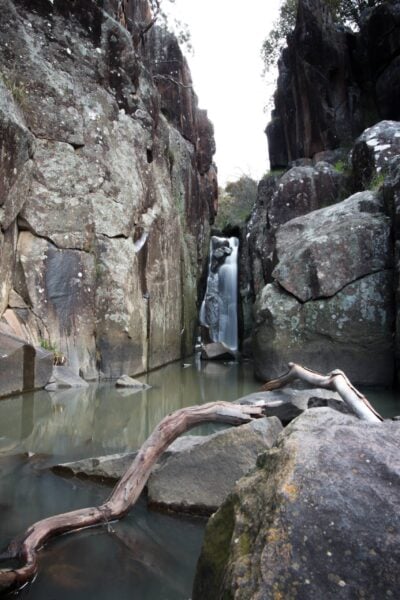

Where Dolerite Cliffs Meet the South Esk in Launceston
Overview
Cataract Gorge Reserve sits on the edge of central Launceston, where the South Esk River cuts sharply through ancient rock before joining the Tamar system downstream. It is one of the city’s defining natural places, combining steep bush-clad slopes, river scenery and a surprisingly large area of public reserve close to the urban centre. The reserve itself covers 192 hectares, and together with the adjoining Trevallyn Nature Recreation Area it forms a much broader protected landscape beside the city.
What makes the place feel distinctive is that mix of proximity and scale. Within a short distance of the CBD, the landscape changes from built-up streets to cliffs, basin pools, rocky river edges and dry forest.
Highlights
The gorge is shaped by dramatic geology. Two large amphitheatre-like basins, known as the First Basin and Second Basin, give the reserve much of its character, while the river corridor is framed by sheer cliff faces, fractured rock columns, plunge pools, cascades and smaller waterfalls. The result is a landscape that feels rugged and enclosed in some sections, then opens out at lookouts and basin edges.
There is also a strong contrast between the formal lower grounds and the surrounding natural slopes. That change in character is part of what makes Cataract Gorge memorable, with carefully tended areas giving way to native bushland and big rock faces almost immediately beyond them.
Best Time to Visit
Cataract Gorge works well across the year, but the cooler months from autumn to spring are often the most comfortable for longer walks and for taking in the cliffs and river without summer heat. Winter and early spring also tend to bring a greener look to the bushland and stronger flow through the river corridor after wetter periods.
Spring is a particularly good time if you are interested in native plants, with many shrubs, lilies and understorey species flowering through the season. Summer has its own appeal around the basin and river setting, but for walking conditions and a broader sense of the landscape, the shoulder seasons are usually the pick.
Plants and Animals
The reserve supports at least 200 native plant species, with vegetation spread across canopy, shrub and ground layers typical of local bushland. Among the trees and taller plants are blackwood, black sheoak, silver banksia, white gum and black peppermint, while the understorey includes species such as correa, bottlebrush, native indigo and dogwood. Ground flora ranges from bulbine lily and blue flax lily to kangaroo grass and lomandra.
The mix of rock, river and bushland helps support a noticeable range of wildlife. Wallabies and pademelons are regular inhabitants, and the reserve is also home to potoroos, bandicoots, quolls, skinks, snakes and small birds including fairy-wrens. Even close to the city, it remains a lively patch of habitat.
Culture and Heritage
The gorge has deep Aboriginal significance. People were moving through this landscape about 40,000 years ago, and it remains a place of spiritual significance for many Aboriginal people today.
Find more places to explore…
Help expand the trail collection!
Know of an official trail not listed on Trail Hiking Australia? I’m focused on showcasing the best tracks managed by land managers, and I’d love your help! Sharing a trail adds to our community and helps others discover safe, new adventures.
Submit your trail here

