Sorry, no records were found. Please adjust your search criteria and try again.
Sorry, unable to load the Maps API.
Explore stunning hiking trails of Knapsack Reserve
Discover the diverse trails of Knapsack Reserve, New South Wales, offering hikes and walks for all skill levels and interests. Find your perfect adventure today.
Discover 1 hiking trail in Knapsack Reserve
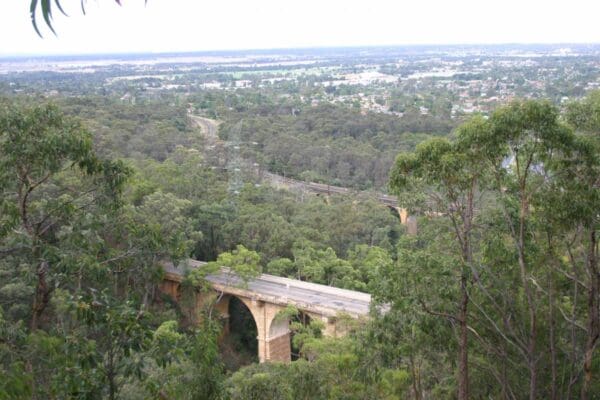

Sandstone Escarpment and Railway Stonework at Knapsack Reserve
Overview
Knapsack Reserve sits on the lower Blue Mountains escarpment at Glenbrook, on the eastern edge of the range. It is a bushland reserve with broad views out across the Cumberland Plain towards Sydney, shaped by steep slopes, gullies and old transport corridors cut into the hillside.
The reserve is managed as Crown land for public recreation and forms part of a larger stretch of native vegetation along the Scenic Eastern Escarpment, linking north towards Yellomundee Regional Park.
Highlights
The setting is defined by the escarpment itself. From the higher parts of the reserve, the land falls away sharply to the plains, giving the area a strong sense of elevation and a very open eastern outlook. Sandstone outcrops, cuttings and gully lines add to that distinct lower Blue Mountains character.
Another standout is the way bushland and major stone structures sit together in the same landscape. The old viaduct across Knapsack Gully is the best-known feature, but the wider reserve also carries the dramatic geometry of old alignments carved into the hillside, which makes the scenery feel both natural and deeply shaped by the terrain.
Best Time to Visit
Cooler months are usually the most comfortable time to spend longer in Knapsack Reserve, especially given its exposed escarpment setting and the amount of open country looking east over the plains. Clear days tend to show off the long views best.
After rain, the gullies and bushland can feel greener and more sheltered, so different times of year give the reserve a noticeably different character without changing what makes it distinctive.
Plants and Animals
Knapsack Reserve is part of a much larger belt of native vegetation along the eastern escarpment, which helps it function as more than an isolated patch of bush. Its bushland sits beside other reserves and larger protected areas, supporting habitat continuity across the lower Blue Mountains edge.
The reserve includes mapped native vegetation communities and bushland on steep escarpment country. The mix of exposed slopes, gully lines and adjoining vegetation corridors gives it a layered feel, with drier ridges and more sheltered pockets contributing to the area’s ecological value.
Culture and Heritage
Knapsack Reserve has strong historic ties to the early transport routes that climbed the Blue Mountains. Its best-known heritage feature is the Knapsack Viaduct, built in 1867 as part of the first railway crossing of the mountains. The surrounding landscape also includes remnants of the Lapstone Zig Zag and other transport-era works that show how engineers adapted rail and road lines to this steep country.
These structures are important not just as surviving relics, but because they are still legible in the landscape. Stone bridgework, embankments and cuttings remain closely tied to the escarpment setting, so the history of movement through the mountains is still easy to read on the ground.
Find more places to explore…
Help expand the trail collection!
Know of an official trail not listed on Trail Hiking Australia? I’m focused on showcasing the best tracks managed by land managers, and I’d love your help! Sharing a trail adds to our community and helps others discover safe, new adventures.
Submit your trail here

